Featured COB LED Strips & Smart Control Systems
High-density dotless COB tape, ultra-narrow mini cut profiles, silicone neon tubes, and precision controllers certified for European commercial and residential projects.
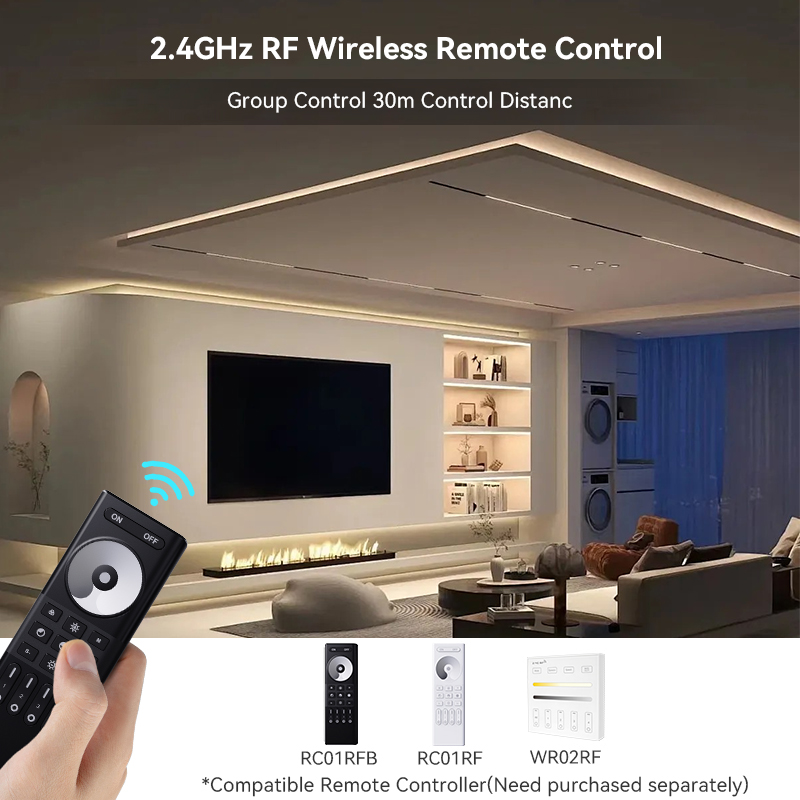
2.4GHz RF Wireless Dimmer Controller RGB RGBCT LED Strip Lights 288W 15A 30m Remote Compatible Group Control
View Details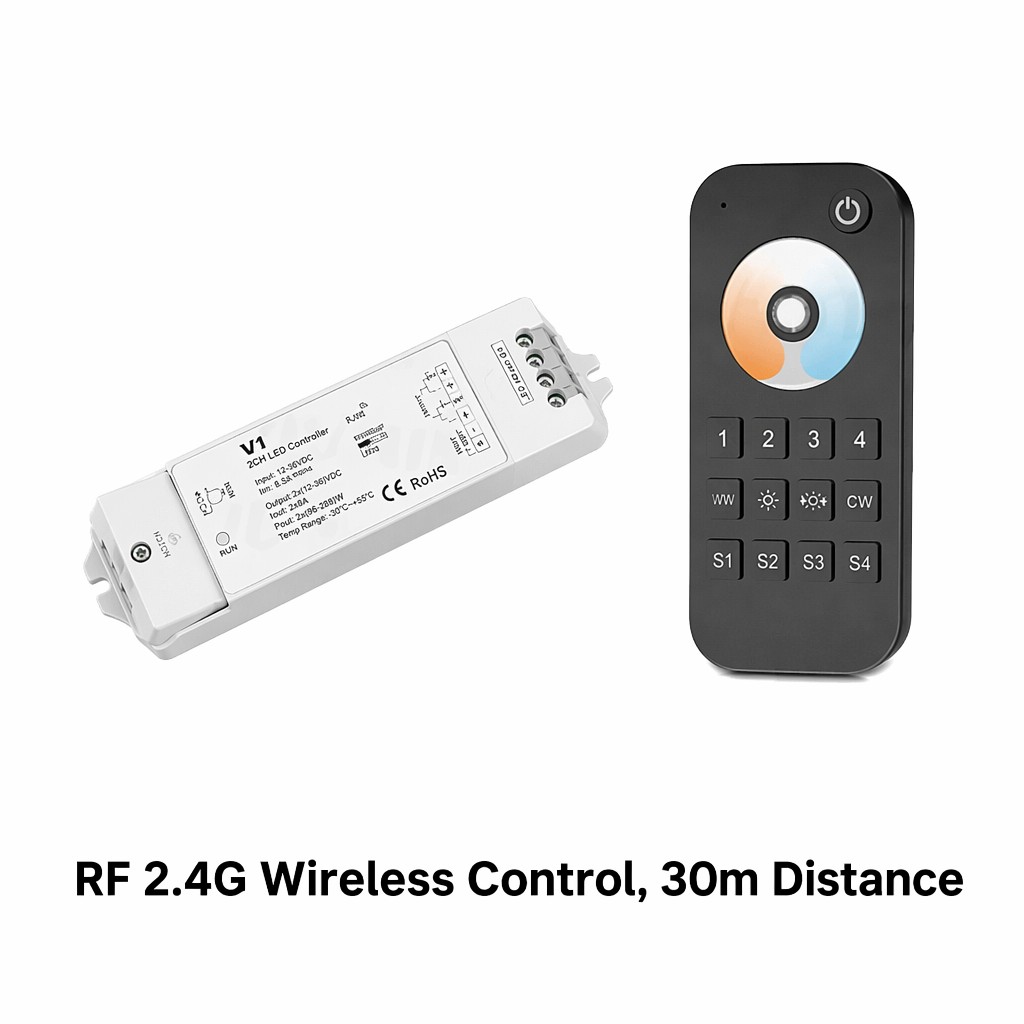
RF 2.4G LED Controller V1 V3 VP Series, RGB RGBW RGBCCT SPI Dimming PWM Smart Controller, DC 12V 24V for LED Strip Lighting
View Details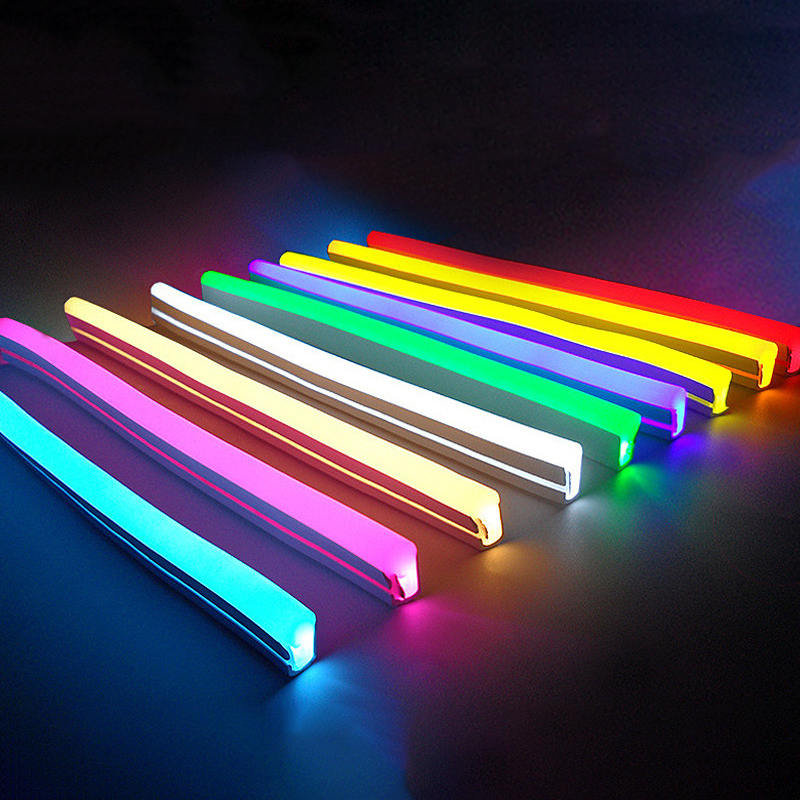
Silicon Separated Split Neon Tubes 6mm/8mm 12V IP65 Flexible Strip S/Zigzag Shape DIY Decorative Sign Cuttable LED Neon Lights
View Details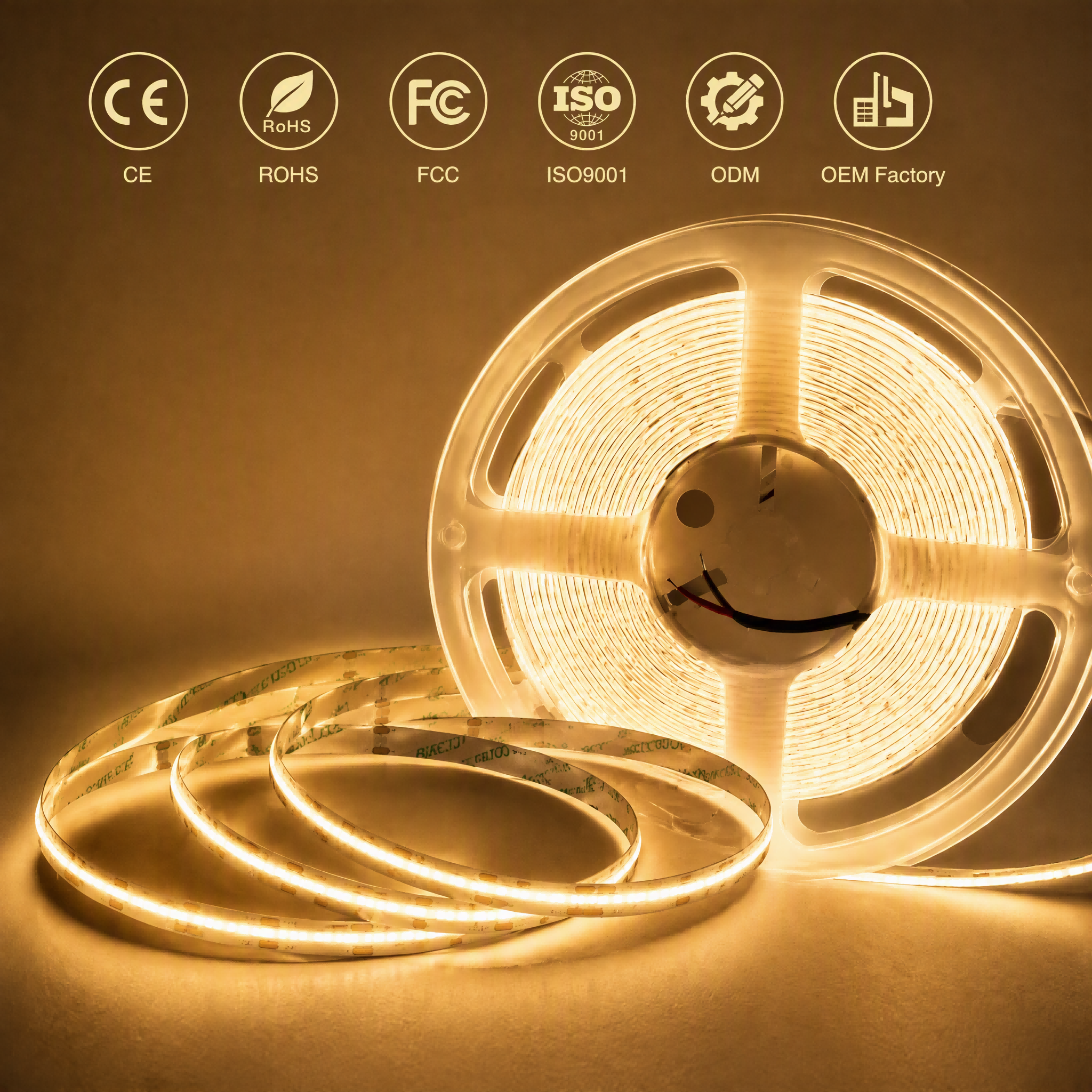
8W & 14W/M Connected Smart Cob LED Strip Light Dimmable Flexible PCB Body DC 5V 320LEDs 8mm & 10mm
View Details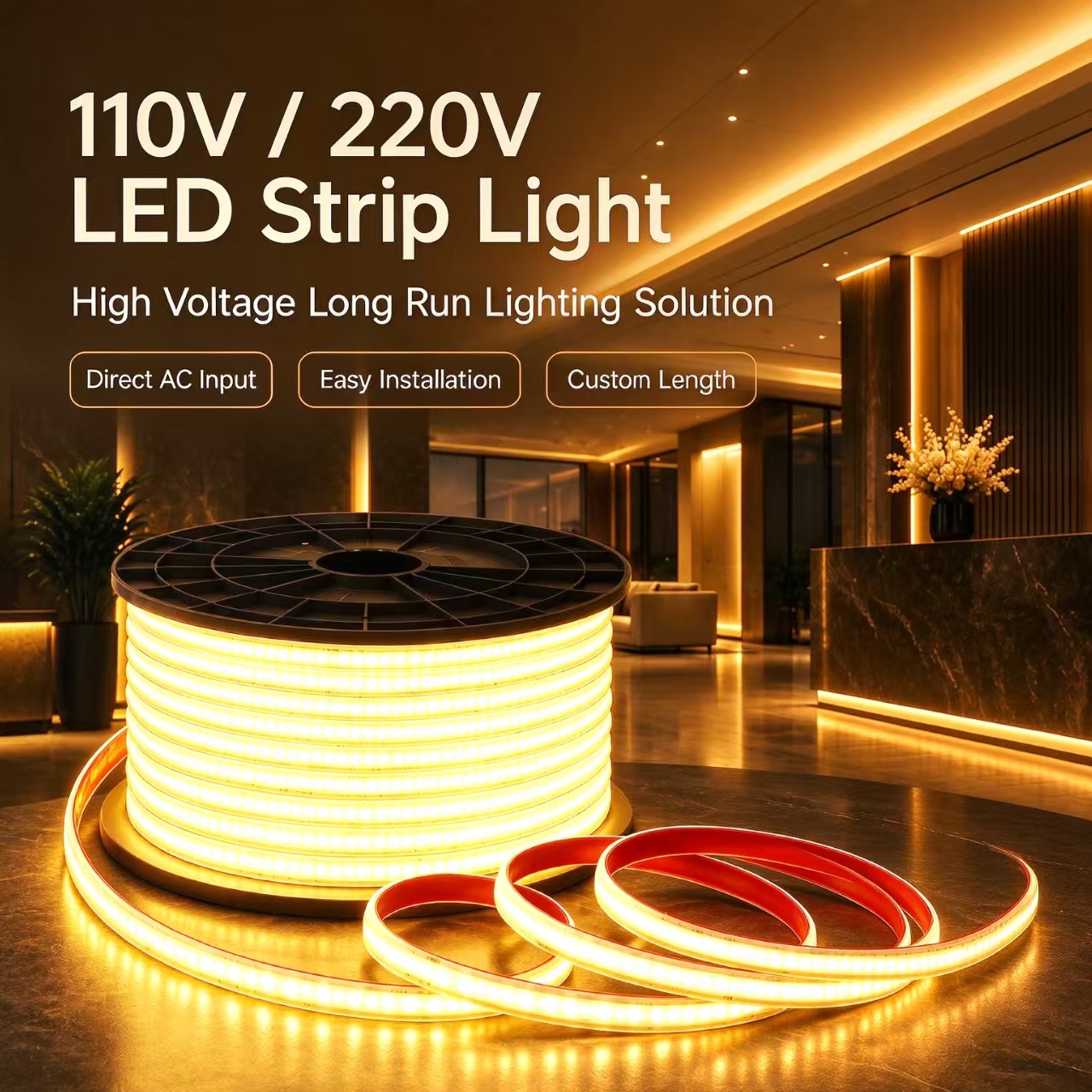
AIKEOU Ip65 Cob Led Strip 220v 110v Outdoor Waterproof Ip68 Led Strip Light Outdoor Waterproof
View Details
Ultra Slim LED Aluminum Alloy T5 Profile Channel Powder Coated Housing Dimmable 90 CRI 6000 Series Modern Linear Light Strip
View Details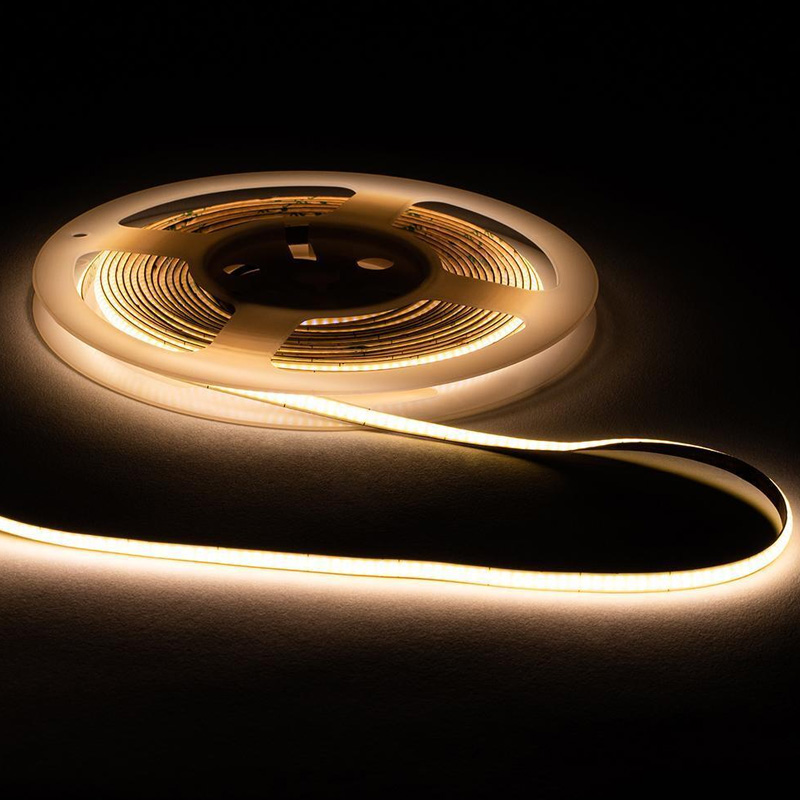
Aikeou 400/312/320/384/480LEDs/m 5mm 8mm 10W/m 12V 24V Factory Supply COB LED Light Strip for Cabinet / Home DIY
View Details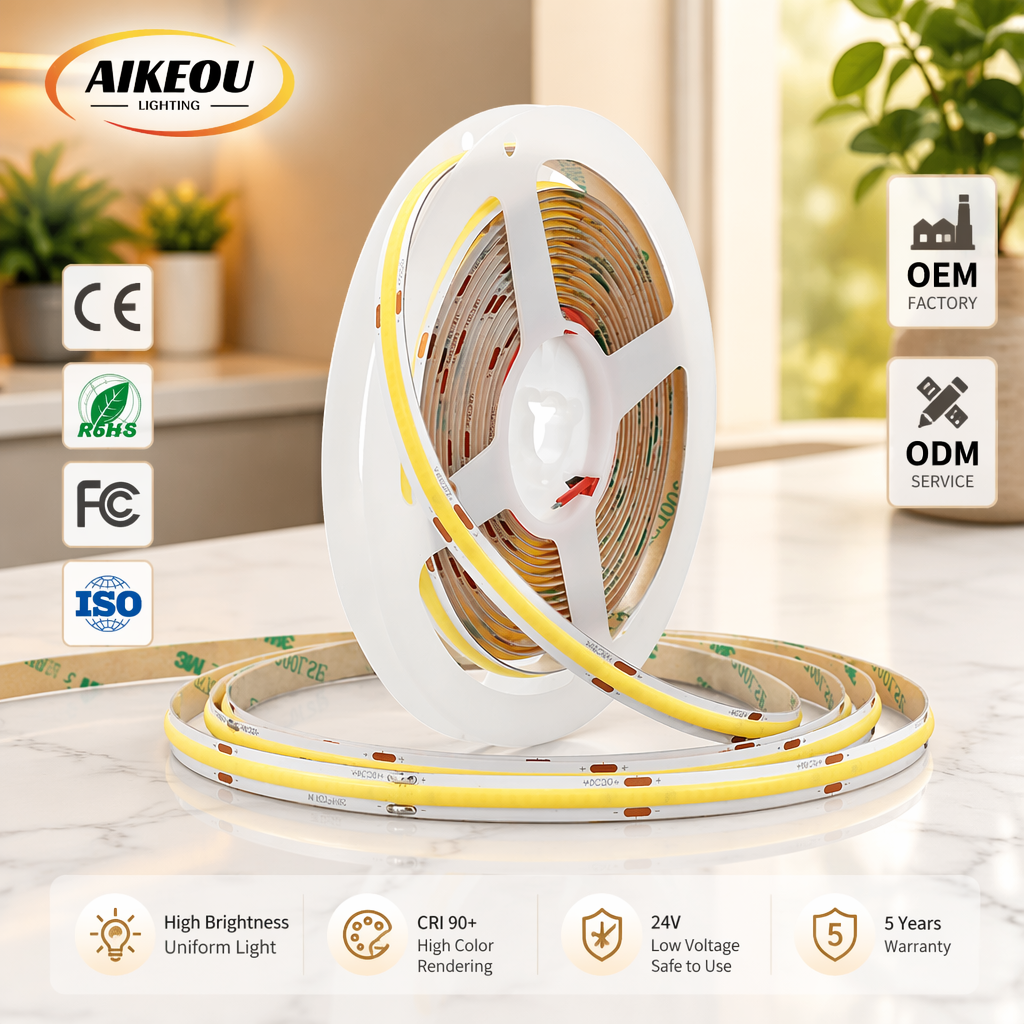
Aikeou 320LEDs/m 8mm 8W/m 12V/24V IP20 High Density Indoor COB LED Strip Light with WiFi for Control CRI90 3-Year Warranty
View DetailsTechnical Whitepaper: The Physics & Photometrics of Mini COB LED Technology
In modern architectural lighting design across Ghent and the broader East Flanders region, the traditional Surface Mounted Diode (SMD) LED strip is rapidly yielding market share to Chip-on-Board (COB) technology. Traditional SMD LED tapes—typically featuring 60 to 240 discrete diode packages per meter—suffer from inherent optical pixelation, commonly referred to as "hotspots." When installed in shallow aluminum profiles or integrated directly into custom millwork, SMD tapes project visible light points and harsh shadows, requiring deep aluminum diffusers that compromise minimalist architectural aesthetics.
Mini COB (Chip-on-Board) LED strips solve this optical bottleneck through direct semiconductor integration. By mounting bare flip-chips directly onto a flexible printed circuit board (FPCB) and encapsulating them under a continuous, yellow phosphor-silicone matrix, COB technology achieves chip densities ranging from 320 to over 576 chips per meter. The resulting light emission is a continuous, uniform ribbon of light with a 180-degree beam angle—completely eliminating dotting even when placed immediately against a frosted lens or exposed directly within ultra-narrow channels.
Thermal Management & Substrate Circuit Engineering
The primary operational stressor for micro-miniaturized linear LEDs is thermal saturation. In ultra-narrow PCB formats (ranging from 2.7mm, 3mm, to 5mm widths), densely packed LED chips generate concentrated heat per unit area. As an OEM/ODM factory serving European distributors and contractors in Ghent, our manufacturing process utilizes a double-layer 2oz/3oz electro-deposited rolled copper PCB.
This heavy copper substrate acts as a secondary heat sink, distributing thermal energy longitudinally along the strip. Coupled with high-thermal-conductivity back-adhesive tape (such as 3M 300LSE or 9448A), heat is efficiently conducted away from the junction layer to the mounting extrusion. This thermal engineering ensures a low junction temperature ($T_j < 75^\circ\text{C}$), preserving lumen maintenance ($L_{70}B_{10} > 50,000 \text{ hours}$) and preventing spectral shift over years of continuous operation.
| Performance Specification | Standard SMD LED Strip (e.g. 2835 / 5050) | High-Density Mini COB LED Strip |
|---|---|---|
| Optical Uniformity | Visible hotspots requiring deep diffusion | 100% Dotless continuous line of light |
| Diode Density | 60 – 240 LEDs / meter | 320 – 576 Chips / meter |
| Minimum PCB Width | 8mm – 12mm | 2.7mm – 5mm (Ultra-Slim Formats) |
| Beam Angle | 120 degrees | 180 degrees wide flood |
| Flexibility & Bend Radius | Limited by discrete epoxy packages | High flexibility, tight bend radius without solder cracking |
| Color Rendering Index (CRI) | Typically Ra 80 (Ra 90 optional) | Standard Ra 90 / Ra 95 (R9 > 50) |
Localized Application Scenarios in Ghent & East Flanders
Ghent presents a unique architectural landscape: a seamlessly blended tapestry of medieval timber-framed structures, brick Gothic canal houses in Patershol and the Graslei, mid-century industrial conversions, and ultra-modern zero-emission residential developments along the Oude Dokken. Serving lighting engineers, electrical wholesalers (Elektro Groothandel), and interior joiners (Schrijnwerkers) in Ghent requires specialized knowledge of how micro-linear LEDs interact with diverse structural environments.
1. Historic Millwork & Heritage Masonry Preservation (Patershol & Gentse Binnenstad)
Restoring protected heritage buildings in Ghent requires non-invasive lighting fixtures that respect historic timber beams, lime plaster walls, and original stonework. Municipal heritage authorities often prohibit deep chase-cutting into original oak joists or historical masonry.
Our 2.7mm and 3mm ultra-narrow Mini COB LED strips can be retrofitted into minimal surface-mounted or micro-milled channels measuring less than 4mm in depth. Operating at 2700K Warm White or 2400K Sunset White with CRI 95, these strips cast warm, indirect illumination across exposed brickwork and timber ceilings without altering the physical integrity of the historic envelope.
Restoration Tip for Ghent Architects: Combine 3mm 24V COB strips with DALI-2 phase-cut dimming drivers to allow smooth dimming down to 0.1%, mimicking historical gaslight ambience while complying with Belgian energy conservation mandates.
2. High-End Custom Joinery & Kitchen Architecture (Flemish Luxury Residential)
Flemish interior design is world-renowned for sleek cabinetry, dark oak veneer kitchen islands, floating shelving, and handleless stone countertops. Installing traditional LED tape under floating shelves frequently results in specular glare off polished marble or composite quartz worktops, revealing ugly LED diode reflections.
Our 4mm and 5mm 24V Mini COB LED strips provide completely diffuse light when recessed into shallow routed grooves. Because the phosphor layer is seamless, polished stone surfaces reflect a pristine, unbroken line of light. Furthermore, with CCT Tunable White variants (2700K to 6500K), home inhabitants can shift from daylight task lighting (4000K) during food preparation to warm ambient light (2700K) during evening dining.
3. Weatherproof Canal-Side & Exterior Facade Linear Accent Lighting (Leie & Scheldt Waterfronts)
Ghent’s humid maritime climate, high rainfall, and seasonal freezing temperatures demand robust outdoor lighting solutions for canal-facing terraces, garden walkways, and outdoor hospitality seating. Standard IP20 indoor strips or poorly sealed IP65 spray-coated tapes quickly yellow, crack, and fail due to moisture ingress along water edges.
We engineer IP67 and IP68 silicone co-extrusion COB LED strips. Unlike cheap PVC-jacketed tapes, our food-grade silicone encapsulation resists UV radiation, saltwater mist, and freezing thermal expansion cycles down to -30°C. These high-voltage (110V/220V) or low-voltage (24V) outdoor COB lines provide uniform perimeter glow along outdoor steps, building plinths, and waterfront balustrades.
Localized Development Trends & Regulatory Standards in Belgium
The European lighting market—and specifically the Belgian construction sector—is governed by stringent energy efficiency directives, electromagnetic compatibility standards, and smart automation requirements. OEM buyers and importers in Ghent must source products that comply with both EU-wide legislation and regional Flemish building practices.
Ecodesign (EU 2019/2020) & Energy Labelling (EU 2019/2015) Compliance
Under the EU Single Lighting Regulation (SLR), light sources brought into Belgium must meet strict minimum efficacy thresholds and standby power limits ($P_{sb} < 0.5\text{W}$). Our factory manufactures COB LED strips delivering optical efficacies up to 110–130 lumens per watt. High luminous efficacy lowers operating wattage while maintaining target lux levels, directly supporting Flanders’ "Bijna Energieneutraal" (BEN) zero-emission home standards.
Integration with European Smart Home Protocols (DALI-2, KNX, Loxone)
Smart automation is standard in Belgian residential and commercial new-builds. System integrators in Ghent heavily rely on DALI-2 (Digital Addressable Lighting Interface) for commercial offices and KNX or Loxone for high-end residential projects. Our COB strip systems are fully compatible with pulse-width modulation (PWM) dimming drivers operating at high frequencies (>4kHz) to guarantee flicker-free performance ($P_{st}^{LM} < 1.0$ and $SVM < 0.4$) under video inspection and digital camera capture.
Health & Well-being (Human-Centric Lighting): By combining CRI>90 high color fidelity with CCT tunable dual-chip COB technology, system integrators can program circadian rhythm lighting cycles across Ghent office parks and healthcare facilities.
Enterprise Advantages & Shenzhen Factory Manufacturing Capabilities
As a verified COB LED strip manufacturer supplying lighting brands, importers, and OEM project developers in Ghent and across Western Europe, our production facility combines state-of-the-art automated assembly with rigorous quality control workflows.
1. SGS-Verified Production Lines & Automated Die Bonding
Our production plant in Shenzhen is verified on-site by SGS Group. We operate fully automated, high-speed flip-chip die bonders capable of placing tens of thousands of semiconductor chips per hour with micrometer-level precision. This automation eliminates human manual soldering errors, ensures uniform solder joint resistance, and prevents cold-joint failures across large-volume production runs.
2. Strict MacAdam Ellipse Color Binning (SDCM < 3)
Color inconsistency between different reels of LED strip is the single most common complaint from installation contractors in Ghent. A corridor lit by 3000K strips with minor chromaticity shifts looks unprofessional and leads to project rejection. We implement a strict 3-step MacAdam Ellipse (SDCM < 3) spectroradiometer binning process. Whether an importer orders 500 meters or 50,000 meters, every reel shipped shares identical chromaticity coordinates.
3. End-to-End Quality Testing Protocol
Prior to export packaging, 100% of our production runs undergo a multi-stage testing sequence:
- IQ Material Inspection: Testing double-sided PCB copper purity, silicone optical clarity, and thermal adhesive shear strength.
- In-Process Burn-in Testing: 100% powered thermal aging for a minimum of 4 hours under elevated current loads.
- Integrating Sphere Photometrics: Full spectral measurement for CCT, CRI (Ra & R9), luminous flux, and power factor.
- IPX8 Pressure Chamber Testing: Submersion testing under hydrostatic pressure for waterproof silicone-encapsulated series.
Frequently Asked Questions for Procurement & Engineering Teams in Ghent
Below are answers to common technical, logistical, and commercial queries raised by B2B buyers, wholesalers, and lighting specifiers located in East Flanders.
Partner with a Direct COB LED Strip Factory Today
Whether you are engineering a high-density mini cut lighting fixture, specifying an architectural restoration in Ghent, or expanding your wholesale catalog in Belgium, our technical engineering team is ready to assist with samples, photometric IES files, and competitive direct factory quotes.
