Precision-Engineered Flexible LED Lighting Systems
Directly manufactured under SGS-verified quality management systems for international architectural, commercial, and residential OEM/ODM integration.
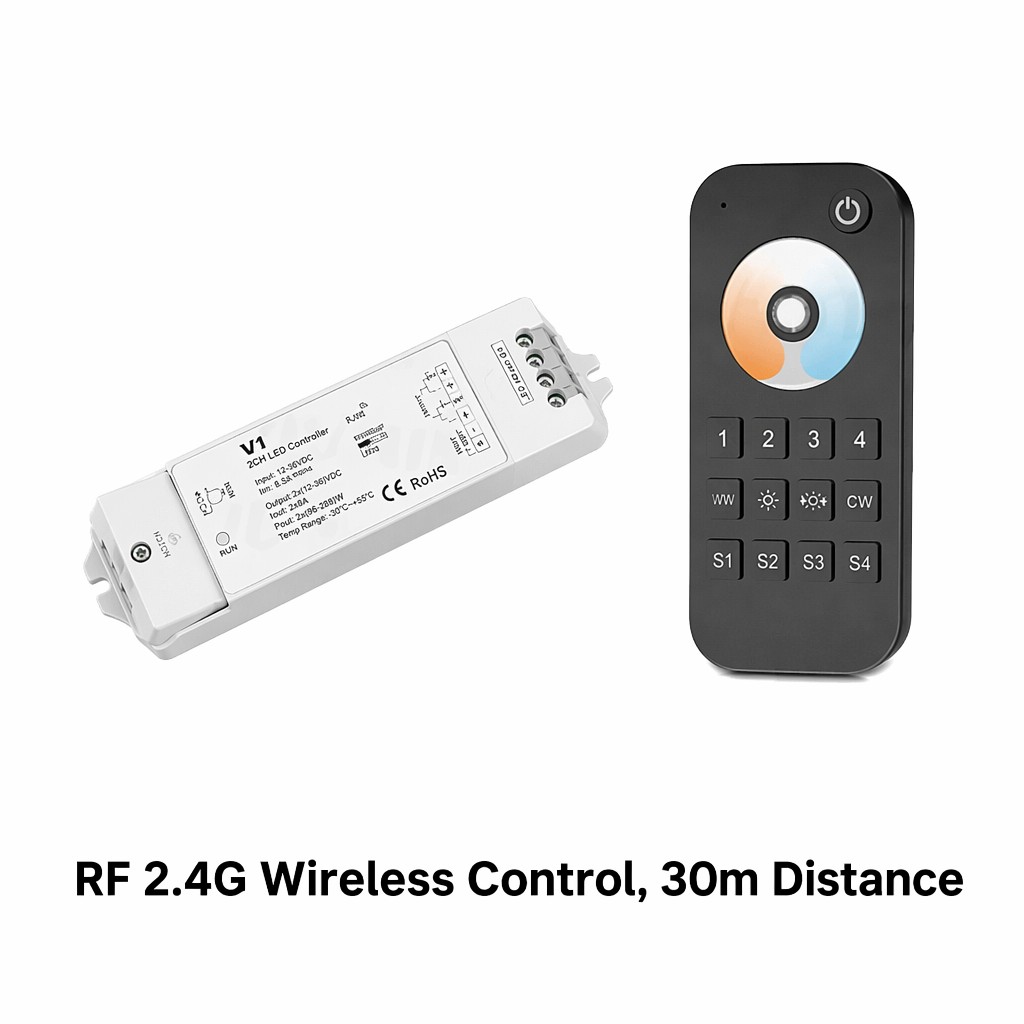
RF 2.4G LED Controller V1 V3 VP Series, RGB RGBW RGBCCT SPI Dimming PWM Smart Controller, DC 12V 24V for LED Strip Lighting
View Technical Specs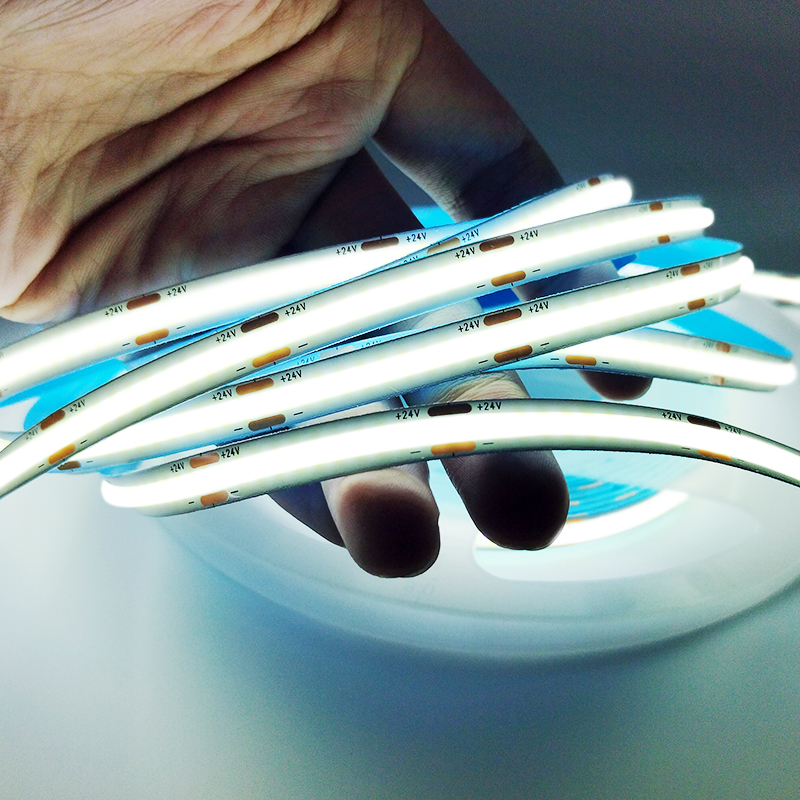
High Quality 12V 24V IP20 Ra80 Modern Remote Control Copper 8mm Cob Led Strip Lights 320LEDs/m Dimmable Multi-Color Temp
View Technical Specs
AI-powered Unisex Massage Robot Beauty Salon Body Wellness 448k Negative-pressure Electrothermal Probe Made in China
View Technical Specs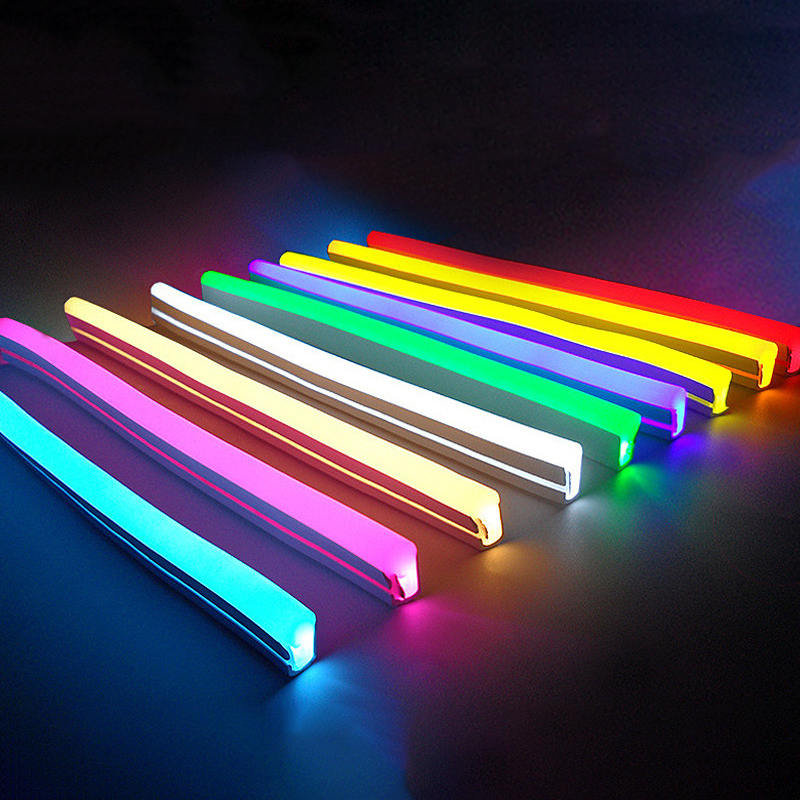
Silicon Separated Split Neon Tubes 6mm/8mm 12V IP65 Flexible Strip S/Zigzag Shape DIY Decorative Sign Cuttable LED Neon Lights
View Technical Specs
Aikeou 384D 8mm 10W/m DC24V IP20 Non-Waterproof 6000K Cool White High Quality Dimmable COB LED Strip Light with Remote Control
View Technical Specs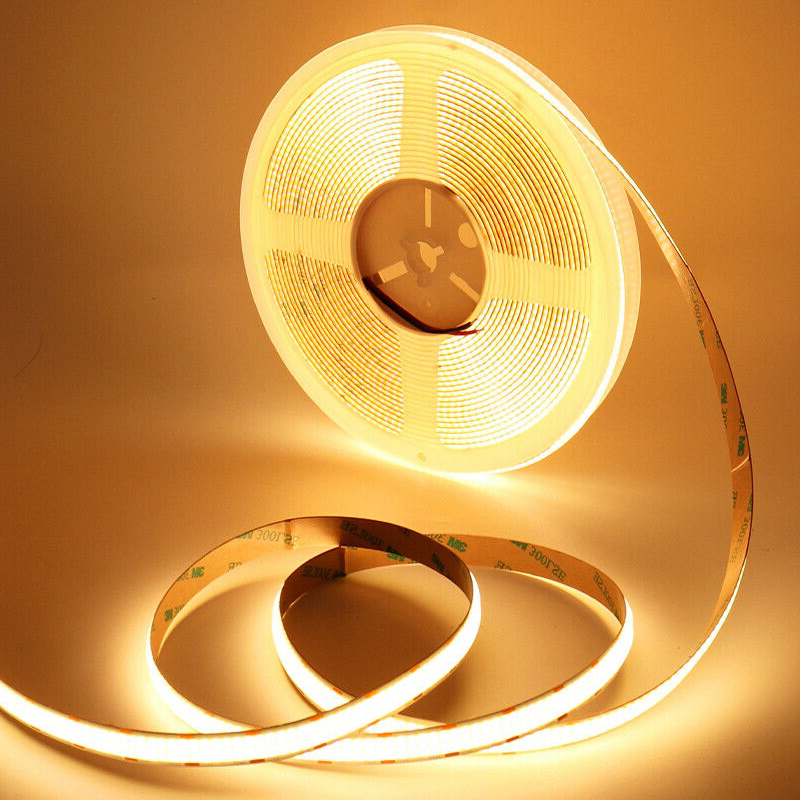
Aikeou 600LEDs/m 5mm 14W/m DC24V IP20 Ra90 Bright DoubleLine Copper COB Strip 3000K 4000K 6000K Custom LED Chips Dimmable Remote
View Technical Specs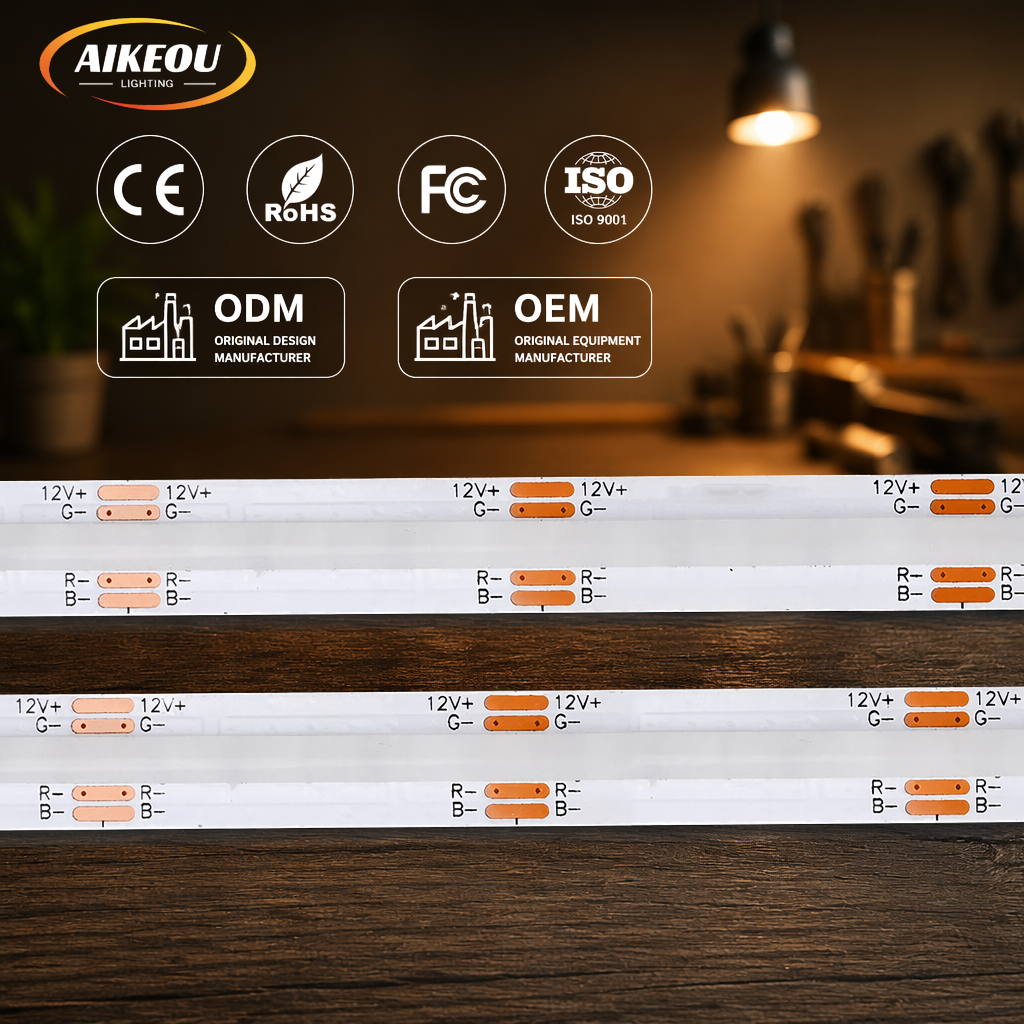
Wholesale Aikeou 576Leds/m IP20 Landscape 10MM RGB COB LED Strip Light 14W Remote Control Dimmable Silicone DC 24V/12V 2-Year
View Technical Specs
Cob Led Strip Light 12V/24V 10m Copper 8mm Warm White Smart Flexible Cuttable for LED Strip
View Technical SpecsEnterprise Capabilities & OEM Infrastructure in Shenzhen
Shenzhen Vokud Technology Co., Ltd. operates state-of-the-art automated production lines optimized for zero-defect LED tape extrusion, flip-chip die bonding, and phosphor dispensing.
Advanced Quality Assurance & Photometrics
Unlike trading intermediaries, Vokud enforces rigorous raw material intake audits. Every batch of copper flexible printed circuits (FPC) undergoes double-sided 3oz electrolytic copper thickness verification to prevent voltage drop over extended runs.
Our in-house photometric lab utilizes 9 specialized optical testing instruments—including spectroradiometers, goniophotometers, thermal shock chambers, and salt-spray corrosion testers—guaranteeing strict compliance with CE, RoHS, FCC, EMC, and LVD directives.
Every reel produced undergoes 100% continuous 4-hour burn-in testing prior to vacuum anti-static packaging, virtually eliminating early-life diode failures in commercial field installations.

Development Trends in Flexible LED Lighting
An engineering analysis of light source transitions: From discrete Surface Mount Devices (SMD) to continuous Chip-On-Board (COB) and Chip Scale Package (CSP) architectures.
1. The Photometric Shift: Discrete SMD vs. Continuous COB Architecture
For over two decades, Surface Mount Device (SMD 3528, 5050, 2835) strip lights dominated global commercial lighting. However, SMDs inherently suffer from the "pixelation effect" or discrete spot shadows when placed inside shallow aluminum extrusion channels. Achieving a seamless, uniform light bar required deep profiles equipped with thick frosted polycarbonate diffusers—which compromised lumen efficiency by up to 35% through transmission scattering.
Chip-On-Board (COB) linear lighting represents a paradigm shift. By mounting bare LED flip-chips directly onto the flexible PCB substrate (ranging from 320 to 600 chips per meter) and encapsulating the entire line under a continuous phosphor-infused silicone layer, COB technology creates a dotless, uninterrupted ribbon of light. This yields several critical engineering benefits:
- 180-Degree Beam Angle: Expands optical dispersion compared to traditional 120-degree SMD lenses, reducing dark corners in cove lighting applications.
- Enhanced Thermal Dissipation: Flip-chips bond directly to the PCB's copper layer without lead frames, decreasing thermal resistance ($R_{th,j-c}$) by over 40% and extending operational lumen maintenance ($L_{70} > 50,000$ hours).
- Low Profile Integration: Enables zero-diffuser installation inside ultra-thin 4mm profiles without visible LED hot spots.
| Technical Metric | Traditional SMD Strip (2835/5050) | Modern COB Strip (Vokud Series) | Next-Gen CSP Flex Strip |
|---|---|---|---|
| Diode Density | 60 – 240 LEDs/meter | 320 – 600 Chips/meter | 210 – 420 Diodes/meter |
| Optical Uniformity | Spotty (Requires deep diffuser) | 100% Dotless (Seamless line) | Near-continuous (Micro-dots) |
| MacAdam Ellipse Binning | 3-Step to 5-Step SDCM | < 3-Step SDCM (Consistent Bin) | 3-Step SDCM |
| Bending Radius Limit | 15 mm (Risk of solder joint crack) | 5 mm (High physical resilience) | 10 mm |
| Thermal Performance | Moderate ($R_{th}$ ~ $65^\circ\text{C}/W$) | Superior ($R_{th} < 35^\circ\text{C}/W$) | High ($R_{th}$ ~ $45^\circ\text{C}/W$) |
2. Evolution of Color Fidelity: CRI Ra, R9, and TM-30-18 Standards
Global procurement standards are rapidly transitioning beyond basic Color Rendering Index ($R_a$). High-end retail, architectural, and museum projects now enforce strict compliance with TM-30-18 metrics—specifically Color Fidelity ($R_f \ge 90$) and Color Gamut ($R_g \ge 100$). Furthermore, strong emphasis is placed on $R_9$ (saturated red rendering), which prevents washed-out skin tones and food merchandise in retail displays.
Top China suppliers like Vokud utilize custom phosphor chemistry (broad-spectrum garnet and nitride phosphors) to achieve high $R_a > 95$, $R_9 > 80$, and tight MacAdam Ellipse tolerance ($\le 3 \text{ SDCM}$ across multiple production lots). This prevents color shifting when replacing or extending LED runs across multi-phase construction projects.
3. Co-Extrusion Silicone Waterproofing Technology (IP65 to IP68)
In exterior landscape, facade, and high-humidity environment (saunas, pools) applications, traditional PVC or glue-filled silicone tubing suffers from yellowing, UV degradation, thermal cracking, and water ingress via capillary action. Modern engineering trends favor integrated solid silicone co-extrusion moulding.
In co-extrusion processing, the flexible PCB and liquid optical silicone are extruded simultaneously through a precision thermostatic die. This forms a gas-tight, bubble-free, molecularly bonded protective shell rated IP67/IP68. Chemical resistance against saltwater, chlorine, UV radiation, and extreme temperatures ($-40^\circ\text{C}$ to $+80^\circ\text{C}$) ensures long-term reliability without discoloration.
Future Sourcing & Purchasing Trends for Flexible LED Lighting
Key macroeconomic, regulatory, and technological shifts shaping global LED strip light procurement strategies over the next decade.
1. Regulatory Compliance & The Circular Economy (EU ErP & Ecodesign Directives)
International procurement departments face increasing regulatory oversight. The European Union's updated Energy-related Products (ErP) directive and Ecodesign regulations mandate higher luminous efficacy thresholds ($\ge 120 \text{ lm/W}$ for complete luminaire assemblies) alongside strict mandatory energy labeling. Suppliers must provide downloadable energy class verification datasheets.
Furthermore, global buyers are auditing suppliers for RoHS (Restriction of Hazardous Substances) compliance, REACH chemical registration, and WEEE design considerations. Manufacturers capable of providing fully traceable raw material certificates and eco-friendly recyclable silicone/packaging gain a clear market advantage.
2. Rise of Dynamic Tunable White (CCT) and Addressable Smart Control Integration
Fixed color temperature lighting (e.g., static 3000K or 4000K) is being rapidly superseded by Human-Centric Lighting (HCL) solutions. Dual-channel CCT tunable white LED strips allow users to dynamically shift color temperature from warm 2700K to daylight 6500K, aligning interior ambient lighting with natural human circadian rhythms.
Concurrently, smart home automation and commercial building management systems (BMS) require addressable digital control protocols. Procurement demand is shifting toward SPI and DMX512 addressable RGBIC COB strips powered by integrated or external ICs (WS2811, WS2812B, UCS1903, SPI1838). These enable dynamic chase patterns, localized dimming zones, and seamless interoperability with Matter, Zigbee, DALI-2, and RF 2.4G smart ecosystem controllers.
3. Supply Chain Resilience, Bin Control, and Direct Factory Auditing
To mitigate project delays and costly on-site replacements, tier-1 lighting brands and OEM distributors are moving away from open-market traders and consolidating supply chains with audited manufacturing plants in China lighting hubs (Shenzhen and Zhongshan).
Core purchasing evaluation criteria now center around a supplier's capacity to guarantee single-bin continuity over 12 to 24-month rolling contract agreements. Suppliers with automated SMT, continuous reel-to-reel phosphor dispensing lines, and verified third-party audit credentials (SGS, TÜV Rheinland, Intertek) offer the highest risk mitigation against color temperature variance and batch-to-batch lumen discrepancy.
Frequently Asked Questions (FAQ) for Buyers
Direct answers to crucial technical and operational procurement questions asked by engineering, purchasing, and supply chain managers.
- Voltage Choice: Select 24V DC or 48V DC over 12V DC systems; 24V halves the current ($I = P/V$), reducing resistive power losses ($I^2R$) by 75%.
- PCB Copper Thickness: We utilize 3oz/4oz heavy rolled copper flexible PCBs to increase cross-sectional trace area.
- Power Feed Method: For single-ended feeds, limit 24V COB runs to 5–10 meters. For runs exceeding 10 meters, implement double-ended power feeds or constant-current driver IC designs integrated onto the strip layout.
Streamline Your Flexible LED Sourcing Today
Partner directly with Shenzhen Vokud Technology Co., Ltd.—a verified manufacturer dedicated to high photometric performance, strict bin control, and global compliance.
