Featured Wholesale Product Solutions
Direct from Shenzhen Manufacturer: SGS-Verified Quality, Custom PCB Substrates, and Precision Spectrally-Tuned LED Strips.

Aikeou 2.7mm/4mm/5mm RGB LED Strip WS2812B USB Remote Control Programmable Ambient Strip
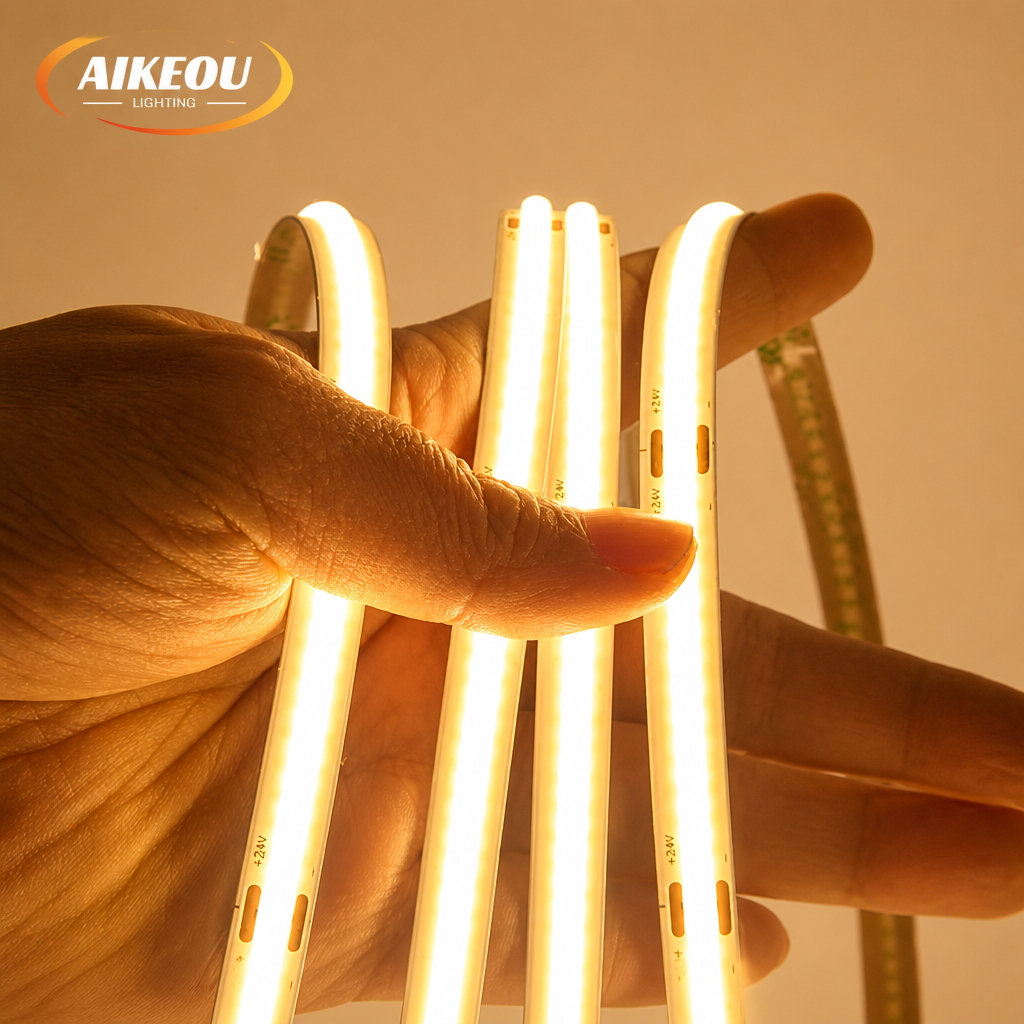
AIKEOU 2mm–5mm IP65 CCT Dimmable 12V/24V Smart Outdoor Waterproof Flexible COB LED Strip Light
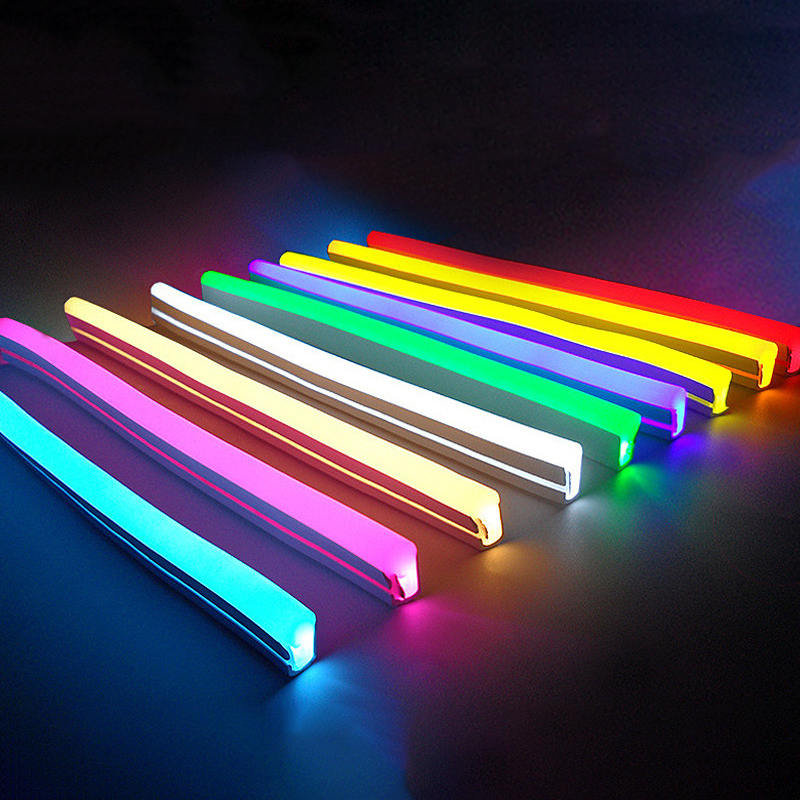
Silicon Separated Split Neon Tubes 6mm/8mm 12V IP65 Flexible S/Zigzag Shape LED Neon Lights
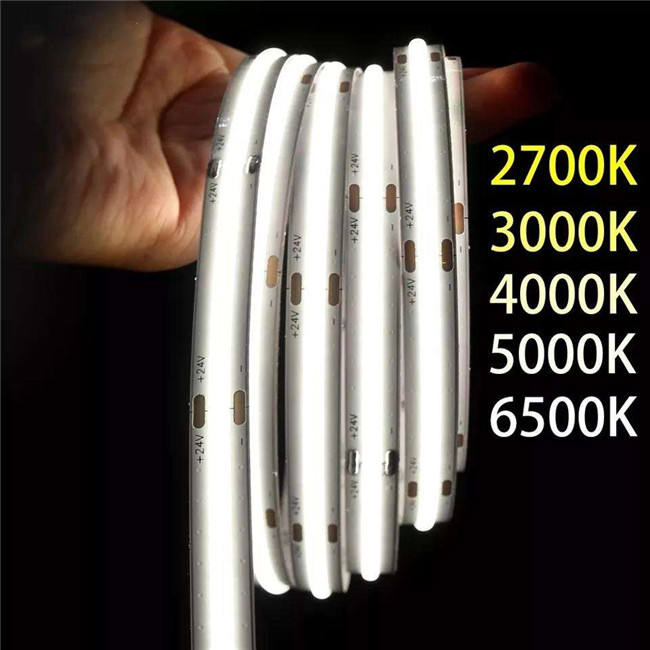
Aikeou 528LEDs/m 10mm 14W/m IP20 12V/24V Smart Voice Control Cuttable High-Density COB LED Strip
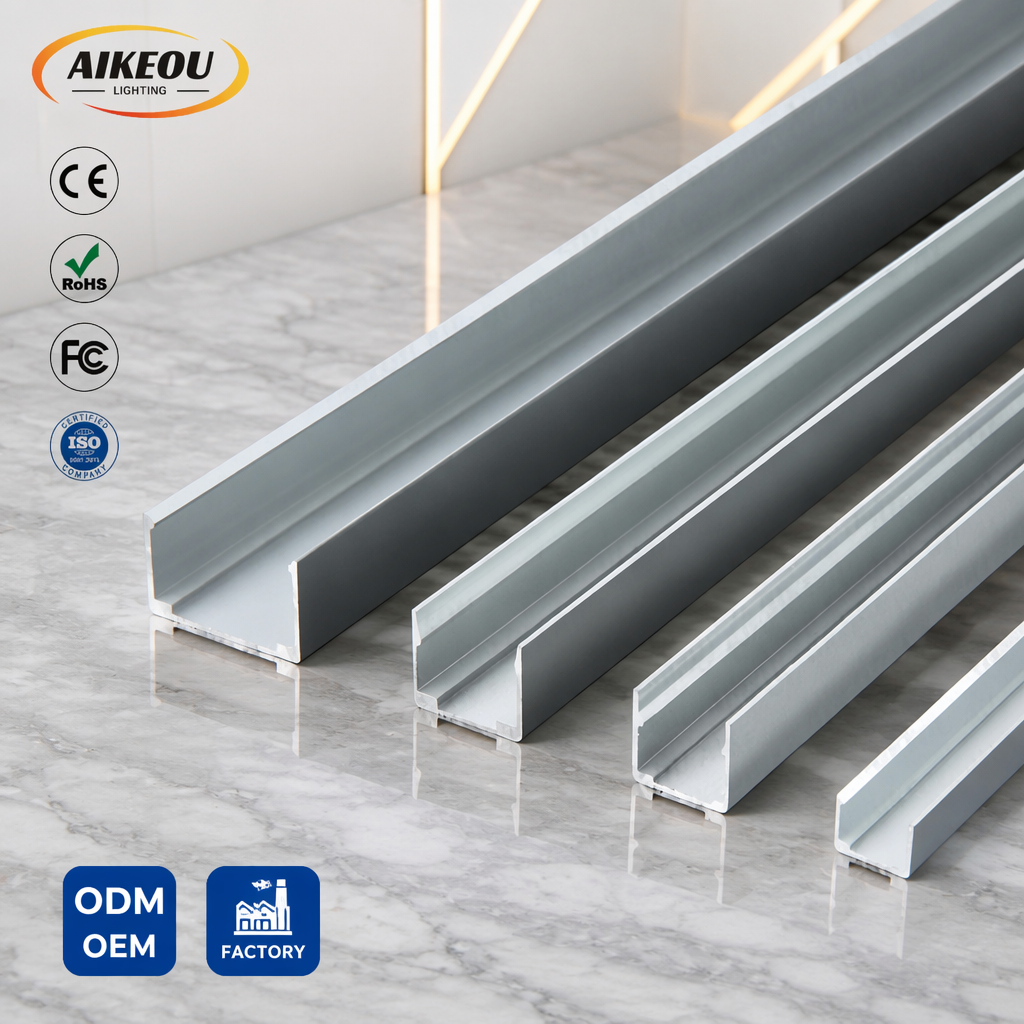
Aikeou Flexible Ribbon Tape LED Neon Flex Strip Light 5V/12V/24V CRI 90 Dimmable Tape
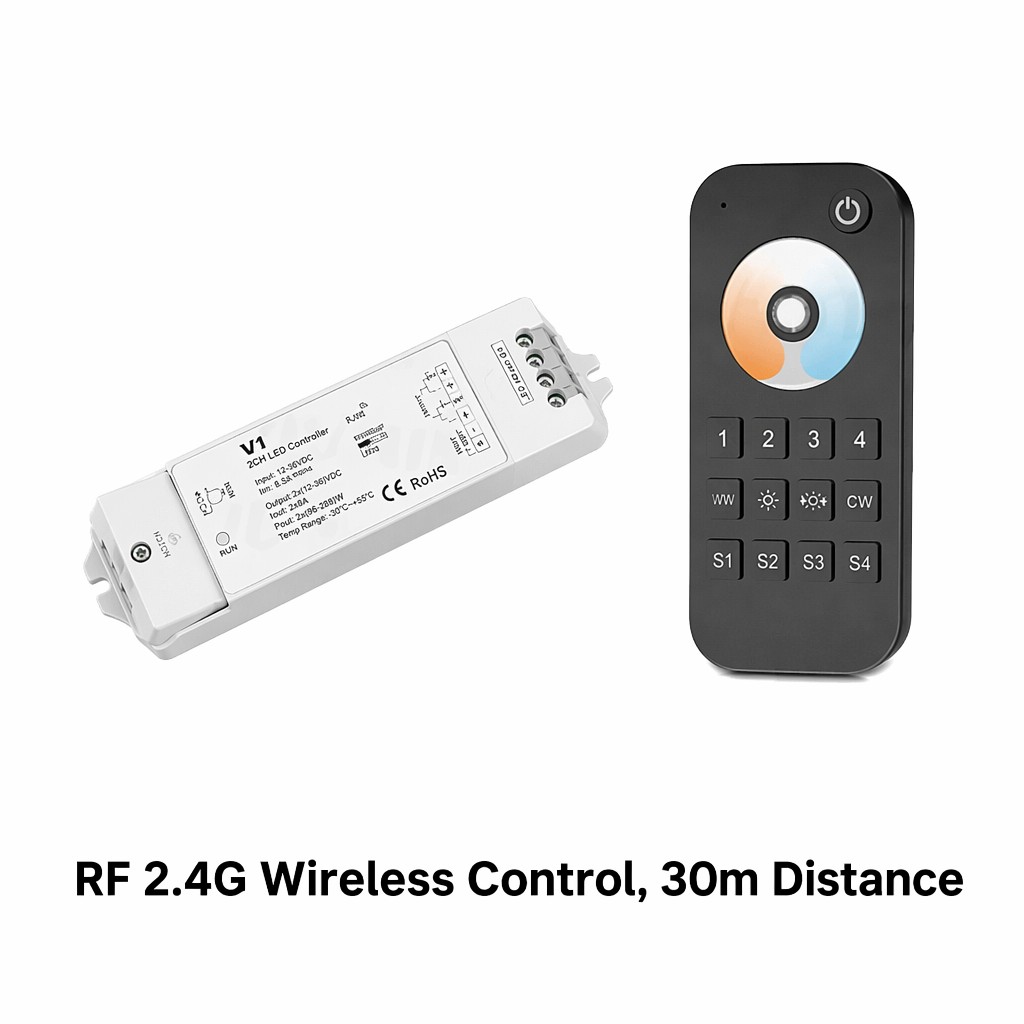
RF 2.4G Smart LED Controller V1 V3 VP Series RGB/RGBW/RGBCCT PWM & SPI Dimmer DC 12V-24V

AI-powered Wellness & Light Therapy Electrothermal Systems (Custom OEM Commercial Hardware)
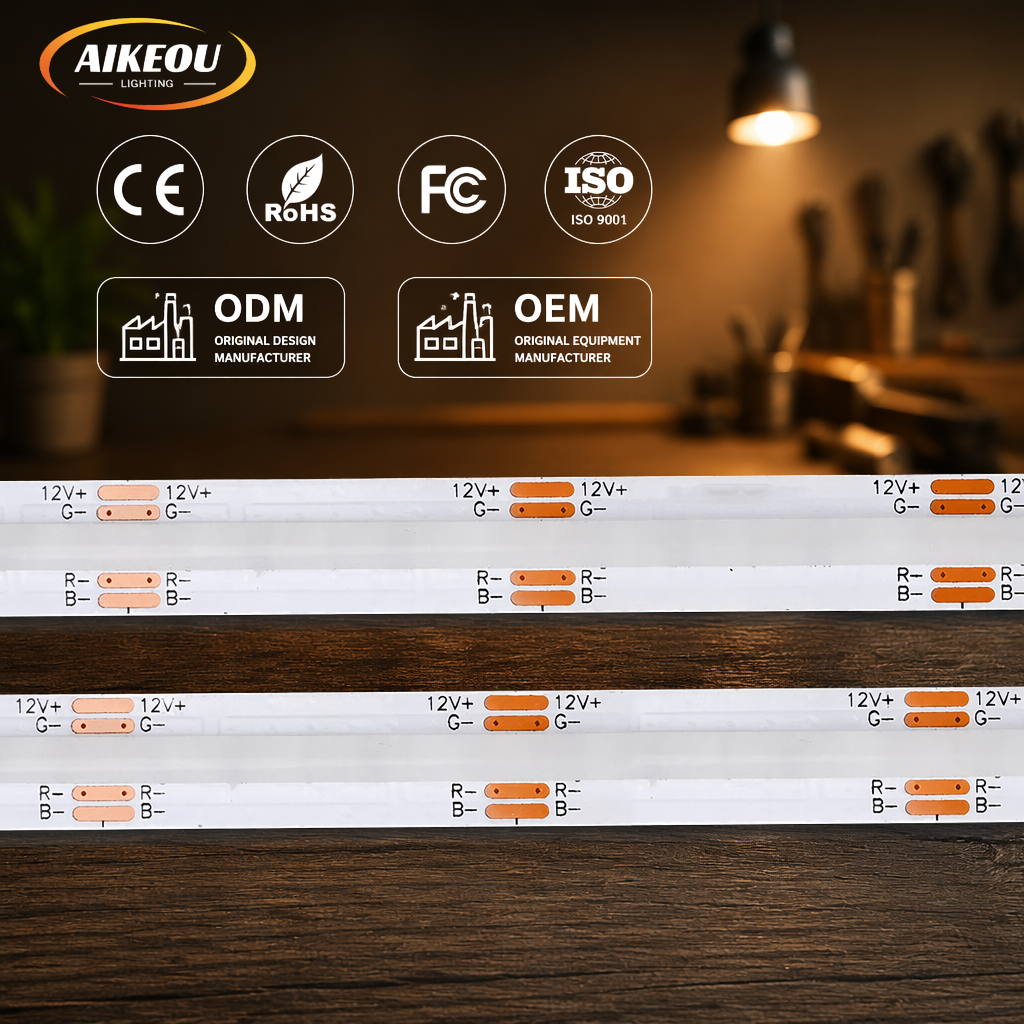
Wholesale Aikeou 576LEDs/m 10mm RGB COB Flexible Strip Light DC 12V/24V Remote Dimmable Silicone
Strategic B2B Sourcing & Procurement Trends (2025–2030)
As global energy frameworks become increasingly stringent and architectural specifications shift toward integrated lighting design, procurement directors and OEM brand managers must adjust their sourcing frameworks. The linear lighting sector is undergoing a fundamental transition driven by regulatory pressures, digital convergence, and advancements in photrometric efficiency. Below is an engineering-level evaluation of strategic sourcing vectors shaping the wholesale market over the next decade.
1. Stringent Energy Efficiency Standards (EU ErP Directive & Title 24 Compliance)
Global regulatory mandates—specifically the European Union's Energy-related Products (ErP) Directive (EU 2019/2020) and California's Title 24 JA8 requirements—are raising the minimum luminous efficacy baseline for flexible strip lighting. Sourcing legacy SMD 3528 or SMD 5050 strips with efficacy ratings below 100 lm/W presents severe compliance risks for importers. Future-proof procurement requires adopting high-density Flip-Chip COB (Chip-on-Board) and CSP (Chip Scale Package) architecture yielding 130 lm/W to 160 lm/W at nominal operating current.
Custom OEM orders must now prioritize thermal dissipation metrics. Lower junction temperatures ($T_j < 75^\circ\text{C}$) directly translate to reduced lumen depreciation, ensuring compliance with LM-80 testing thresholds and TM-21 lifetime extrapolations exceeding 50,000 operational hours ($L_{80}B_{10}$).
2. Transition from Discrete SMD Hotspots to Continuous Dotless COB Matrices
Architectural lighting design has permanently moved away from pixelated point sources. Visible LED "hotspots" require deep aluminum extrusions with thick frosted diffusers, which increase installation depth and total bill-of-materials (BOM) costs. Sourcing trends favor ultra-narrow, dotless COB flexible light strips featuring continuous phosphor encapsulation over high-density flip-chip arrays (up to 576 LEDs/m or 840 LEDs/m).
This structural change allows lighting designers to utilize shallow profile extrusions as slim as 3mm to 5mm without shadow lines or pixelation, opening new possibilities for cabinet integration, retail displays, and flush architectural coves.
3. Digital Control Convergence: SPI, Matter, DALI-2, and Wireless Mesh Integration
Commercial linear lighting procurement is increasingly tied to building automation systems (BAS) and smart home ecosystems. B2B buyers now demand driver and strip compatibility across multiple protocol standards:
- Addressable Pixel Dynamics: Transitioning from simple analog RGB to addressable SPI/PWM controllers featuring single-pixel IC control (e.g., WS2812B, WS2811, SK6812) for dynamic spatial illumination.
- Unified Smart Ecosystems: Direct interoperability with Matter-over-Thread and Zigbee 3.0 gateways, eliminating proprietary bridge dependency.
- High-Resolution Dimming: Integration with DALI-2 (IEC 62386) and 0-10V flicker-free dimming drivers supporting 16-bit smooth logarithmic dimming curves down to 0.1%.
4. Customization as a Standard Business Requirement
Off-the-shelf catalog sourcing no longer provides competitive differentiation for lighting distributors or fixture manufacturers. Winning market strategies rely on comprehensive ODM/OEM capabilities. Exporters must provide full customization of critical physical and electrical parameters: rolled-annealed (RA) copper PCB thickness (2oz to 3oz for minimal voltage drop), custom cut-length increments (e.g., Mini-Cut technology down to 10mm segments), tailored Color Rendering Index (CRI Ra > 95, R9 > 80), and specialized IP rating extrusions (IP68 full silicone co-extrusion).
Technological Evolution: COB vs. Traditional SMD
Understanding the Structural Differences Shaping Next-Generation Linear Lighting Systems.
Chip-on-Board Architecture
Bare flip-chips are bonded directly to the copper flexible PCB substrate without wire bonding. The entire chip layout is encapsulated under a continuous linear silicone-phosphor layer, achieving an ultra-wide 180° beam angle and eliminating light degradation caused by traditional packaging wire fatigue.
Color Uniformity & Binning
Adhering strictly to 2-step or 3-step MacAdam Ellipse (SDCM < 3) binning protocols. Through automated spectral sorting during encapsulation, batch-to-batch CCT variation is virtually imperceptible to the human eye, solving color drift challenges in multi-reel commercial project installations.
Integrated Waterproofing
Progressing from yellowing-prone PVC jackets to solid silicone integrated co-extrusion technology (IP65/IP67/IP68). This material evolution offers complete UV resistance, anti-gas corrosion protection, high flame retardancy (UL94-V0), and thermal stability across extreme temperatures (-40°C to +80°C).
Engineering Parameter Matrix
Comprehensive Performance Comparison for Technical Sourcing Evaluation.
| Performance Indicator | High-Density COB Strip | Standard SMD Strip (5050/2835) | Silicone Neon Flex |
|---|---|---|---|
| Luminous Efficacy | 110 – 140 lm/W | 80 – 110 lm/W | 70 – 95 lm/W |
| LED Density (per meter) | 320 to 840 chips/m | 30 to 120 LEDs/m | 120 to 240 LEDs/m |
| Beam Angle | 180° Wide Emission | 120° Directional | 270° – 360° Diffusion |
| Hotspot Elimination | 100% Dotless (No Profile Required) | Visible Hotspots without Diffuser | Smooth Surface Uniformity |
| Color Fidelity (CRI / TM-30) | CRI Ra > 90 / 95 (R9 > 80) | CRI Ra > 80 / 90 | CRI Ra > 80 / 90 |
| Minimum Cut Length | Mini-Cut (Up to 5mm – 10mm) | 25mm – 100mm | 10mm – 50mm |
| Thermal Resistance ($R_{th}$) | Ultra-Low Substrate Thermal Drift | Moderate Heat Accumulation | Requires Aluminum Channel Heat Sinking |
Enterprise OEM/ODM Manufacturing Capabilities
Shenzhen Vokud Technology Co., Ltd. is a custom manufacturer and global exporter specializing in engineered linear LED lighting solutions. Verified on-site by SGS Group, our production facility serves global lighting brands, commercial importers, and architectural project contractors who require strict binning control, verified lumen maintenance, and full regulatory compliance.
1. Fully Automated Precision Manufacturing & Quality Control
Our Shenzhen factory operates high-speed, automated die-bonding lines, high-precision phosphor dispensing machinery, and continuous high-temperature SMT reflow ovens. Quality assurance is integrated into every stage of production:
- Incoming Raw Material Inspection (IQC): 100% testing of bare LED die wavelengths, copper substrate purity, 3M adhesive thermal conductivity, and silicone resin viscosity.
- In-Process Quality Control (IPQC): Optical inspection systems (AOI) monitor flip-chip alignment and ribbon solder joint integrity in real time.
- 100% Aging & Photometric Verification: Every production reel undergoes a continuous 4-hour burn-in aging test followed by integrating-sphere spectroradiometer analysis for flux, CCT, CRI, and SDCM verification.
2. Customization Workflow: From Design Brief to Mass Production
We provide an efficient 8-step OEM/ODM workflow designed to minimize development lead times while ensuring technical precision:
- Technical Requirement Assessment: Analysis of operating voltage (5V, 12V, 24V, 48V, or high-voltage 110V/220V), target wattage, CCT spectrum, PCB width (2.7mm to 12mm), and environmental sealing specs.
- Circuit & Substrate Engineering: Layout optimization using 2oz/3oz copper FPC to mitigate voltage drop over long continuous runs.
- Prototyping & Photometric Testing: Production of functional pre-series samples within 3 to 5 working days using mass-production tooling.
- Compliance File Generation: Comprehensive test documentation including CE, RoHS, FCC, EMC, and LVD reports ready for customs clearance and retail distribution.
3. Supply Chain Reliability & Global Export Standards
With an export footprint spanning over 60 countries across North America, Europe, Latin America, and the Middle East, our logistics team manages all export documentation, anti-static reel packaging, custom private-label branding, and customs tariff classification. Our bilingual engineering sales teams (English & Spanish) ensure technical clarity from initial inquiry to post-installation technical support.
Frequently Asked Procurement Questions
Clear, Authoritative Answers to Essential Technical and Commercial Inquiries.
What is the Minimum Order Quantity (MOQ) for custom OEM/ODM LED strip orders?
How do you prevent voltage drop on extended continuous LED strip runs?
What international quality certifications do your LED strip light lines carry?
What is the difference between COB and traditional SMD LED flexible strip lights?
How does your factory ensure color consistency (SDCM) across different production batches?
Which IP waterproof encapsulation method should be selected for outdoor or sauna environments?
Can you manufacture custom addressable RGBIC strips with specific IC protocols?
Partner with a Trusted OEM/ODM LED Strip Manufacturer
Streamline your supply chain with engineering-grade COB, addressable RGBIC, and custom linear lighting solutions tailored to your brand's specifications.
