Precision Constant Voltage & COB LED Strip Portfolio
Engineered for high color fidelity (CRI90+), superior binning consistency (3-step MacAdam Ellipse), and thermal resilience under Canterbury climatic conditions.
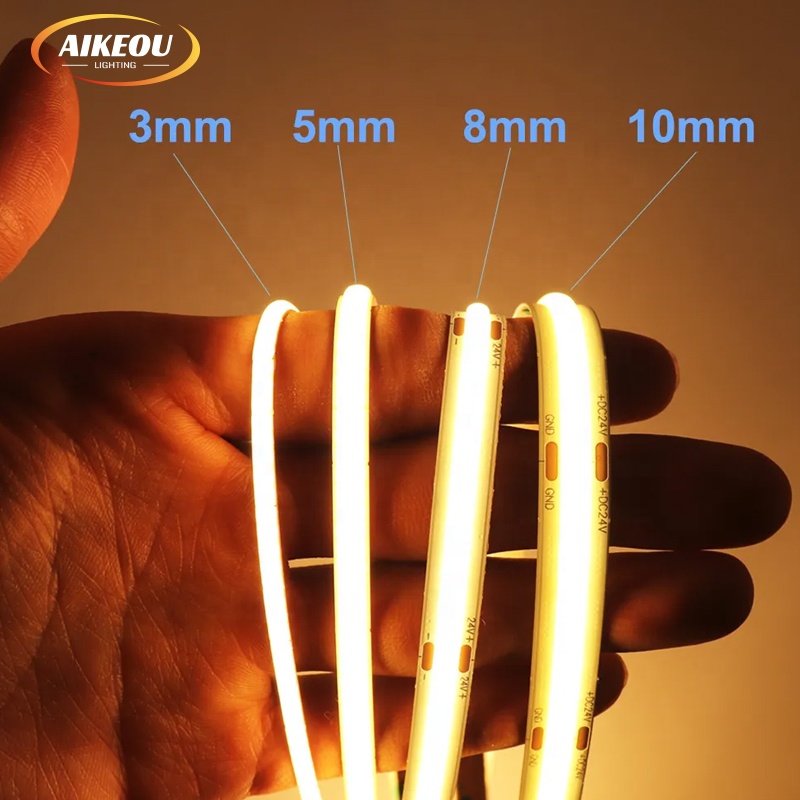
Aikeou 480/528LEDs/m 8mm 14W/m DC12V DC24V IP20 Flexible Copper PCB COB Strip Light
View Specifications →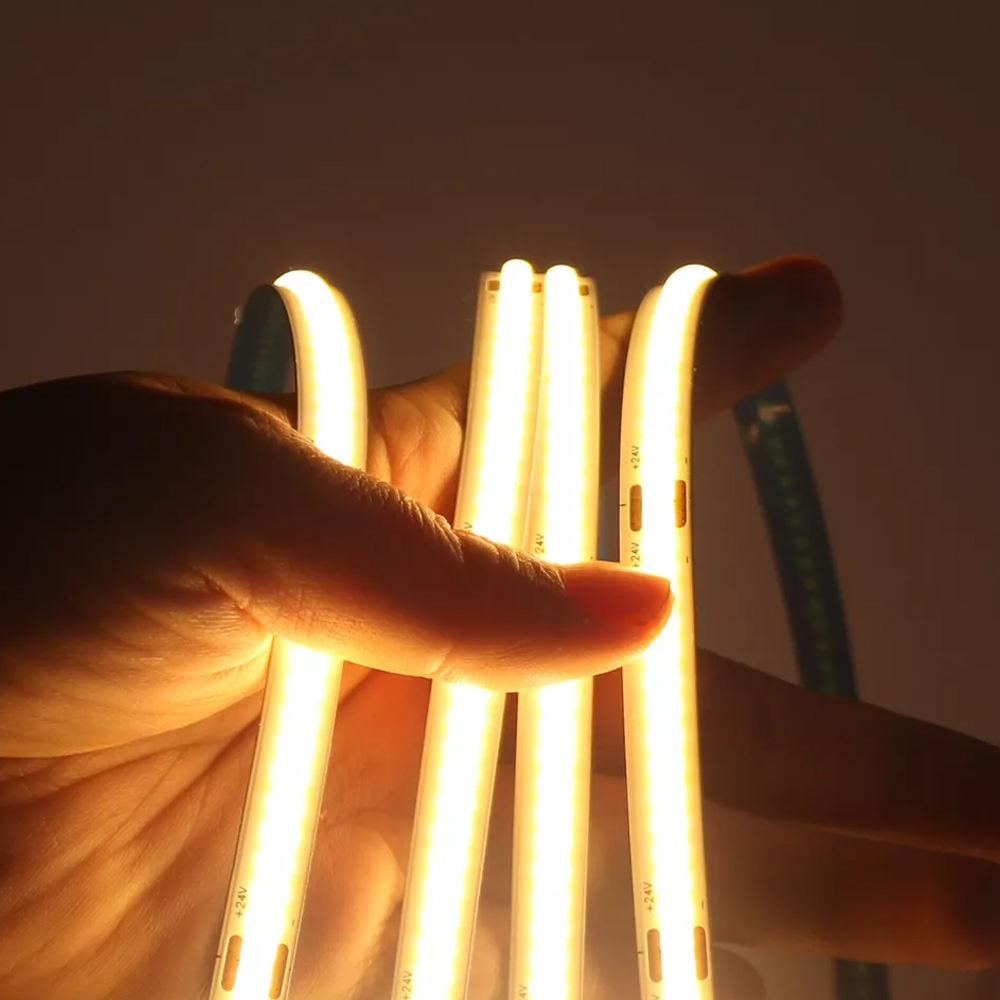
Aikeou 480LEDs/m 8mm 11W/m 24V IP20 3000K 4000K 6500K CRI90 Flexible Copper PCB COB LED Light Strip
View Specifications →
AI Bionic Infrared Physiotherapy Robotic Meridian Muscle Care System (Specialized OEM Tech)
View Specifications →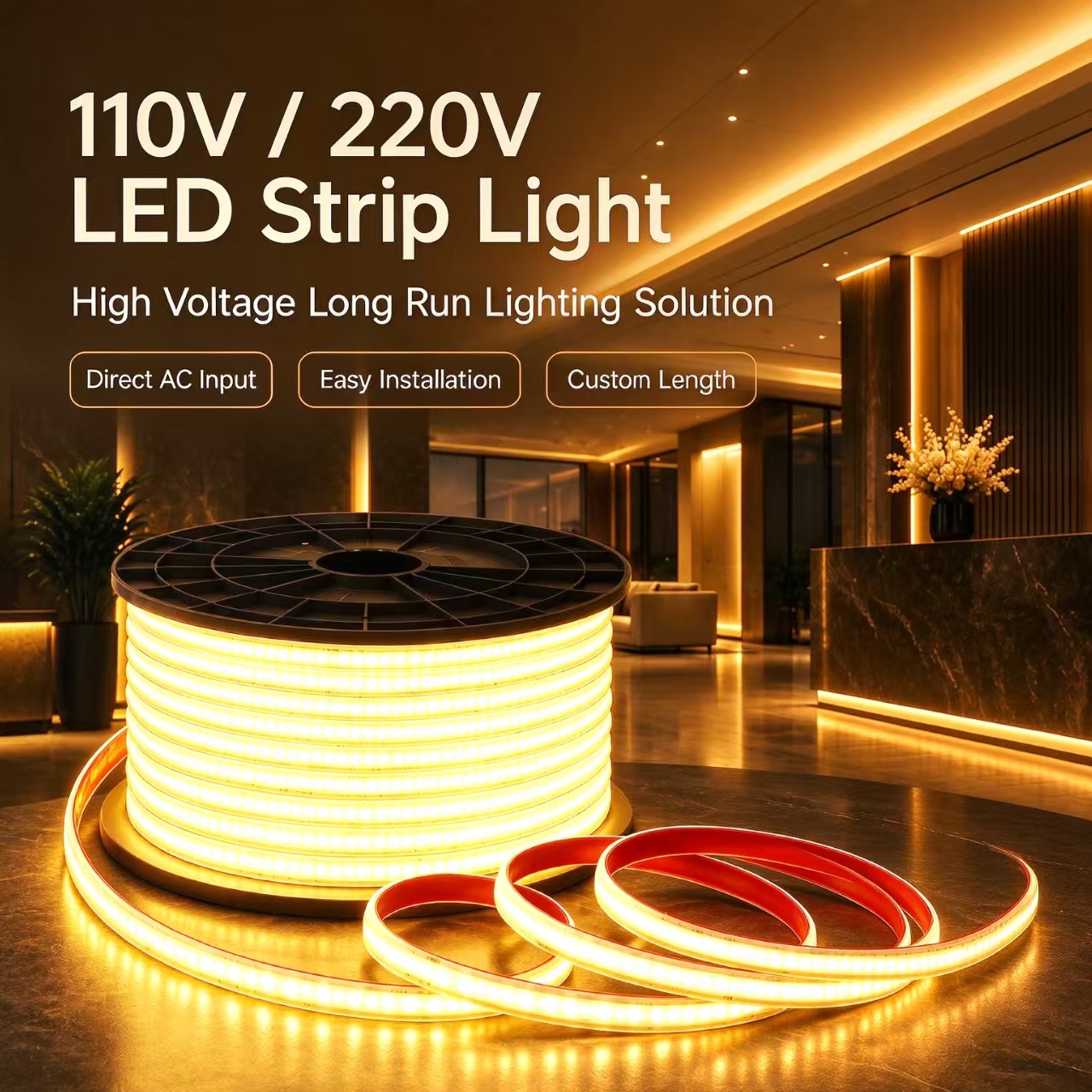
AIKEOU Outdoor Waterproof COB LED Strip Light IP65/IP68 110V 220V Silicone Extrusion
View Specifications →
COB LED Strip 2.7mm Micro-Width 384 LED/m Monochrome 12V 24V Flexible Copper Body
View Specifications →
8W & 14W/M Connected Smart COB LED Strip Light Dimmable Flexible PCB Body DC 5V 12V 24V
View Specifications →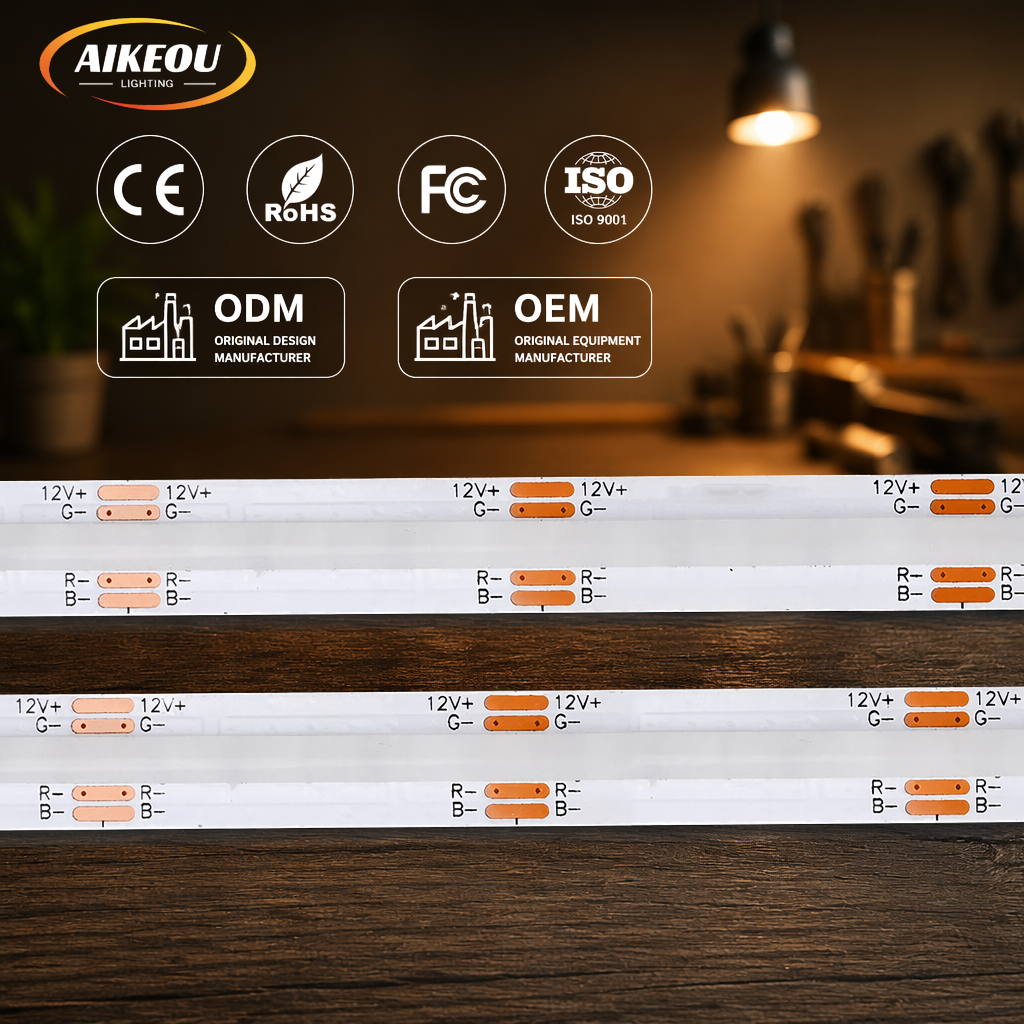
Wholesale Aikeou 576Leds/m IP20 Landscape 10MM RGB COB LED Strip Light 14W DC 24V/12V
View Specifications →
Aikeou 400D 3mm Slim 7W Copper COB 400LED/m Monochrome High CRI90 WiFi / App Control
View Specifications →Strategic Procurement Analysis: Constant Voltage LED Tape for Christchurch Construction
The Greater Christchurch urban center and the broader Canterbury region represent one of Australasia's most dynamic architectural lighting markets. Following the extensive post-earthquake rebuilds, Christchurch's commercial landscape—ranging from the vibrant central business district (Te Pae Christchurch Convention Centre, Riverside Market, Cashel Street retail arcades) to expanding logistics parks in Hornby and Rolleston—demands ultra-reliable linear lighting infrastructure. Simultaneously, high-end residential architectural developments in Cashmere Hills, Merivale, and Fendalton require sophisticated, dotless continuous luminance that seamlessly integrates with modern home automation platforms.
For New Zealand electrical wholesalers, lighting importers, and commercial electrical contractors (members of Master Electricians NZ), procuring Constant Voltage (CV) LED Strip Lights from Tier-1 Chinese manufacturers requires rigorous technical scrutiny. Operating a 12V DC or 24V DC secondary circuit across long linear runs presents distinct engineering challenges, including thermal degradation, voltage drop, and strict compliance with WorkSafe New Zealand's Electrical Safety Regulations (ESS) and Energy Efficiency Regulations.
1. The Architectural & Engineering Shift to COB (Chip-on-Board) Technology
Traditional Surface-Mounted Device (SMD) LED tapes—such as SMD 2835, 5050, or 3014—rely on discrete plastic-packaged chips spaced at intervals ranging from 60 to 240 LEDs per meter. In modern architectural installations with shallow aluminum extrusions (less than 10mm deep) or handle-less cabinetry, SMD strips produce visible light hotspots ("pixellation"). Correcting this under SMD technology requires thick frosted diffusers, which reduce total luminous efficacy by 25% to 35%.
Chinese OEM manufacturing has evolved through Chip-on-Board (COB) linear tape packaging. By bonding flip-chips directly onto a 3-ounce or 4-ounce flexible copper Printed Circuit Board (FPCB) and encapsulating them under a continuous, phosphor-doped silicone extrusion layer, density increases dramatically to 320, 480, 528, or even 576 chips per meter.
- Zero Hotspot Luminance: COB produces an unbroken, homogenous line of light even when placed inside ultra-thin 3mm micro-profiles without diffusers.
- 180-Degree Beam Dispersion: Eliminates shadow lines and provides uniform wall washing inside acoustic ceiling coves and timber-clad feature walls popular in Canterbury architectural designs.
- Enhanced Thermal Dissipation: Eliminating individual lead-frame packages allows thermal energy to transfer directly from the die junction into the heavy-gauge copper substrate, extending chip operational life beyond 50,000 hours (L70/B10).
2. Voltage Drop Dynamics & Circuit Engineering: 12V DC vs. 24V DC
In constant voltage systems, maintaining voltage stability along the entire run is essential for preventing color shift and light output attenuation (dimming towards the far end of the strip). The power loss ($P_{loss}$) across an FPCB trace is governed by Joule's Law:
Ploss = I2 × R
Where $I$ is current in amperes and $R$ is trace resistance. When supplying a 14.4W/m load over a single 5-meter feed:
- At 12V DC: $I = (14.4\text{W} \times 5\text{m}) / 12\text{V} = 6.0\text{ Amperes}$.
- At 24V DC: $I = (14.4\text{W} \times 5\text{m}) / 24\text{V} = 3.0\text{ Amperes}$.
Because power loss scales exponentially with current ($I^2$), operating at 24V DC reduces trace heat generation and voltage drop by 75% compared to 12V DC. For Christchurch electrical contractors executing long continuous runs in hotel corridors, retail perimeter coves, or perimeter building façades, 24V DC (or specialized 48V DC long-run constant-current IC strips) is the industry standard for preventing driver overload and maintaining uniform lumen output across 10-meter single-ended feeds.
Class 2 Power Architecture
Designed for seamless pairing with Class 2 SELV drivers, ensuring compliance with New Zealand AS/NZS 60598 safety extra-low voltage standards.
Color Binning Consistency
Guaranteed <3-Step MacAdam Ellipse batch control ensures identical Color Temperature (CCT) matching across multiple shipping containers.
Severe Weather Protection
IP67 silicone co-extrusion and IP68 solid silicone filling withstand Christchurch frost, coastal salt spray in Lyttelton, and UV exposure.
Selecting the Correct LED Strip Architecture for NZ Standards
A side-by-side technical evaluation for Christchurch lighting engineers and electrical procurement managers.
| Performance Parameter | Standard SMD 2835 Strip | High-Density COB Strip | Outdoor IP68 COB Strip |
|---|---|---|---|
| Luminous Efficacy | 90 - 110 lm/W | 100 - 125 lm/W | 95 - 115 lm/W |
| Color Rendering Index (CRI) | CRI80 standard / CRI90 optional | CRI90+ standard / CRI97 premium | CRI90+ standard |
| Max Single-Feed Run Length | 5m (at 24V) | 10m (at 24V CV with 3oz copper) | 10m - 15m (Integrated IC) |
| AS/NZS 60598.2.21 Suitability | Requires additional profile protection | Indoor dry/damp cove rating | Direct outdoor / coastal splash rated |
| Dimming Protocol Compatibility | TRIAC, 1-10V, DALI-2 | TRIAC, 1-10V, DALI-2, Zigbee 3.0 | DMX512, DALI-2, App Control |
| Canterbury Application Focus | Budget commercial backlighting | Residential coves, retail cabinetry | Exterior façades, gardens, heritage builds |
Localized Lighting Applications Across Greater Christchurch
Engineering linear lighting for the Canterbury environment requires an understanding of localized architectural practices, structural materials, and atmospheric conditions:
A. Commercial & Hospitality Hubs (CBD, Te Pae, Riverside Precinct)
In Christchurch CBD commercial developments, linear LED lighting is extensively integrated into acoustic ceiling baffles, stone reception desks, and under-bar overhangs. High CRI90+ COB LED strips operating at 2700K warm white or 3000K warm-natural white ensure that natural timber finishes (such as local rimu and mataī veneers), stone counter surfaces, and merchandise display vivid, accurate tones without color distortion.
Integration with centralized building management systems (BMS) utilizing DALI-2 (Digital Addressable Lighting Interface) drivers requires that constant voltage LED tape exhibits clean dimming curves down to 0.1% without micro-flicker or high-frequency acoustic noise.
B. High-End Residential Developments (Fendalton, Merivale, Cashmere Hills)
Architectural homes in Cashmere Hills and Christchurch's western suburbs feature extensive perimeter cove lighting, floating staircases, and handle-less kitchen island joinery. Micro-width COB strips (2.7mm to 5mm PCB) allow joiners and cabinet makers to mill ultra-fine 4mm dado channels directly into custom cabinetry, completely hiding the light source while providing soft ambient task lighting.
C. Exterior Façade & Landscaping (Lyttelton, Sumner, Port Hills)
Christchurch's coastal zones (Sumner, Redcliffs, Lyttelton Harbour) experience elevated airborne salt spray, severe seasonal temperature swings (ranging from sub-zero winter frosts to 30°C+ dry summer days), and intense UV radiation. Standard PVC-jacketed LED strips yellow, crack, and fail within 12 to 18 months under these conditions.
Our export-grade outdoor constant voltage strips utilize gas-phase co-extruded UV-stabilized silicone encapsulation (IP67/IP68). Silicone maintains elasticity from -40°C to +150°C, completely resists salt-spray corrosion, and guarantees optical clarity without yellowing, making it ideal for exterior deck lighting, timber pergola perimeter accents, and concrete retaining wall steps in hillside properties.
Why New Zealand Importers Partner Direct with Our Shenzhen Facility
SGS-Verified Manufacturing
Our manufacturing plant, automated surface-mount (SMT) lines, die-bonding machinery, and QA lab undergo strict annually verified on-site audits by SGS Group.
Custom OEM/ODM Packaging
Full customization of reel lengths (5m, 10m, 50m, 100m continuous), custom PCB silk-screen logo printing, branded anti-static packaging, and customized EAN-13 barcode labeling.
Lyttelton & Christchurch Airport Freight Logistics
Established export freight routes directly to the Port of Lyttelton (Sea Freight LCL/FCL) and Christchurch International Airport (CHC Express Air), with streamlined customs documentation support.
Frequently Asked Questions by Christchurch Buyers
Essential guidance on importing constant voltage LED tape, New Zealand electrical compliance, and logistics.
What electrical safety certifications are required to import LED strips into New Zealand?
In New Zealand, low-voltage LED strip lights operating under SELV (12V DC or 24V DC) fall under the Electrical Safety Regulations. To sell legally in Christchurch and across New Zealand, importers must hold a Supplier Declaration of Conformity (SDoC), supported by test reports covering IEC/EN 60598-1 and IEC/EN 60598-2-21 standards. Our factory provides full CE, RoHS, FCC, and EMC test documentation to support your compliance files.
How do you address thermal management when LED strips are installed in insulated ceilings?
New Zealand building codes (NZS 4214) require high insulation levels in residential builds. When LED strips are installed in shallow recessed extrusions surrounded by ceiling insulation, heat build-up can accelerate lumen depreciation. We utilize double-layer 3oz/4oz copper PCBs and recommend maintaining a maximum power density of 10W-14W/m for insulated coves, ensuring junction temperatures stay below critical thresholds.
What is the minimum order quantity (MOQ) for custom OEM orders?
For standard catalog COB, CCT, and RGB LED strip configurations, our baseline factory MOQ starts at just 5 meters per specification. Custom PCB designs, tailored CCT color temperatures, or OEM private-label retail reel packaging typically carry a project-specific MOQ of 500m to 1,000m following engineering review.
How do your COB strips ensure color matching across separate shipments?
We enforce a strict 3-Step MacAdam Ellipse color binning protocol across all LED die bonding batches. Every order's chromaticity coordinates ($x, y$) are digitally archived. When Christchurch wholesalers place re-orders months later, we match the exact LED binning to prevent color variance between separate production runs.
What are the typical sea and air freight lead times to Christchurch?
Standard production lead time is 7 to 12 working days following sample sign-off. Express air freight to Christchurch Airport (CHC via DHL/FedEx or direct air cargo) takes approximately 4 to 7 days. Sea freight LCL/FCL shipments from Shenzhen/Ningbo port directly to the Port of Lyttelton typically take 18 to 25 days transit time.
Partner with China's Premier Constant Voltage LED Strip Manufacturer
Expand your product catalog or secure factory-direct pricing for your upcoming commercial construction project in Christchurch. Connect with our engineering team for instant technical datasheets, photometrics (.IES files), and wholesale quotation files.
