Featured LED Dimming Controllers & COB Systems
Precision-engineered PWM, RF 2.4G, Wi-Fi, and CCT-tunable linear lighting solutions certified for high-humidity coastal and commercial deployments.

Aikeou 320D 8mm 10w Dotless Strip CE RoHS FCC Certified, IP20, Customizable Color Tunable Smart COB Strip
View Product
High CRI90 Flexible Copper LED Light Panels Custom Cut Industrial Design CCT Color Tunable Sheets Warm White
View Product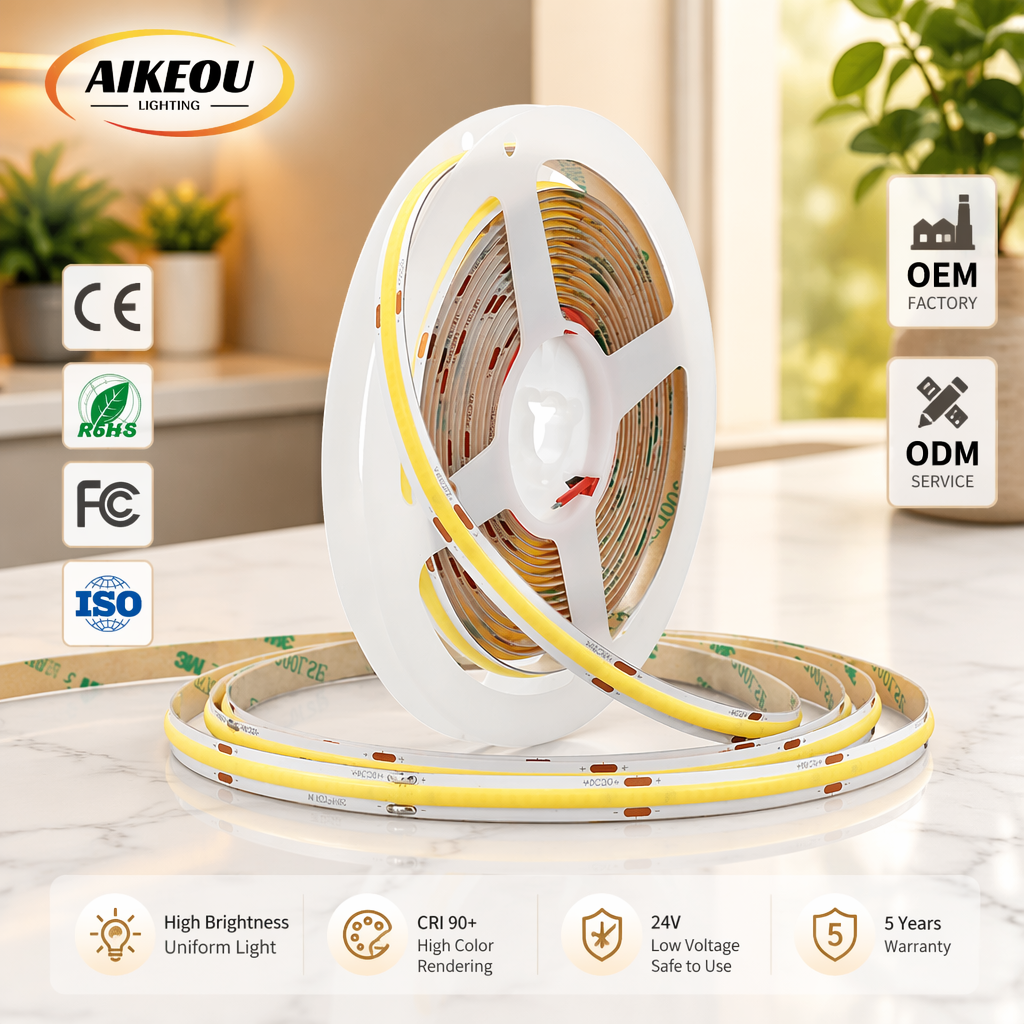
Aikeou 320LEDs/m 8mm 8W/m 12V/24V IP20 High Density Indoor COB LED Strip Light with WiFi for Control CRI90
View Product
AI-powered Wellness Integration System & Controller Probe Series for Commercial Facilities
View Product
Aikeou 400-480LEDs/m 3-8mm 7W/m IP20 12V/24V Wholesale Flexible Soft COB Strip Lights with Remote Control
View Product
Cob LED Strip 2.7mm 384 LED/m Monochrome 12v 24v Flexible Copper Body IP20 Uniform Light for Staircase Architecture
View Product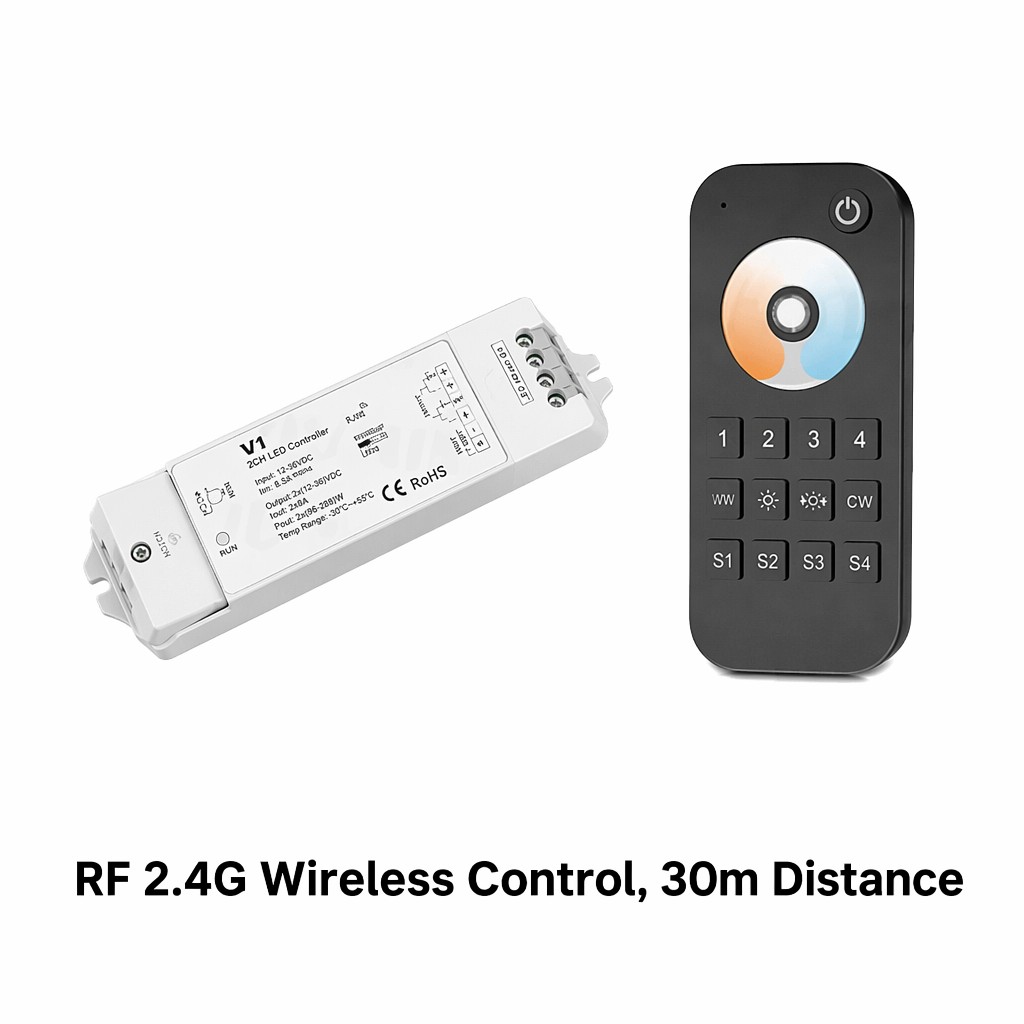
RF 2.4G Smart LED Controller V1 V3 VP Series RGB RGBW RGBCCT SPI Dimming PWM DC 12V 24V Receiver Module
View Product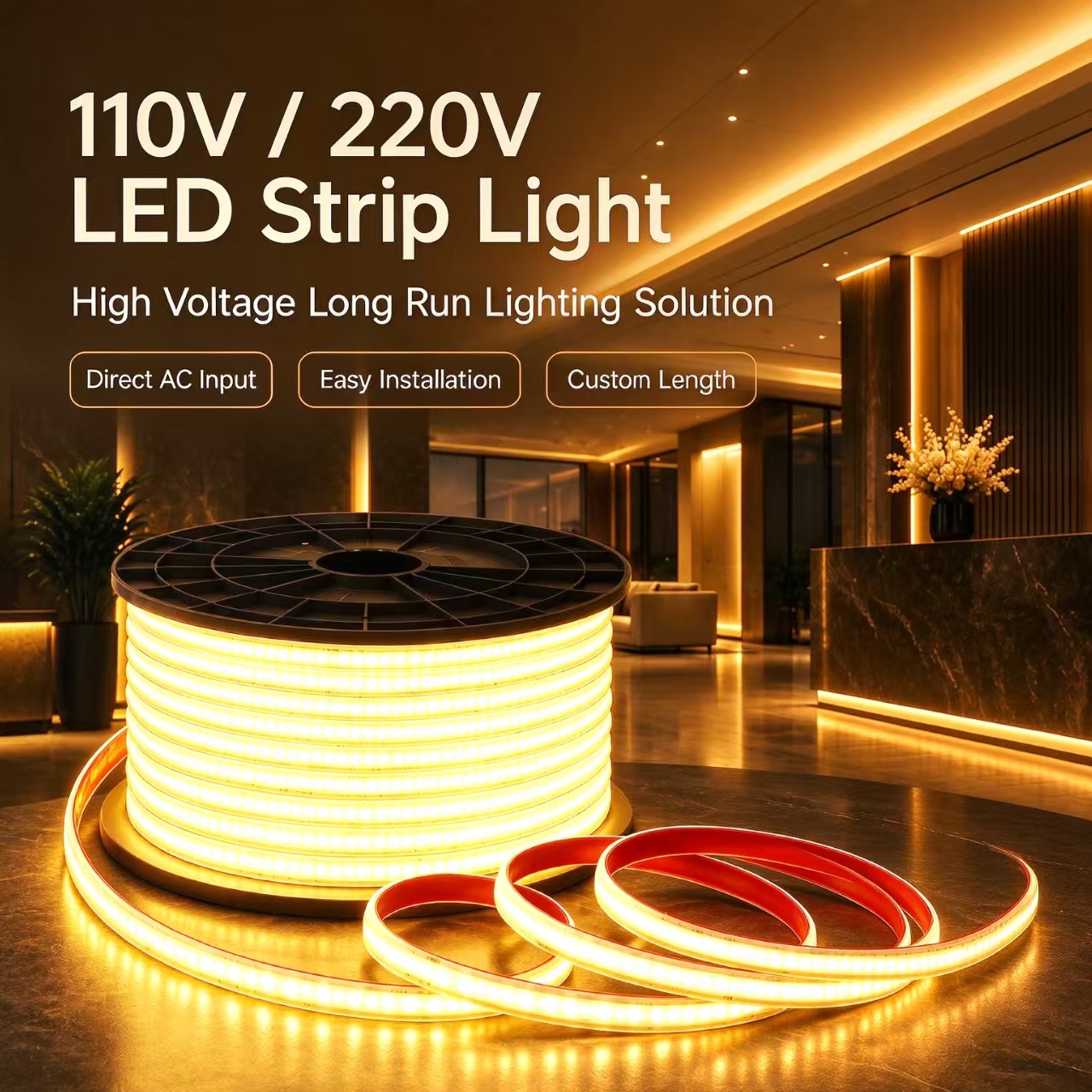
AIKEOU IP65/IP68 COB LED Strip 220V 110V High Voltage Outdoor Waterproof Dimmable Architectural System
View ProductState of LED Dimmer Control Technology in Coastal & Island Markets
An engineering analysis of pulse-width modulation (PWM), phase-cut dimming, and RF wireless protocol stability under island-grid environmental stresses.
The demand for advanced LED dimmer controllers across the Caribbean, specifically within localized commercial hubs such as Barrouallie in Saint Vincent and the Grenadines, has experienced a structural paradigm shift. As luxury eco-resorts, marine infrastructure, high-end residential estates, and public sector developments along the Leeward Coast modernize their lighting control systems, traditional analog dimming mechanisms are rapidly being replaced by high-precision, digital signal dimming interfaces.
Operating solid-state lighting (SSL) in tropical marine environments introduces severe environmental and electrical stress vectors. Grid power supplied by utility companies like St. Vincent Electricity Services Limited (VINLEC) can experience frequency harmonic variations and voltage surges caused by lightning storms or localized diesel-generator transitions. Furthermore, ambient air saturated with sodium chloride (salt spray) and sustained relative humidity exceeding 85% RH causes accelerated dielectric breakdown in low-quality LED driver circuitry and wireless dimming receivers. B2B procurement directors, mechanical and electrical (MEP) contractors, and lighting designers operating within the Barrouallie zone require dimming control architectures engineered specifically for high thermal dissipation, surge suppression, flicker-free low-end response, and long-range RF protocol resilience.
1. Pulse-Width Modulation (PWM) vs. Phase-Cut Dimming Protocols
For low-voltage direct current (DC 12V/24V/48V) linear LED strips and Chip-on-Board (COB) tapes, Pulse-Width Modulation remains the gold standard for maintaining exact Correlated Color Temperature (CCT) and Color Rendering Index (CRI ≥ 90). Analog amplitude reduction (constant current reduction) often induces color shift in phosphor-encapsulated LEDs when dimmed below 30% output. High-grade LED dimmer controllers engineered by direct Shenzhen factories utilize high-frequency switching MOSFETs that pulse the current at frequencies ranging from 2.0 kHz to 10.5 kHz.
This high-frequency switching eliminates perceptible stroboscopic effects and invisible micro-flicker, satisfying IEEE 1789-2015 safety recommendations for visual comfort in luxury hospitality venues, broadcast studios, and high-end residential interiors. Conversely, for retrofit projects where existing AC 110V/220V wiring infrastructure cannot easily accommodate dedicated control lines, leading exporters supply forward-phase (leading-edge TRIAC) and reverse-phase (trailing-edge ELV) AC dimmers equipped with dynamic load sensing and auto-calibrating trim settings to eliminate transformer buzz and pop-on latency.
2. Comparison Matrix: Dimming Controller Technologies for Island Applications
To assist MEP consultants and importers in Barrouallie with technical evaluation, the matrix below details the mechanical and electrical trade-offs of primary dimmer control topologies:
| Protocol Topology | Signal / Output Voltage | Max Wiring Distance | Salt-Spray & Humidity Tolerance | Primary Application in SVG Market |
|---|---|---|---|---|
| RF 2.4GHz Wireless (V1/V3/VP Series) | 2.4GHz ISM Band / Constant Voltage DC PWM | 30m (Auto-transmitting mesh nodes) | High (When paired with conformal-coated PCB) | Villa retrofits, cove lighting, multi-zone indoor hospitality without rewiring. |
| DALI-2 / DALI (IEC 62386) | Digital 2-wire bus (16V DC nominal) | 300m (over 1.5mm² twin-lead cable) | Very High (Galvanically isolated signal) | Luxury eco-resorts, institutional buildings, centralized smart automation networks. |
| 0/1-10V Analog Sink/Source | 0-10V DC Analog signal | 100m (Limited by voltage drop) | Moderate (Susceptible to signal decay over line length) | Commercial office spaces, retail showrooms, exterior flood lighting drivers. |
| Triac / Phase-Cut AC Dimming | AC 110V / 220V Phase Modulation | Dependant on AC breaker branch max load | High (Housed in standard wall gang boxes) | Legacy residential upgrades, direct main-voltage outdoor COB strip control. |
Localized Application Scenarios across Barrouallie & Leeward St. Vincent
Tailored control configurations engineered for coastal resilience, nautical luxury, and commercial energy conservation.
1. Waterfront Eco-Resorts & Luxury Villas
Along the coastal stretches of Barrouallie Bay and neighboring luxury developments, outdoor lighting requires seamless integration with architectural landscapes. Multi-channel RF 2.4G smart dimmers and SPI pixel controllers drive flexible CCT and RGBIC COB strips housed in IP68 silicone extrusions. Dimmers featuring smooth 0.1% dimming curves enable resort managers to transition dining decks from functional task lighting at dusk to ultra-warm 2200K ambient glow at night without color temperature drift.
2. Marine & Yachting Installations
Barrouallie’s historic maritime connection demands marine-grade low-voltage lighting control. Ultra-compact DC 12V/24V single-color and CCT dimmer controllers featuring reverse polarity protection, over-current cutoff, and conformal-coated internal circuitry are deployed inside yacht cabins, under-deck coves, and gangways. These receivers withstand battery charge fluctuations (from 11.5V to 14.8V DC alternator outputs) while maintaining unwavering output brightness.
3. Peak Electrical Efficiency & Grid Retrofits
With island electricity rates closely tied to imported diesel fuel surcharges, commercial operators in Saint Vincent prioritize energy reduction. High-efficiency 0-10V and DALI-2 dimming receivers linked with photocells and occupancy sensors automatically adjust lux levels based on ambient sunlight. By dimming continuous LED COB runs by just 30% during off-peak occupancy hours, commercial facilities reduce overall HVAC and lighting power demand by up to 25%.
Local Procurement Trends & Import Specifications in St. Vincent & the Grenadines
Understanding regional compliance, logistics routes, and engineering expectations for wholesale dimming equipment.
The market for LED dimming controllers and linear strip lights in Barrouallie is undergoing rapid expansion driven by national infrastructure upgrades, expanding tourism investments, and residential modernization. Contractors and electrical wholesalers in Saint Vincent are moving away from unbranded, low-cost domestic consumer components in favor of direct factory partnerships with established Chinese OEM manufacturers who offer verified test reports, long-term warranties, and customized engineering support.
Key Market Drivers Shaping Local Demand:
- Shift Toward Wireless Smart Control Mesh: Electrical installers in the region increasingly favor RF 2.4GHz auto-synchronizing controllers and Wi-Fi/Tuya smart gateway integration over complex control wire runs. Wireless dimming receivers that function as mesh repeaters allow large villa installations to transmit control signals reliably through thick concrete and coral-stone masonry walls without physical control cabling.
- Demand for All-In-One Multi-Protocol Receivers: Wholesalers in Kingstown and Barrouallie seek inventory flexibility. Controllers capable of accepting multiple input signals (e.g., 5-in-1 receivers supporting Single Color, CCT, RGB, RGBW, and RGBCCT modes) drastically reduce stocking SKU complexity while catering to diverse project specifications.
- Strict Compliance with International Safety Standards: Importers require full compliance documentation for customs clearance and insurance underwriting. Dimmers exported to the SVG market must hold valid CE (EMC/LVD), RoHS, and FCC certifications. Industrial projects frequently demand UL component recognition or SGS factory audit documentation to verify quality control standards at origin.
- Direct Air & Sea Freight Logistics from Shenzhen Hubs: Importers in Barrouallie utilize consolidated maritime shipping routes from Shenzhen to Port Kingstown or air express hubs via Barbados and Trinidad. Exporters providing anti-static vacuum packaging, reinforced export cartons, and customized palletization ensure zero degradation during transit through tropical ocean routes.
Factory OEM/ODM Capabilities & Quality Assurance
Direct-from-factory production line controls, photometric darkrooms, and rigorous environmental stress testing.
Automated SMT & Conformal Coating
High-speed Yamaha surface-mount technology (SMT) lines ensure ultra-precise component placement on double-sided PCB substrates. Automated conformal coating units apply nano-moisture barrier films to protect sensitive ICs from high-humidity coastal environments.
SGS On-Site Verified Facility
Production facilities, quality management systems, and manufacturing capacities undergo rigorous annual on-site audit and verification by SGS Group, giving global B2B buyers complete operational transparency.
100% Thermal & Burn-In Aging
Every dimming controller module and COB LED strip lot undergoes a continuous 12-to-24 hour full-load burn-in test inside elevated thermal chambers (45°C) to eliminate early-life electronic component failures prior to export.
Custom Engineering & Private Labeling
Full ODM capability including custom PCB trace layout, proprietary RF firmware flashing, OEM silk-screen branding, customized user manual drafting, and retail or bulk contractor packaging.
Frequently Asked Questions for Barrouallie Buyers
Direct technical answers addressing electrical compatibility, environmental protection, MOQs, and custom manufacturing options.
How do RF 2.4G wireless dimming controllers perform against salt air and humidity in Barrouallie?
Standard commercial electronics often suffer from trace corrosion and RF signal dampening in high-humidity coastal zones. Our exported RF 2.4G controllers (such as the V1, V3, and VP series) utilize moisture-resistant PCB substrates coated with a protective conformal layer. When housed inside IP65 or IP67 junction boxes, these controllers operate flawlessly across a -30°C to +55°C temperature range and up to 95% non-condensing humidity. Furthermore, 2.4GHz RF signals penetrate non-metallic construction materials effectively, providing a reliable 30-meter line-of-sight control range.
Can your dimming controllers handle voltage fluctuations from the local island grid or back-up generators?
Yes. Our DC controllers feature wide-input voltage tolerance windows (e.g., DC 12V–24V or DC 12V–48V) and built-in transient voltage suppression (TVS) diodes. When powered by high-quality regulated constant-voltage power supplies, the dimmers absorb minor voltage spikes caused by grid phase shifts or diesel generator switchovers, preventing current surges from damaging delicate COB LED phosphor layers.
What is the minimum order quantity (MOQ) for custom OEM dimmers and COB strip bundles shipped to SVG?
Standard inventory dimming controllers and standard COB LED strips start from low minimums of 5 to 10 units/reels for project evaluation. Custom OEM orders—including custom silk-screen branding, custom PWM frequency programming, private-label packaging, or bespoke PCB board dimensions—typically start at an accessible MOQ of 100 to 500 units depending on technical specification complexity.
How do I prevent voltage drop on long continuous COB LED dimming runs in large resort projects?
Voltage drop causes visible dimming at the far end of an LED strip. To mitigate this over long runs (exceeding 5 or 10 meters): 1) Utilize 24V DC systems instead of 12V DC, effectively halving the current requirement; 2) Install synchronized power repeaters (amplifiers) linked to the primary dimmer controller; or 3) Employ high-voltage AC 110V/220V IP68 COB strips which can run up to 50 continuous meters from a single feed point while maintaining uniform phase-cut dimming response.
What certifications accompany shipments to ensure smooth customs clearance in Kingstown?
All exported dimmers and LED systems are accompanied by official CE (EMC and LVD directives), RoHS 2.0 chemical compliance, and FCC certificates. Test reports from accredited third-party laboratories (such as SGS or Intertek) are provided alongside commercial invoices, packing lists, and certificates of origin to streamline Caribbean Customs inspection.
Request Direct Factory Quotations & Technical Data Sheets
Partner with a verified Shenzhen manufacturing exporter. Speak directly with senior application engineers to customize dimming protocols, review electrical schematics, or request sample evaluation kits for your Barrouallie project.
Send an Inquiry