Cob Series

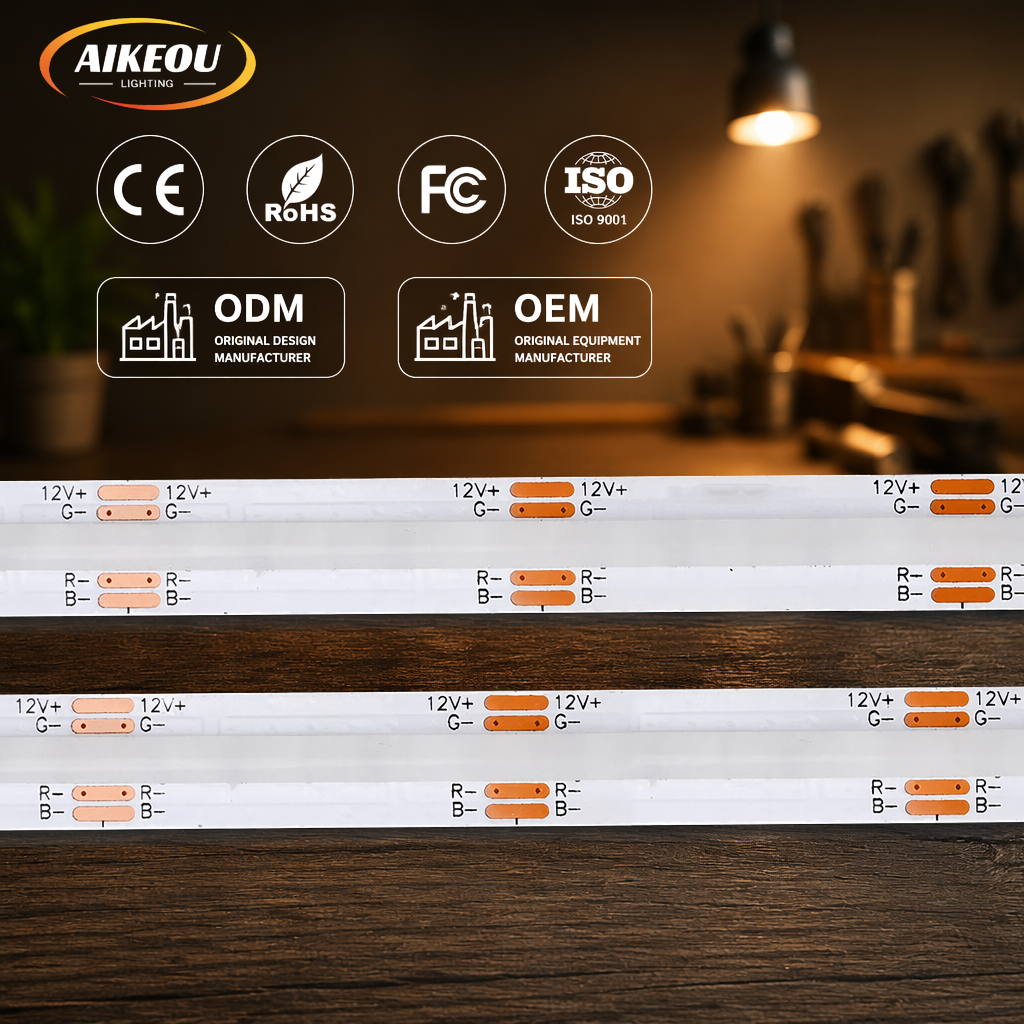
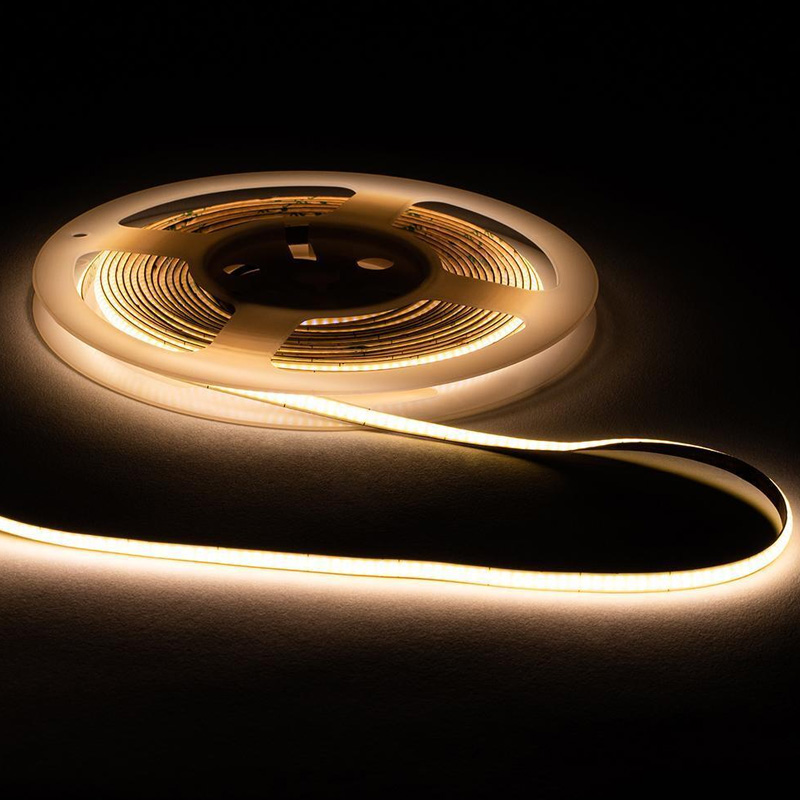
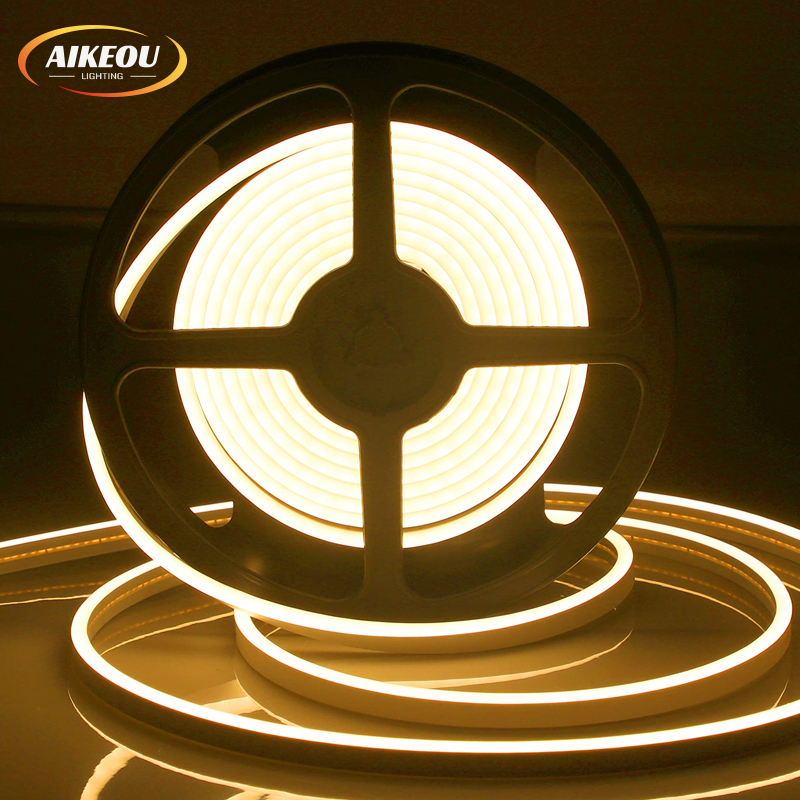
Cob Led Strip Light 12V/24V 10m Copper 8mm Warm White Cuttable
8mm Copper PCB
12V / 24V
Warm White
Engineered for seamless linear illumination, high color fidelity, and harsh environmental resilience.



A rigorous breakdown of optical performance, thermal substrate engineering, color binning, and driving topologies for professional procurement teams.
The global demand for linear LED lighting has undergone a fundamental transformation. B2B importers, architectural specifiers, and commercial OEMs no longer evaluate suppliers based solely on unit price per meter. Modern architectural lighting projects demand strict dynamic color rendering, high visual comfort free of pixelation, long-term chromatic consistency, and robust thermodynamic stability under continuous load.
When selecting among the Top China RGBW LED Tape Manufacturers, engineering buyers must analyze three core technical dimensions: optical delivery mechanisms (Discrete SMD vs. Continuous Flip-Chip COB), printed circuit board thermal dissipation physics (copper weight and layer stacking), and chromaticity control protocols (MacAdam Ellipse SDCM binning and SPI/DMX addressability).
Traditional RGBW flex tapes rely on Surface Mounted Devices (such as SMD 5050, 3838, or 3535 packages) spaced along a flexible substrate. While cost-effective, discrete SMDs suffer from visual "hotspots" (pixelation) unless paired with deep aluminum extrusions and thick frosted diffusers. Furthermore, color mixing occurs externally, often creating multi-colored shadow artifacts along wall washes.
In contrast, state-of-the-art RGBW Chip-on-Board (COB) LED tapes directly mount bare semiconductor dies (Red, Green, Blue, and White emitting chips) onto the flexible copper substrate at extreme densities—ranging from 480 to 756 micro-dies per meter. The entire linear array is encapsulated beneath a continuous phosphor-infused silicone gel strip. This creates a completely dotless, homogeneous 180-degree beam of light directly out of the tape, eliminating the need for bulky diffusers and providing flawless color blending at zero distance.
| Performance Parameter | Standard Discrete RGBW SMD | Advanced RGBW COB (Vokud Series) | Addressable RGBW Pixel Tape |
|---|---|---|---|
| Optical Uniformity | Visible Light Points (Hotspots) | 100% Seamless Continuous Line | Point-by-Point Dynamic Pixels |
| Die Density (Chips/m) | 60 – 120 LEDs/m | 480 – 756 Dies/m | 84 – 160 IC Units/m |
| Beam Angle | 120° Direct Directional | 180° Ultra-Wide Lambertian | 120° Direct Directional |
| Bending Radius | Standard (>30mm) | Ultra-Flexible (>10mm) | Standard (>25mm) |
| Color Rendering Index (Ra) | Ra 80+ Typical | Ra 90+ / Ra 95+ (Specialized White) | Ra 80 – Ra 90 |
| Driver Protocol | 4-Channel Constant Voltage PWM | 4-Channel PWM / DALI-2 DT8 | SPI (WS2814 / TM1814 / SK6812) |
Thermal management is the single most critical factor dictating lumen maintenance ($L_{70}$ lifespan) and color shift over time. Because RGBW LED strips pack four distinct die circuits into a compact flex width (typically 10mm to 12mm), heat generation per linear meter can reach 14W to 24W during full-white output (all R+G+B+W channels energized simultaneously).
Tier-1 Shenzhen manufacturers utilize 3oz (105µm) rolled-annealed double-sided copper PCBs rather than cheap 1oz electro-deposited single-layer copper. The thick copper layer acts as an integrated heat sink, conducting heat away from the semiconductor junctions toward the thermal adhesive backing tape. This prevents localized overheating, reduces voltage drop over extended runs, and ensures color stability across the entire 5m to 10m installation.
A frequent defect in lower-grade RGBW tapes is inconsistent white spectrum rendering. RGBW strips append a dedicated monochrome White diode (usually 2700K, 3000K, 4000K, or 6500K) to the tri-color RGB chip. Premium factories enforce strict 3-Step MacAdam Ellipse (SDCM < 3) binning protocols for the White chip channel. This ensures that when replacement rolls or multiple reels are installed in a single commercial space, there is zero perceptible color temperature deviation between adjacent runs.
Verified manufacturing capabilities, strict quality assurance gates, and customized OEM development.
Shenzhen Vokud Technology Co., Ltd. undergoes rigorous annual on-site audits by SGS Group. Production lines, QA/QC testing equipment, labor compliance, and manufacturing throughput are independently verified for complete buyer peace of mind.
Every RGBW and COB tape series carries authentic CE, RoHS, FCC, and EMC certifications. Full test reports (IES files, integrating sphere photometric data, and thermal camera imaging) are available for architectural specification submissions.
From custom PCB trace widths (down to 2.7mm ultra-narrow) to tailored CCT mixes, specialized IP68 nano-coatings for underwater installations, and custom private-label retail packaging—our engineering team delivers turnkey customization starting at low 5m MOQs.
Key technological shifts reshaping procurement criteria for commercial and industrial lighting buyers.
Wire-bonded SMD LEDs are rapidly being superseded by Flip-Chip COB structures. By eliminating gold wire bonds and directly bonding the semiconductor die face-down onto the copper PCB layer, mechanical failure rates from thermal cycling are reduced by over 92%. Buyers are increasingly standardizing on COB RGBW for high-end hospitality and yacht lighting.
Traditional 24V LED tapes have cut points spaced every 50mm to 100mm, creating blacked-out unlit tail ends in custom-length aluminum channels. Advanced manufacturing now enables Mini-Cut (down to 10mm segments) and true continuous "Cut-Anywhere" COB tapes, ensuring edge-to-edge illuminated perfection in millwork and architectural cabinetry.
Sourcing standards require seamless integration into smart building automation ecosystems. High-specification RGBW tapes now incorporate direct-on-flex digital ICs (such as WS2814, SK6812, and TM1814) supporting 16-bit dimming resolution, zero flicker at camera frame rates (high-frequency PWM > 4000Hz), and native compatibility with DMX512/RDM and Matter over Thread bridges.
With global energy regulations tightening (such as EU ERP compliance), factory R&D is focused on pushing RGBW COB efficacy beyond 110 lm/W for combined white channels. Lead-free soldering, halogen-free flexible copper substrates, and recyclable silicone encapsulation represent mandatory baseline criteria for European and North American distributors.
Ensuring zero defects from incoming bare die inspection to final anti-static export vacuum packing.
Spectroradiometer verification of LED die wavelength, phosphor purity, and 3oz copper PCB thickness.
Automated high-speed SMT & die bonders mount bare semiconductor chips at sub-micron placement tolerances.
Computer-controlled silicone-phosphor encapsulation line creates seamless linear COB beam uniformity.
Multi-zone precision temperature baking ensures bubble-free silicone vulcanization and adhesion strength.
Every single meter undergoes automatic optical inspection (AOI) to detect open circuits or color anomalies.
Continuous full-power electrical load testing for 8 to 24 hours to eliminate early component mortality.
Integrated silicone co-extrusion or nano-hydrophobic coating application for outdoor marine grades.
Final integrating sphere verification, customized labeling, anti-static vacuum sealing, and export boxing.
Clear technical answers addressing critical considerations for purchasing directors and lighting engineers.
Send us your project drawings, target photometric specs, or OEM customization briefs. Our senior engineering team will respond within 24 hours with complete technical datasheets and competitive factory direct pricing.
