Engineering Portfolio & Featured Strip Systems
Explore our certified COB, Addressable RGBIC, Ultra-Narrow PCB, and Precision Controller series designed for architectural, commercial, and OEM applications.




1. The Technical Evolution of Linear Lighting: From SMD Hotspots to Continuous COB & Addressable RGBIC
The global solid-state lighting (SSL) industry has undergone a fundamental architectural shift. For over two decades, Surface Mount Device (SMD) technology—specifically SMD 3528, 5050, and 2835 packages—dominated commercial and residential accent lighting. However, SMD configurations inherent design limitations, including visible light pixelation ("dotting"), uneven spatial chromaticity distribution, and localized thermal concentration points, created significant hurdles for high-end architectural integrations.
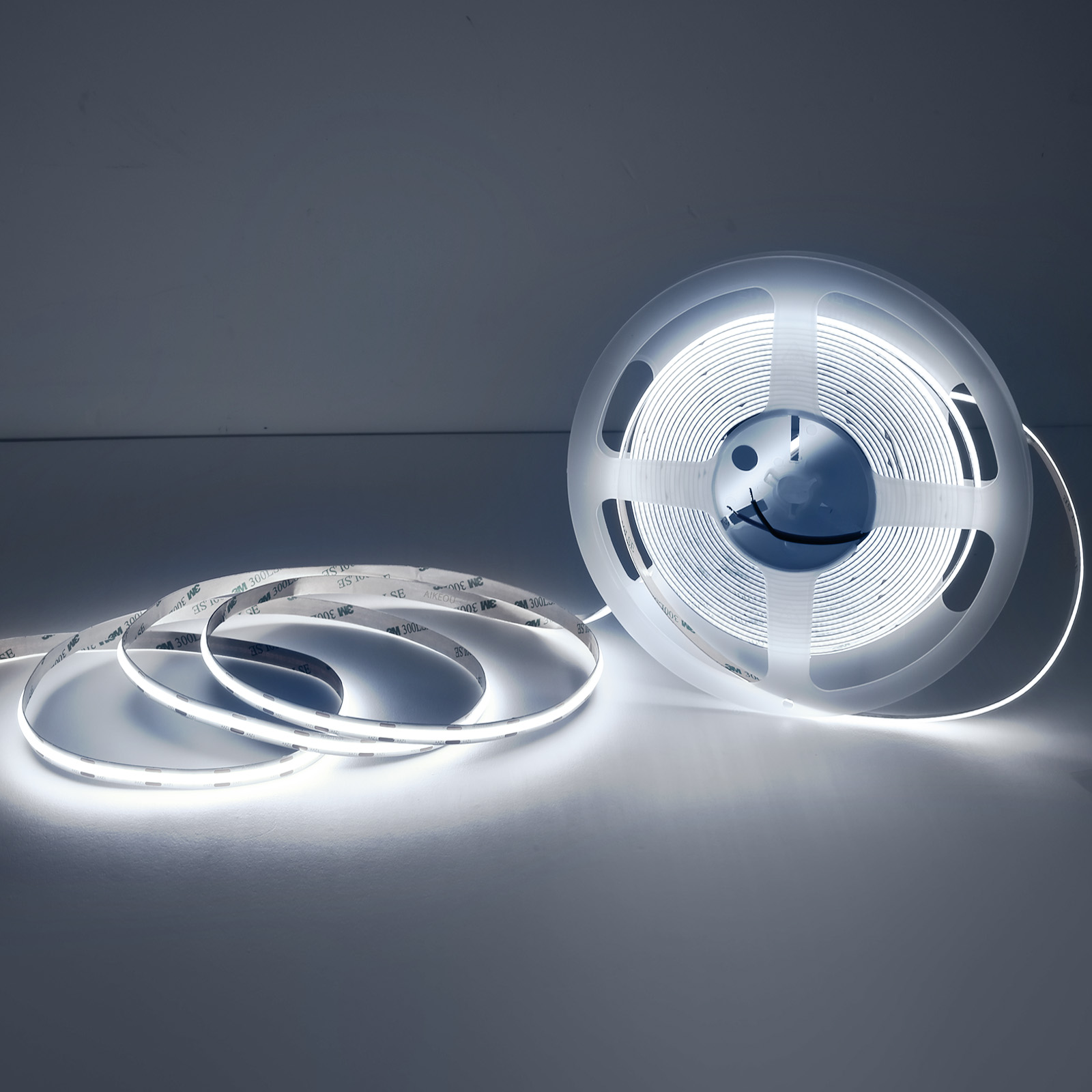
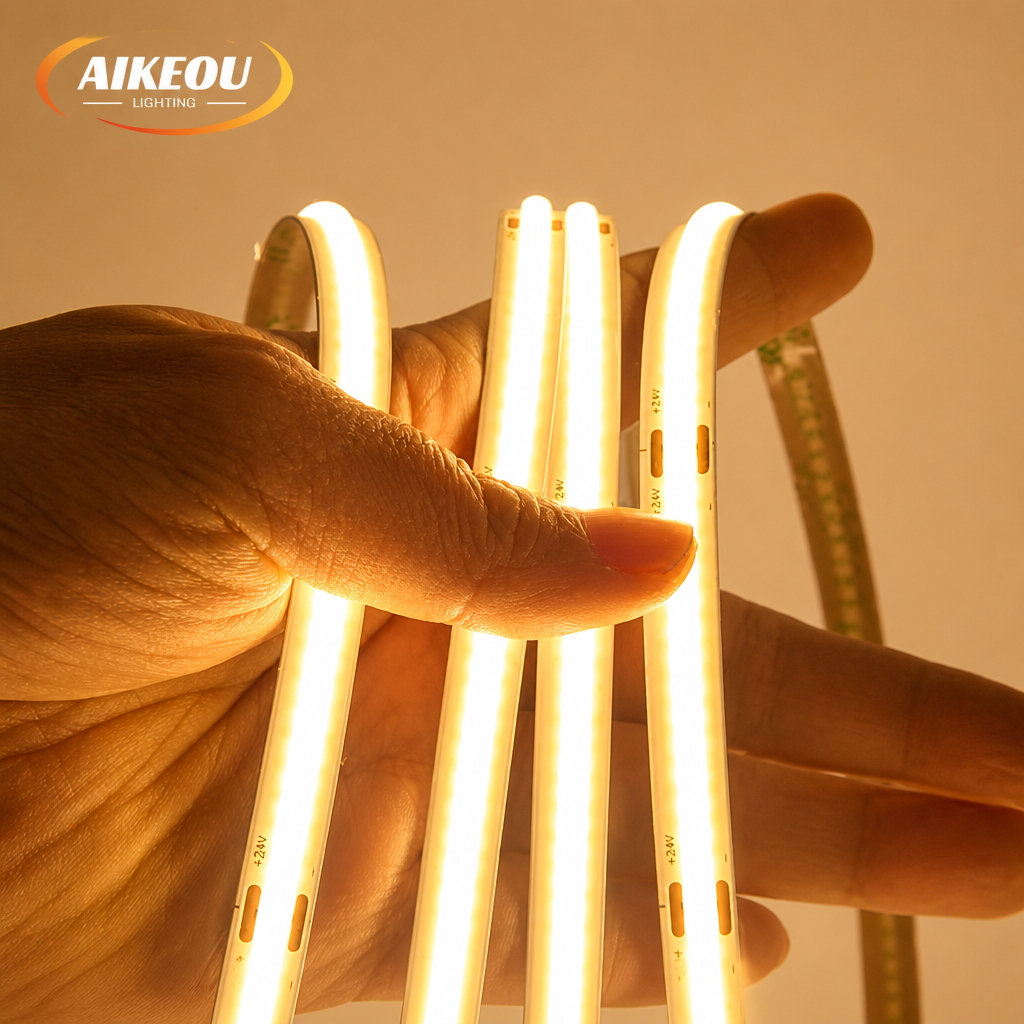
To overcome these challenges, our engineering facility has pioneered high-density Chip-on-Board (COB) linear packaging alongside advanced digital pixel-addressable dynamic circuits (RGBIC/WS2812B/WS2811). By eliminating the plastic leaded chip carrier (PLCC) and bonding flip-chips directly onto dual-layer rolled annealed (RA) copper flexible printed circuits (FPCB), modern COB strips achieve a seamless 180-degree continuous beam angle without requiring deep diffuse aluminum profiles.
Information Gain: Phosphor-in-Silicone (PIS) Encapsulation & Thermal Dynamics
In high-grade OEM Multicolor and CCT COB strips, chip placement density ranges from 320 to 840 chips per meter. Our proprietary continuous phosphor-in-silicone matrix dispensing process ensures that red, green, blue, and white die-wavelengths blend homogeneously prior to light emission. This eliminates color-fringing at wide viewing angles and lowers junction temperature ($T_j$) by transferring heat evenly across the 3oz pure copper substrate, extending lumen maintenance ($L_{70}B_{10}$) past 50,000 operational hours.
Architectural Comparison Matrix: SMD vs. COB vs. Digital RGBIC LED Strips
| Performance Metric | Legacy SMD 5050 / 2835 | High-Density COB Strip | Digital RGBIC Addressable Strip |
|---|---|---|---|
| Optical Uniformity | Visible pixel dots (requires diffuse cover) | 100% Dotless continuous line | Programmable pixel zones |
| Flexible PCB Widths | 8mm to 12mm minimum | Ultra-narrow 2.7mm, 3mm, 5mm to 10mm | 5mm to 12mm depending on IC count |
| Color Rendering Index (CRI) | Ra 70 - Ra 80 typical | Ra > 90, Ra > 95, Ra > 98 (R9 > 80) | Dynamic RGB + Dedicated High-CRI White |
| Minimum Cut Unit | 50mm - 100mm (3-6 LEDs) | "Mini-Cut" short segments (5mm - 10mm) | Single-pixel or 3-pixel control groups |
| Thermal Resistance ($R_{th}$) | 45 - 65 K/W | 18 - 28 K/W (Direct Flip-Chip Bonding) | 25 - 35 K/W with integrated IC drivers |
2. Sourcing Trends & Procurement Projections (2025–2030) for Global Lighting Buyers
As smart building automation systems, DALI-2 protocols, and Matter-enabled ecosystems become mandatory in tier-1 commercial developments, the specification demands placed on OEM LED strip manufacturers have intensified. B2B procurement managers and lighting designers must account for four macro procurement trends over the next decade:
- Miniaturization & Hidden Architectural Profile Integration: Demand for ultra-narrow flexible PCBs (2.7mm to 5mm width) is growing at a compound annual growth rate (CAGR) of 18.4%. Designers require completely invisible light channels within millwork, luxury showcase cabinetry, and curved wall reveals.
- Circadian Rhythm Tunable White (CCT) & High Spectral Purity: Dynamic CCT flexibility (ranging from warm 2200K ambient to cool 6500K daylight) combined with high TM-30-18 color fidelity scores ($R_f \ge 92, R_g \ge 100$) is fast replacing static single-color installations in hospitality and healthcare environments.
- Transition to IP68 Co-Extrusion Waterproofing: Conventional spray-coated or silicone tube-cased strips suffer from yellowing, UV degradation, and water ingress under thermal expansion stress. Modern procurement mandates solid silicone co-extrusion moulding capable of withstanding extreme temperatures (-30°C to +80°C) and submerged sauna or outdoor facade conditions.
- Low-Voltage Efficiency & Voltage Drop Mitigation: Migration from 12V DC systems toward 24V DC and 48V DC constant-current driver IC architectures allows continuous single-feed runs up to 15–20 meters without noticeable tail-end dimming or chromaticity shift.
Engineering Custom Flex PCBs for Your Next Architectural Project?
Consult with our OEM technical team to request custom Gerber circuit layouts, photometric IES files, or specialized binning parameters tailored to your regional compliance standards.
3. Enterprise Manufacturing Strengths & OEM/ODM Capabilities
Selecting an authoritative manufacturing partner requires verifiable operational capabilities and transparent quality assurance protocols. Our Shenzhen-based production facilities are independently audited and verified on-site by SGS Group, ensuring compliance with international manufacturing benchmarks and technical transparency.
MacAdam 3-Step Binning
Automated spectroradiometer sorting guarantees SDCM < 3 across all production batches, ensuring flawless color consistency across large-scale multi-reel installations.
Full OEM/ODM Circuit Design
In-house surface-mount technology (SMT) lines offer customized copper weight (2oz/3oz), private-label branding, customized cut markings, and tailor-made tail connectors.
Comprehensive QA Testing
Every production roll undergoes 100% 8-hour burn-in aging, thermal shock testing (-40°C to +100°C), integrating sphere colorimetry, and hydrostatic IP water immersion verification.
9-Stage Operational Quality Assurance Framework
To ensure total reliability in mission-critical applications, our manufacturing workflow executes a rigorous 9-stage quality control protocol:
- IQC (Incoming Quality Control): Spectroradiometric testing of raw LED chips, wafer wavelength verification, and copper thickness measurement of incoming FPC reels.
- Solder Paste Stencil Printing: Automated 3D SPI (Solder Paste Inspection) to eliminate micro-voids and cold solder joints.
- High-Speed Die Bonding & Placement: Sub-micron precision automated chip placement up to 100,000 CPH (Components Per Hour).
- Reflow Soldering in Nitrogen Atmosphere: Multi-zone convection reflow ovens configured with precise thermal profile curves to prevent thermal stress on chips.
- Continuous Silicone/Phosphor Dispensing: Automated volumetric dispensing ensuring uniform phosphor thickness across COB linear arrays.
- Thermal Curing & Solidification: Controlled cleanroom curing tunnels maintaining zero-dust contamination during silicone setting.
- 100% Automated Optical Inspection (AOI) & Light-On Test: Electronic polarity, short-circuit, and brightness consistency evaluation for every linear meter.
- Continuous Accelerated Burn-in Aging: Full-load power burn-in aging to filter out early life cycle component failures.
- FQC/OQC Packaging Inspection: Anti-static moisture-barrier sealing, custom barcode labeling, drop testing, and final customs compliance certification.
4. Compliance & International Regulatory Documentation
Navigating global customs and regional safety directives requires complete and non-ambiguous documentation. Our entire multicolor LED strip product catalog, including low-voltage DC models and high-voltage AC linear systems, holds validated test reports and certificates including:
- CE Safety Directives: Low Voltage Directive (LVD 2014/35/EU) and Electromagnetic Compatibility (EMC 2014/30/EU).
- RoHS & REACH Compliance: Full verification of hazardous substance restrictions (Directive 2011/65/EU and Amendment 2015/863).
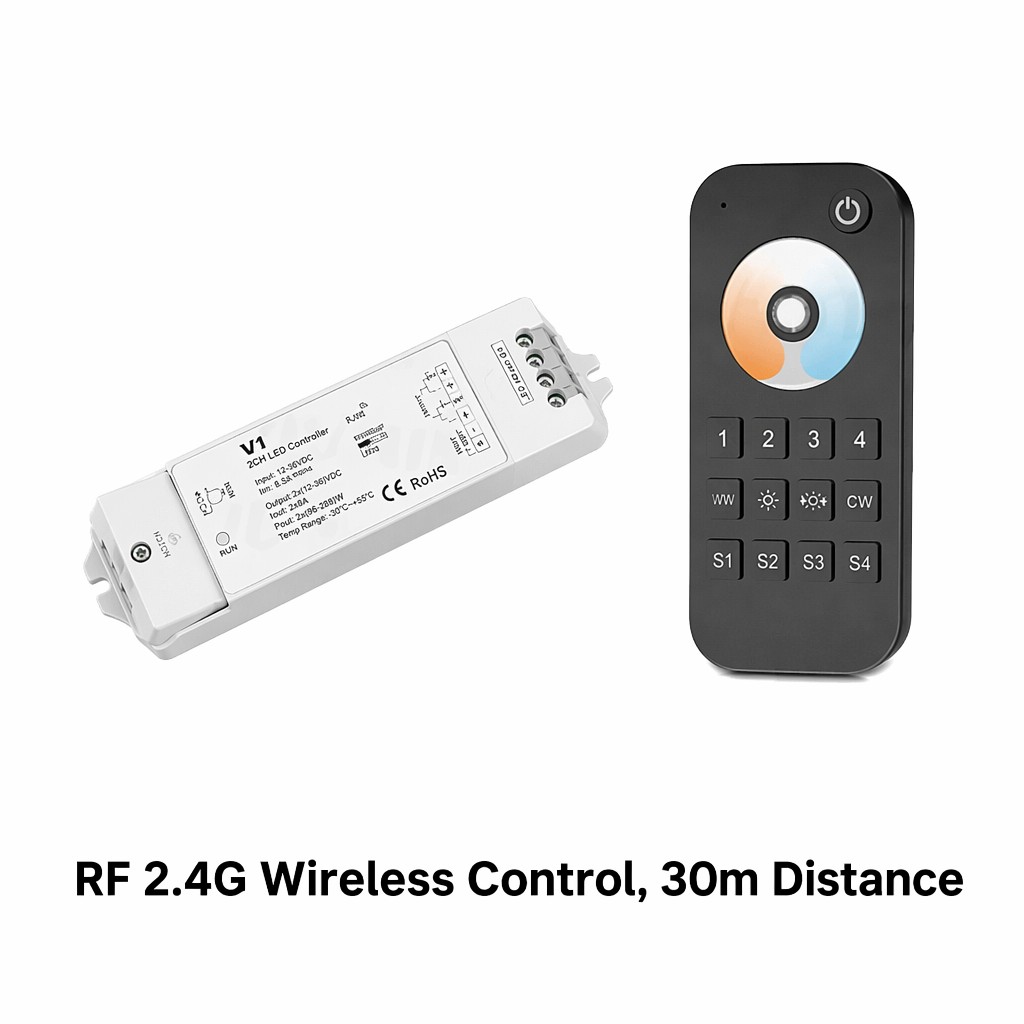
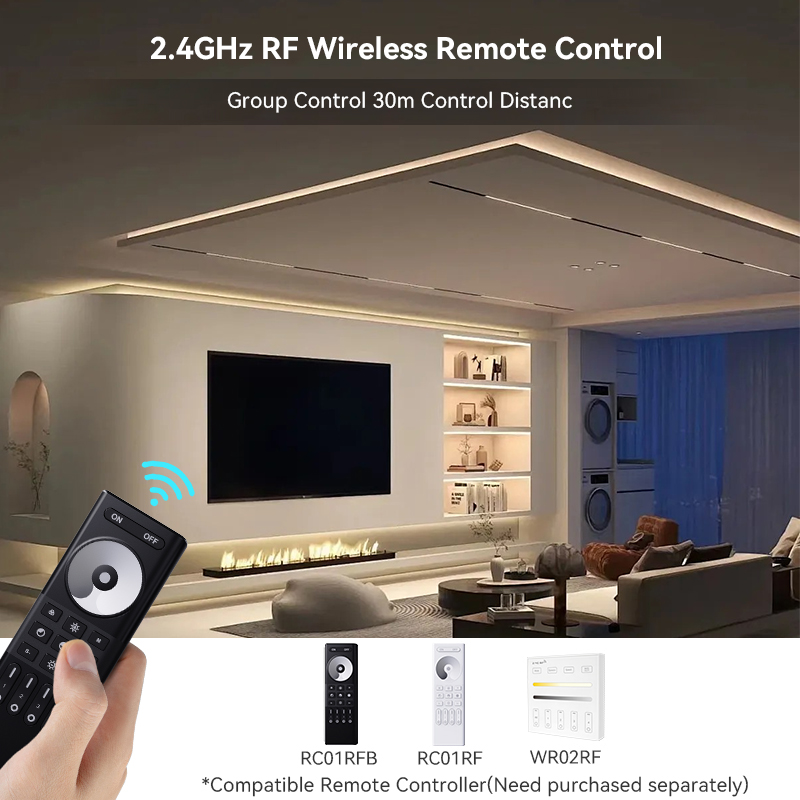
- FCC Part 15 Class B: Electromagnetic interference testing for digital RGBIC dynamic controllers and smart RF dimmers.
- EU EPREL Energy Labelling: High-efficacy lumen per watt testing under EU 2019/2015 energy efficiency regulations.
Frequently Asked Questions for B2B Procurement
Direct answers to technical, commercial, and engineering inquiries common among lighting importers and distributors.
Partner with a SGS-Verified OEM/ODM LED Strip Factory
Streamline your supply chain with direct factory pricing, full regulatory documentation, and dedicated engineering support from prototype through mass production.
