SGS Verified Supply Base
Featured OEM Flexible & COB LED Strip Series
Direct factory supply featuring standard 5m MOQs, ultra-narrow PCBs, dotless linear diffusion, high color fidelity, and IP20–IP68 protective encapsulations.

Aikeou 320LEDs/m 8mm 10W/m CRI90+ Flexible Linear Lighting Dot-free COB LED Strip Light
View Specifications →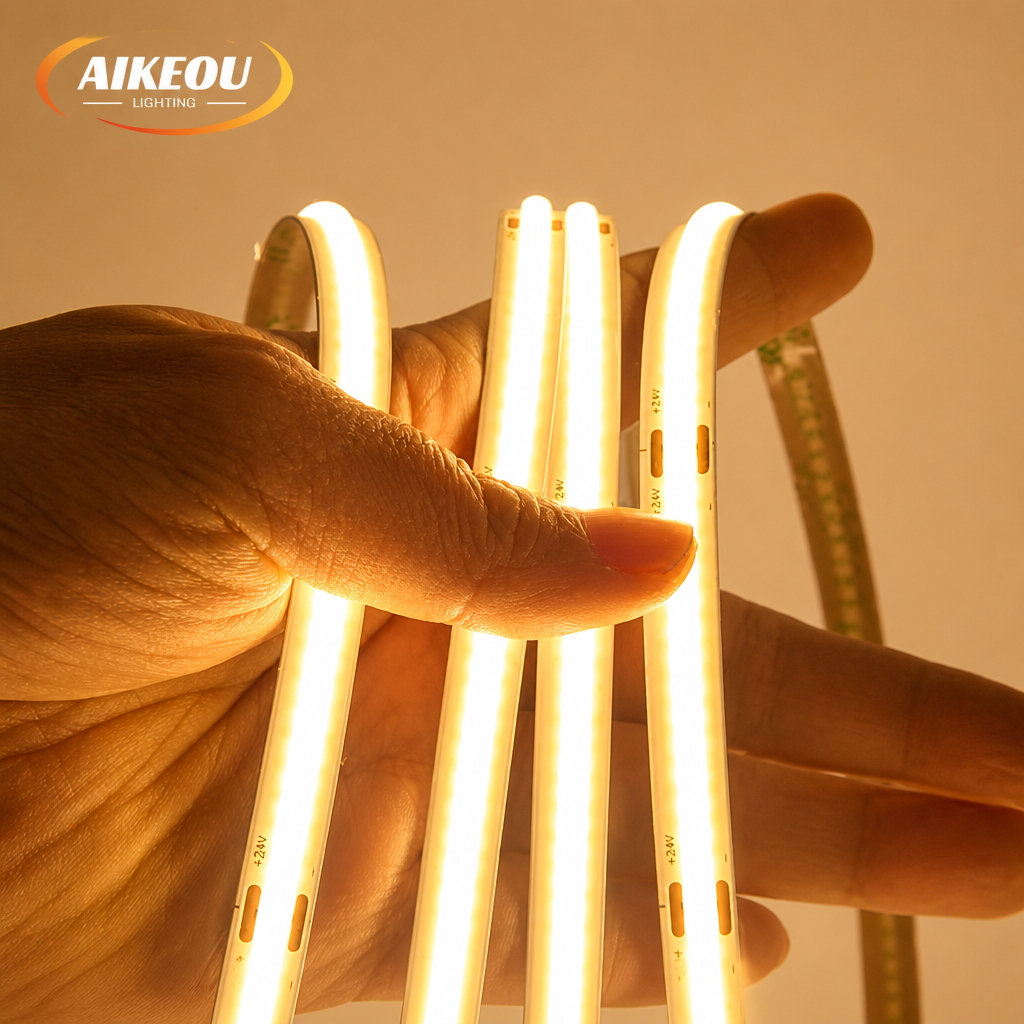
AIKEOU 2mm 5mm IP65 CCT Warm White Dimmable Flexible IP68 Outdoor Waterproof COB LED Strip
View Specifications →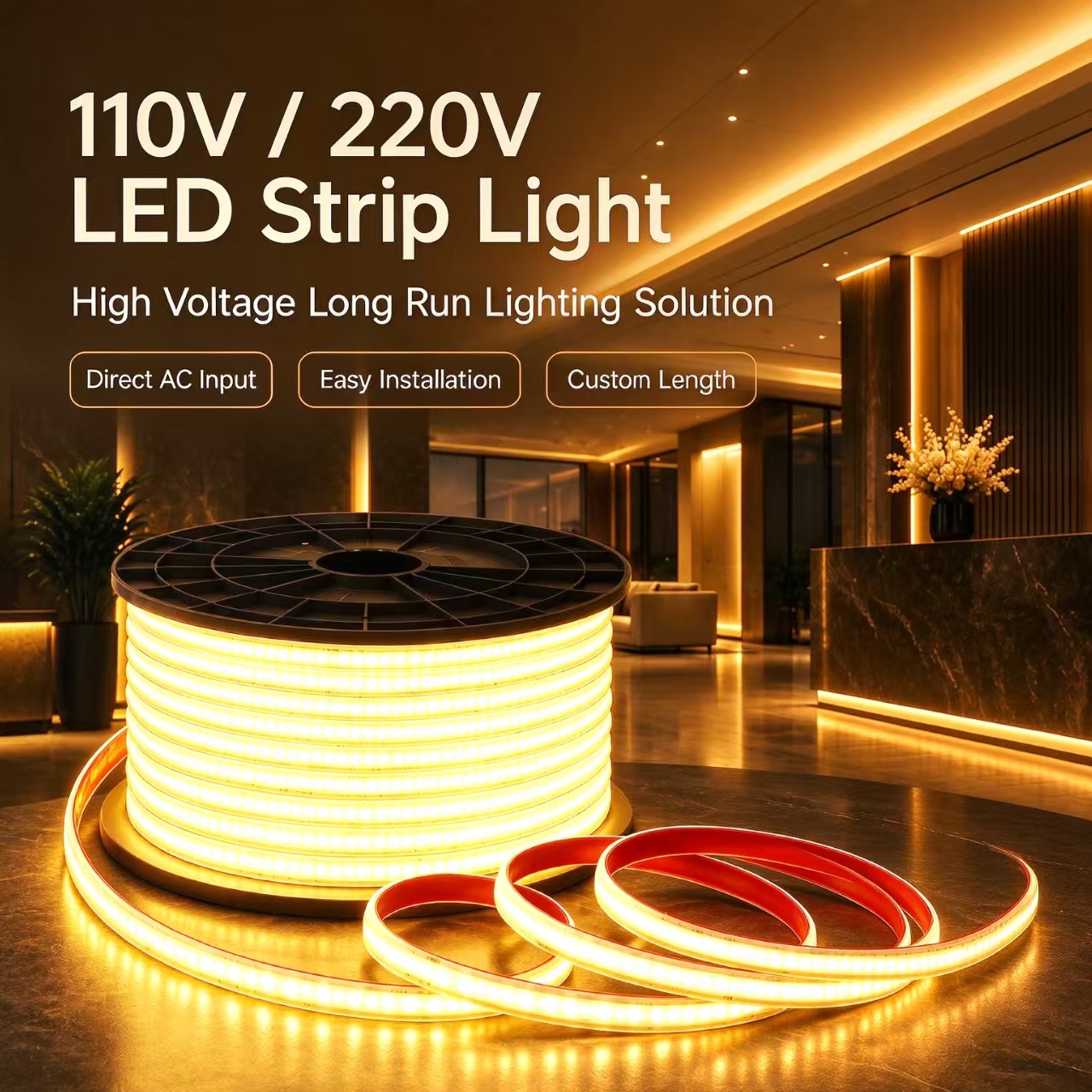
AIKEOU IP65 COB LED Strip 220V 110V Outdoor Waterproof IP68 Flexible High-Voltage Tape
View Specifications →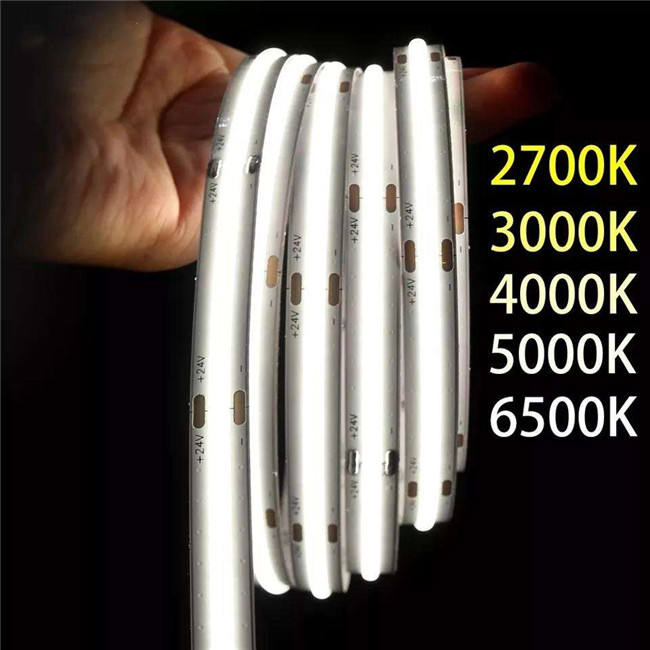
Aikeou 528LEDs/m 10mm 14W/m IP20 12V 24V Smart Voice Control Cuttable COB LED Strip
View Specifications →
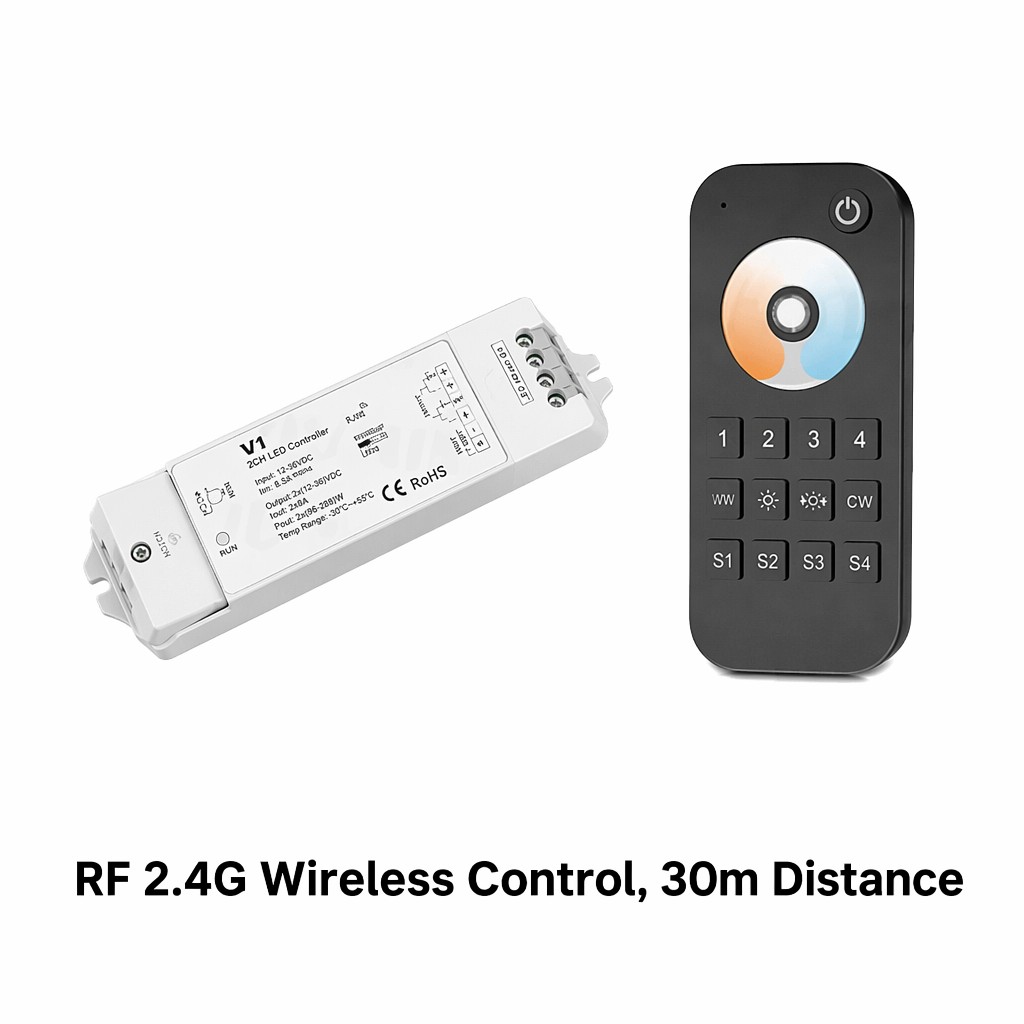
Aikeou 320D 8mm 10W Dotless Strip CE RoHS FCC Certified Customizable Color Tunable COB LED Light
View Specifications →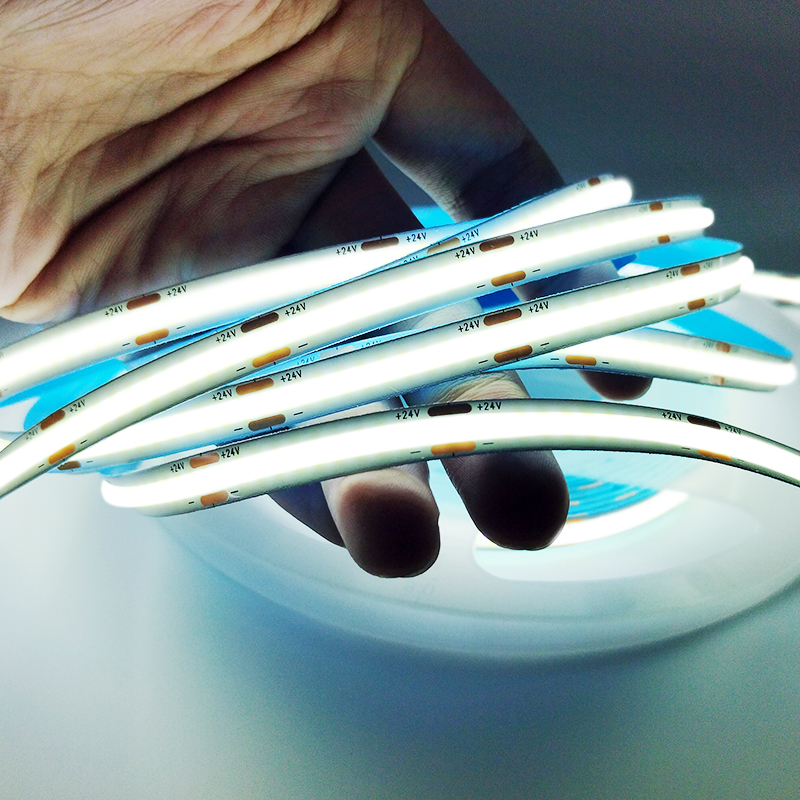
High Quality 12V 24V IP20 Ra80 Modern Remote Control Copper 8mm COB LED Strip Lights 320LEDs/m
View Specifications →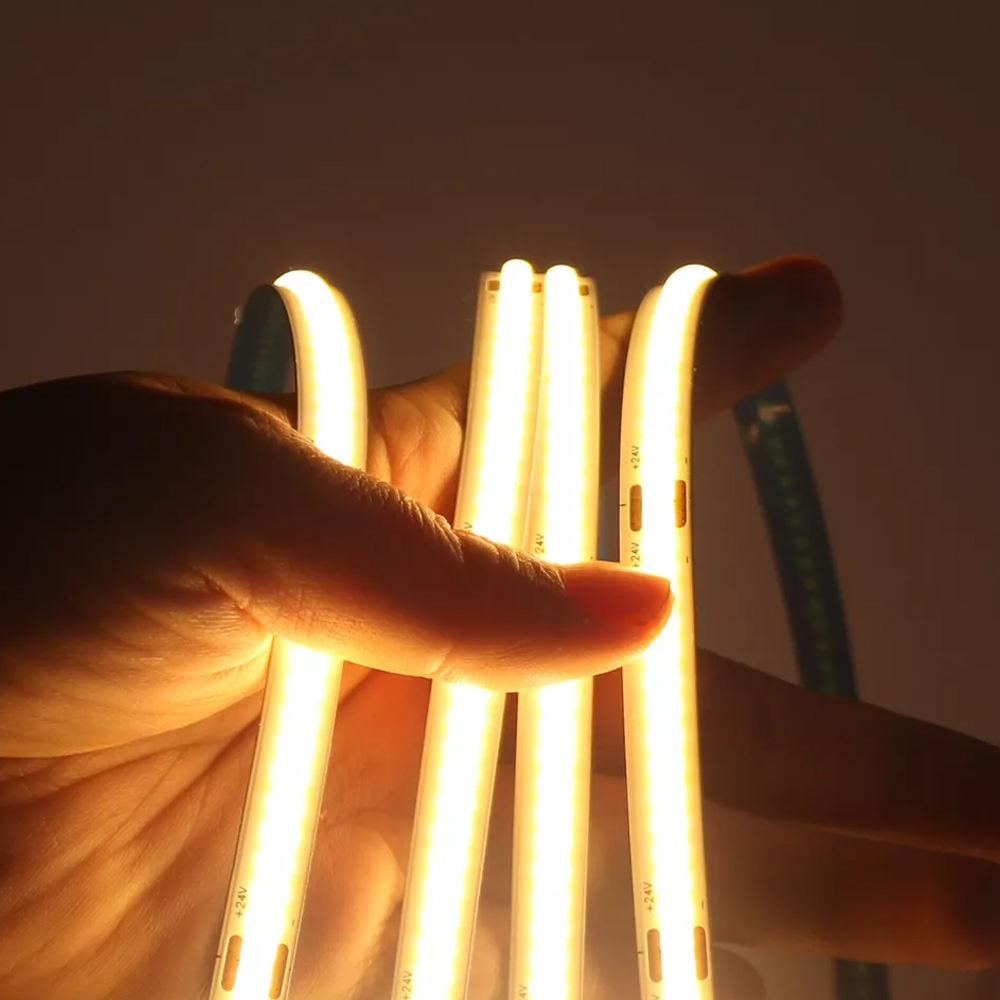
Aikeou 480LEDs/m 8mm 11W/m 24V IP20 3000K 4000K 6500K CRI90 Flexible Copper PCB COB LED Strip
View Specifications →
Audited Manufacturing Strength
Why Global Lighting Brands Source From Us
Shenzhen Vokud Technology Co., Ltd. operates an SGS-verified custom manufacturing facility engineered for precision binning, thermal longevity, and international compliance.
15+
Years R&D Mastery
165K+
Meters Shipped Monthly
4.9/5
Buyer Satisfaction Rating
9
In-House QA Testing Systems
SGS On-Site Verified Factory
Verified on-site by SGS Group. Production lines, SMT placement accuracy, clean-room phosphor encapsulation, and international trading capabilities are fully audited.
Strict 3-Step MacAdam Binning
Eliminate color variance between batch orders. Our spectroradiometer testing guarantees color consistency within SDCM < 3 across all production runs.
Complete Global Certifications
Export ready with official CE, RoHS, FCC, EMC, and Declaration of Conformity (DoC) certificates. Lab test reports are provided directly with sample shipments.
Technical White Paper
High CRI Physics: Beyond Ra 90 to TM-30-18 Spectrum Fidelity
An engineering breakdown of spectral distribution, color rendering metrics, and thermal management in commercial linear LED customization.
In high-end architectural, museum, retail, and hospitality lighting, standard color rendering metrics (CRI Ra > 80) are no longer sufficient to evaluate light quality. Commercial importers and lighting specifiers increasingly demand high-fidelity spectral distribution that accurately reproduces saturated colors—specifically deep reds (R9), skin tones (R13), and natural vegetation (R9–R15).
1. Deconstructing Color Rendering: CRI Ra vs. IES TM-30-18
Traditional Color Rendering Index (CRI Ra) measures light source color fidelity against eight neutral pastel color samples ($R_1$ to $R_8$). However, Ra ignores saturated color swatches. High-end retail displays and medical applications require evaluating the full spectral power distribution (SPD):
- R9 Value (>90): Critical for deep red spectrum rendering, crucial for apparel, food displays, art galleries, and surgical spaces.
- TM-30-18 Fidelity Index ($R_f$): Evaluates 99 color evaluation samples (CES) to provide an accurate measure of overall color accuracy. Our custom high CRI strips achieve $R_f \ge 93$.
- TM-30-18 Gamut Index ($R_g$): Measures color saturation level. An $R_g$ value close to 100 ensures colors are neither oversaturated nor desaturated.
| Spectral Grade | CRI Ra | R9 Metric | TM-30 $R_f$ | Primary Application Profile |
|---|---|---|---|---|
| Commercial Standard | Ra 80+ | R9 > 0 | $R_f$ 82 | General office backlighting, indirect cove lighting, budget residential |
| High Fidelity (Vokud Standard) | Ra 90+ | R9 > 50 | $R_f$ 90 | Luxury residential, hotel guestrooms, retail showcases, architectural linear slots |
| Museum / Studio Grade | Ra 95–98 | R9 > 90 | $R_f$ 95 | Art galleries, jewelry showcases, medical examination, film & broadcast studios |
2. Continuous Phosphor COB vs. Discrete SMT Package Engineering
Traditional SMD LED flexible strips (such as SMD 2835 or 5050) rely on individually packaged LEDs soldered along a flexible printed circuit (FPCB). This layout creates distinct optical hotspots, requiring deep aluminum extrusion profiles with heavy frosted diffusers to achieve continuous light lines. The diffuser absorption results in energy losses ranging from 20% to 35%.
Chip-on-Board (COB) technology eliminates discrete LED packaging. 320 to 576 flip-chips per meter are die-bonded directly onto the copper substrate and covered with a continuous phosphor-silicone encapsulation layer. This construction delivers key performance advantages:
- 180-Degree Seamless Beam Angle: Delivers uniform, spot-free linear illumination even in shallow 5mm aluminum profiles.
- Reduced Thermal Resistance ($R_{th}$): Direct die bonding eliminates the lead-frame package thermal barrier, lowering junction temperatures and extending L70 lifespan beyond 50,000 hours.
- Bending Flexibility: Flip-chip packaging eliminates wire bonding, preventing open-circuit failures caused by mechanical flexing during installation.
3. FPCB Copper Thickness & Voltage Drop Physics
Voltage drop along flexible LED strips is a primary engineering challenge in continuous long runs. Lower voltage at the strip tail reduces lumen output and causes color shifting. As a custom OEM exporter, Vokud utilizes 2oz and 3oz rolled-annealed (RA) double-sided copper FPCBs to minimize line resistance:
- 12V DC Systems: Suitable for short linear runs (≤ 5 meters) in furniture, under-cabinet lighting, and display cases.
- 24V DC Systems: Halves current draw compared to 12V, extending single-feed runs to 10 meters without visible brightness attenuation.
- Constant Current IC Integration: Incorporates linear drive ICs directly onto the flexible PCB to ensure consistent lumen output from meter 1 to meter 20.
Strategic Market Outlook
Future Procurement & Technology Trends in Linear LED Systems
Market foresight for OEM buyers, lighting specifiers, and distributors preparing for upcoming regulatory changes, smart integrations, and efficiency benchmarks.
1. High Efficacy & ErP Class Compliance
European Union regulations (ErP Directive) and US Title 24 guidelines demand higher lumens-per-watt ratios. Next-generation COB formulations leverage high-efficiency blue LED flip-chips combined with KSF/fluoride phosphor blends, delivering 140–160 lm/W while maintaining CRI Ra > 90.
2. Human-Centric (HCL) & Dynamic Tunable CCT
Commercial developments are shifting from fixed CCTs to Dynamic Tunable White systems (2700K to 6500K). Dual-chip COB lines enable smooth CCT transitions that mirror natural daylight cycles, supporting circadian rhythm alignment in healthcare, corporate offices, and hospitality environments.
3. Matter, DALI-2 DT8 & Addressable Integration
Procurement focus is moving beyond standalone LED tapes to fully integrated smart ecosystems. Demand is expanding for addressable SPI/WS2811 pixel COB strips, DALI-2 DT8 color control compatibility, and native Matter-over-Thread IoT controller integration.
Customization Workflow
End-to-End OEM / ODM Manufacturing Process
From initial specification review to golden sample approval and volume production, our engineering workflow ensures strict quality control at every stage.
Phase 01
Specification Brief
Client submits mechanical, optical, and electrical requirements (voltage, CCT, CRI, PCB width, IP rating, target lumen output).
Phase 02
Engineering Simulation
Our engineering team designs the FPCB layout, calculates resistor values or IC trace placement, and simulates thermal dissipation performance.
Phase 03
Golden Sample Validation
Prototyping sample runs are manufactured on automated SMT lines and subjected to spectroradiometer and environmental stress testing.
Phase 04
Mass Production & QC
Volume SMT assembly, automated optical inspection (AOI), 100% 24-hour burn-in aging, anti-static reel packaging, and export shipment.
Procurement Knowledge Base
Frequently Asked Questions (B2B FAQ)
Clear technical and commercial answers for OEM buyers, engineering contractors, and product managers.
Q: What is the Minimum Order Quantity (MOQ) for custom OEM orders?
Standard production runs for standard voltage and CCT COB/SMD strips start at 5 meters per specification. For fully customized FPCB designs, custom PCB widths (e.g., 2.7mm or 3mm ultra-narrow), or private label branded reel packaging, project-specific MOQs are established following engineering evaluation.
Q: What is the main functional difference between COB and SMD LED strips?
COB (Chip-on-Board) strips mount 320 to 576 bare LED chips per meter directly onto the PCB, sealed under a continuous gel layer. This produces a seamless line of light without visible hotspots or dark zones, eliminating the need for deep diffuser profiles. SMD strips feature discrete surface-mounted packaged diodes (60 to 240 LEDs/m) that require deeper profiles to diffuse individual light spots.
Q: How do you guarantee color temperature (CCT) consistency across multiple production orders?
We strictly follow a 3-Step MacAdam Ellipse binning tolerance (SDCM < 3). Raw LED chips are batch-sorted using automated spectroradiometers. Every production run is matched against archived golden samples to prevent color shift between separate procurement cycles.
Q: Which IP ratings are available for outdoor and submersed applications?
We offer four standard protection tiers: IP20 for dry indoor applications; IP65 with a surface nano-layer or silicone splash coating for humid spaces; IP67 with full silicone tube jacket encapsulation; and IP68 solid silicone integrated co-extrusion designed for permanent outdoor, sauna, landscaping, or underwater installation.
Q: Should I select 12V, 24V, or High Voltage (110V/220V) for commercial projects?
12V DC is ideal for short runs under 5 meters, such as linear accent slots, furniture, and cabinet joinery. 24V DC reduces line current by half, allowing continuous runs up to 10 meters per power feed with minimal voltage drop. 110V/220V AC direct driverless strips are used for continuous long-distance outdoor architectural facade lighting (up to 50–100 meters on a single feed point).
Q: How is quality verified prior to factory dispatch?
Every production batch undergoes a 9-stage quality protocol: Incoming Raw Material Inspection (IQC), SMT Automated Optical Inspection (AOI), 100% 24-Hour Continuous Burn-in Aging Test, Spectroradiometer Lumen & Spectrum Analysis, High-Voltage Insulation Test, Thermal Shock Cycling, IPX8 Water Immersion Testing, and Pre-Shipment Inspection (OQC). Third-party inspection agencies are welcome to audit orders on-site.
Accelerate Your LED Lighting OEM Program
Partner with an SGS-verified manufacturer to build high CRI, custom-engineered linear lighting products. Speak directly with an engineer to review specifications, request samples, or obtain factory-direct pricing.
