OEM Dual White & COB LED Strip Portfolio
Discover our enterprise-grade tunable white, ultra-narrow, high-density COB, and outdoor waterproof lighting strips tailored for commercial and architectural lighting OEMs.
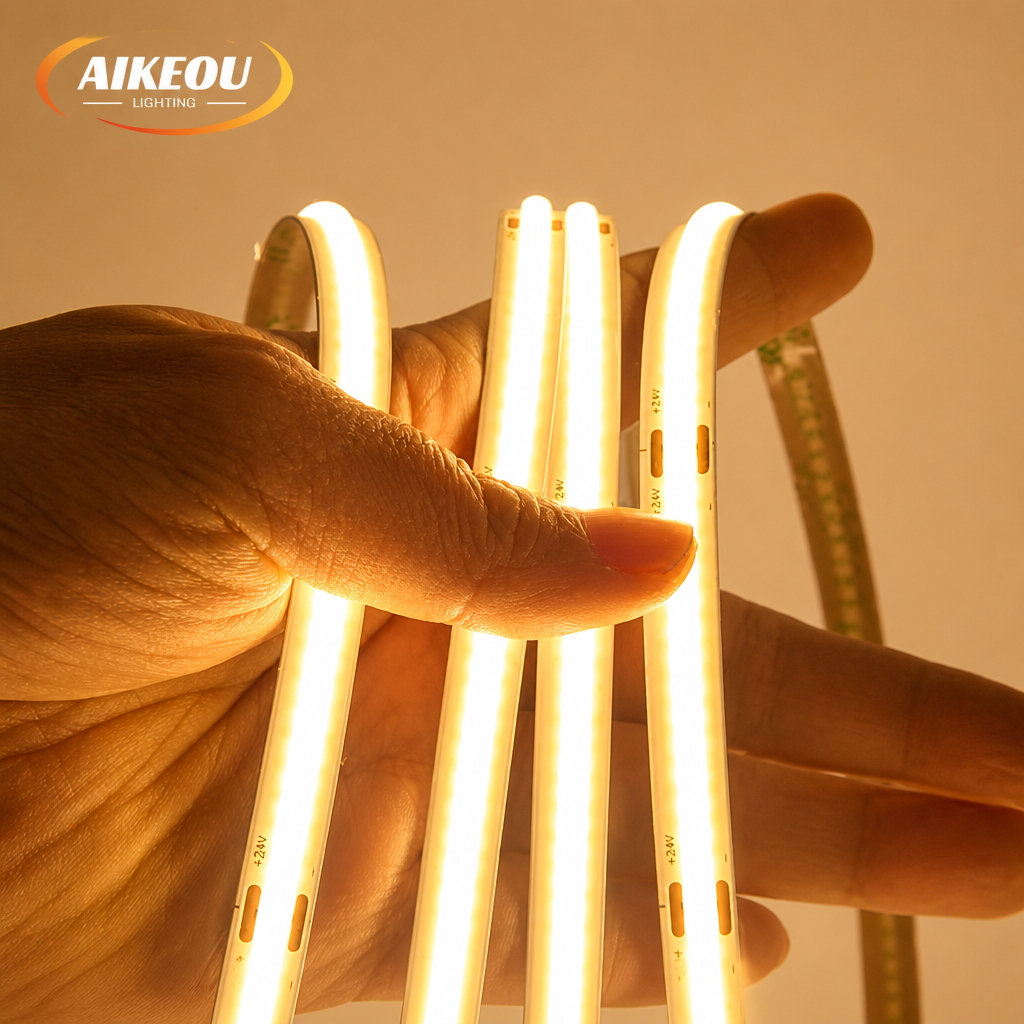
AIKEOU 2mm 5mm IP65 CCT Warm White Dimmable Flexible 12V 24V COB LED Strip
View Engineering Specs
Aikeou 384LEDs/m 5mm 7W/m Ultra Narrow Copper PCB COB Strip Light DC12V DC24V IP20
View Engineering Specs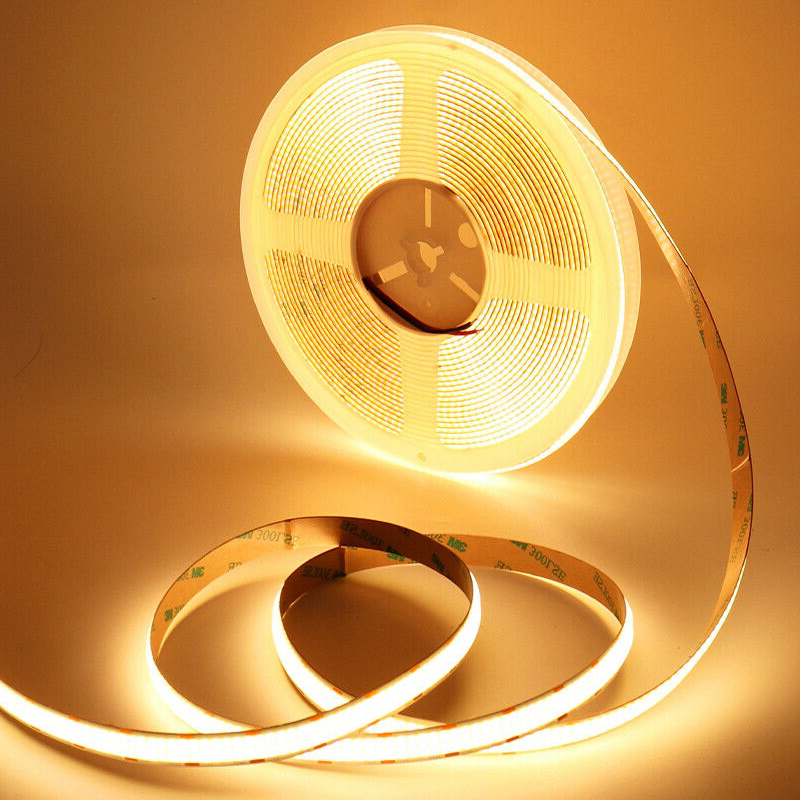
Aikeou 600LEDs/m 5mm 14W/m DC24V IP20 Ra90 Bright DoubleLine Copper COB Strip
View Engineering Specs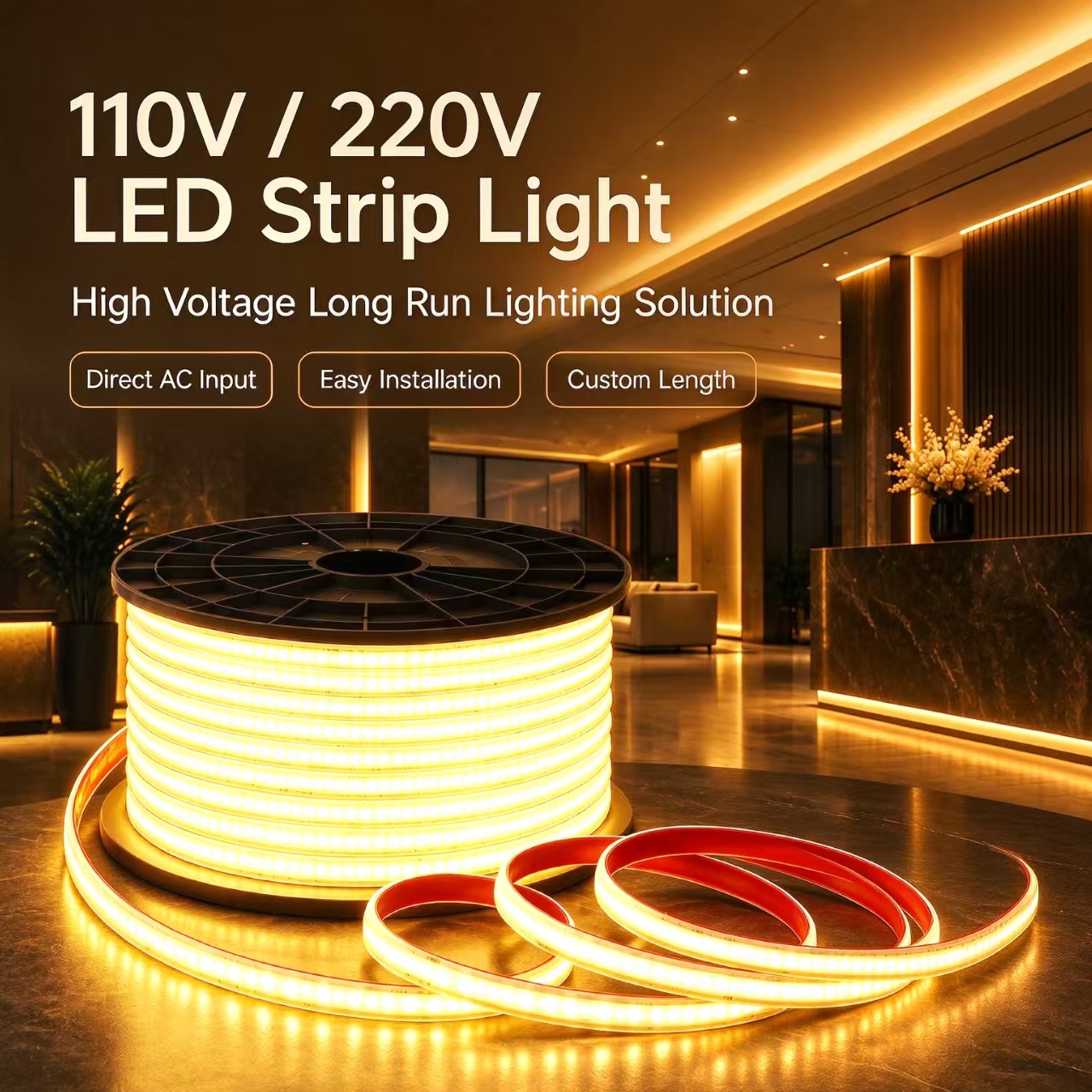
AIKEOU IP65 COB LED Strip 220V 110V Outdoor Waterproof IP68 LED Strip Light
View Engineering Specs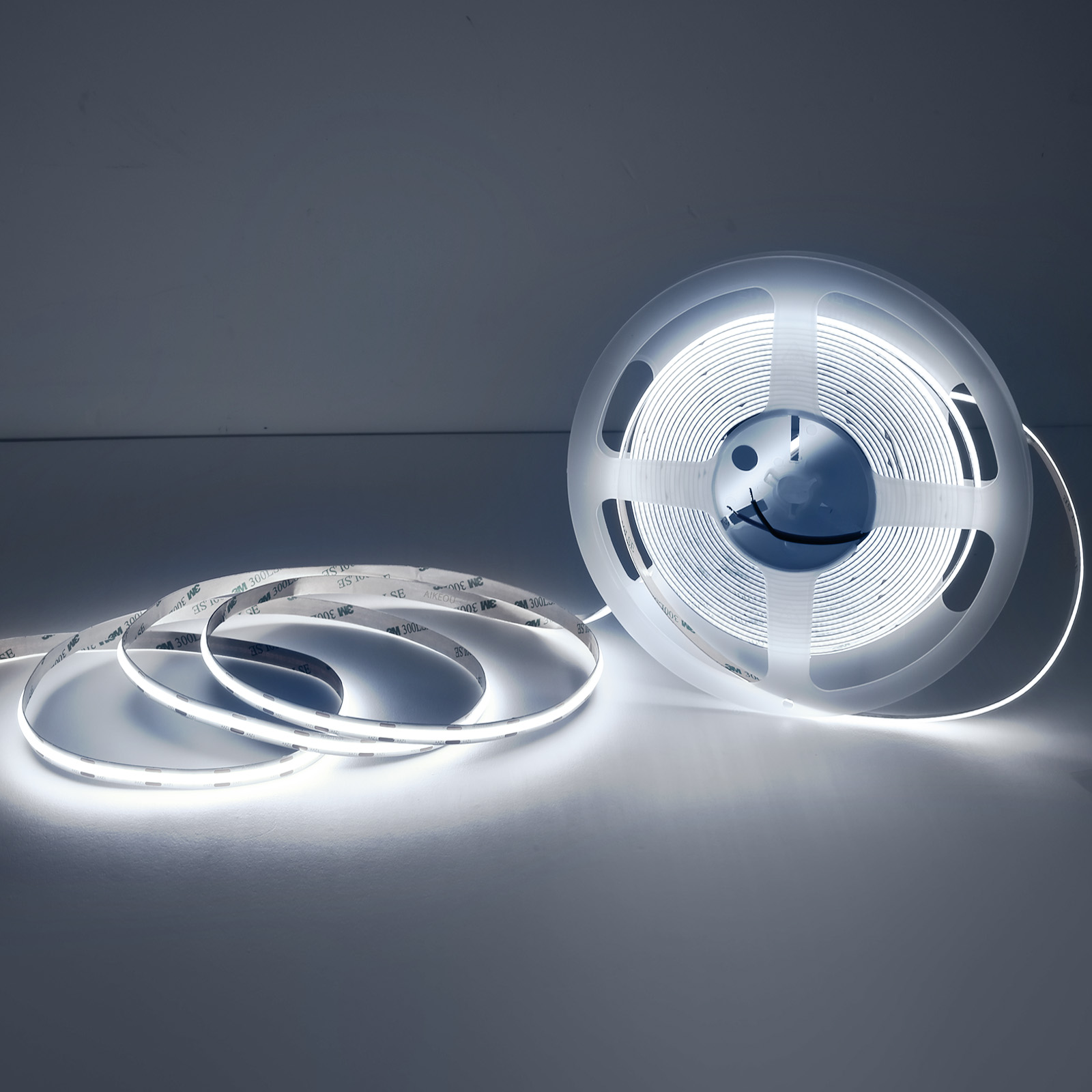
Dimmable 8W 14W/m Flexible PCB COB LED Strip Light DC5V 320LEDs/m 8mm/10mm Smart App
View Engineering Specs
Aikeou 384D 8mm 10W/m DC24V IP20 Non-Waterproof 6000K Cool White COB LED Strip
View Engineering Specs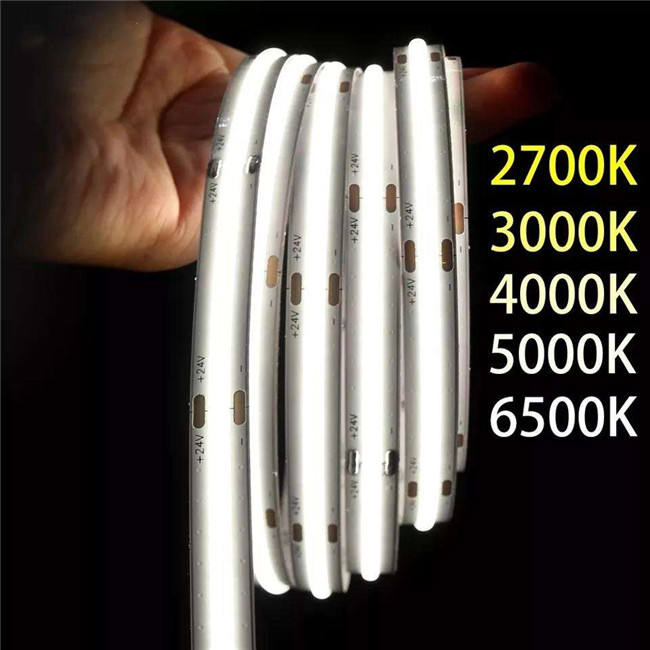
Aikeou 528LEDs/m 10mm 14W/m IP20 12V 24V Flexible Smart Voice Control COB LED Strip
View Engineering Specs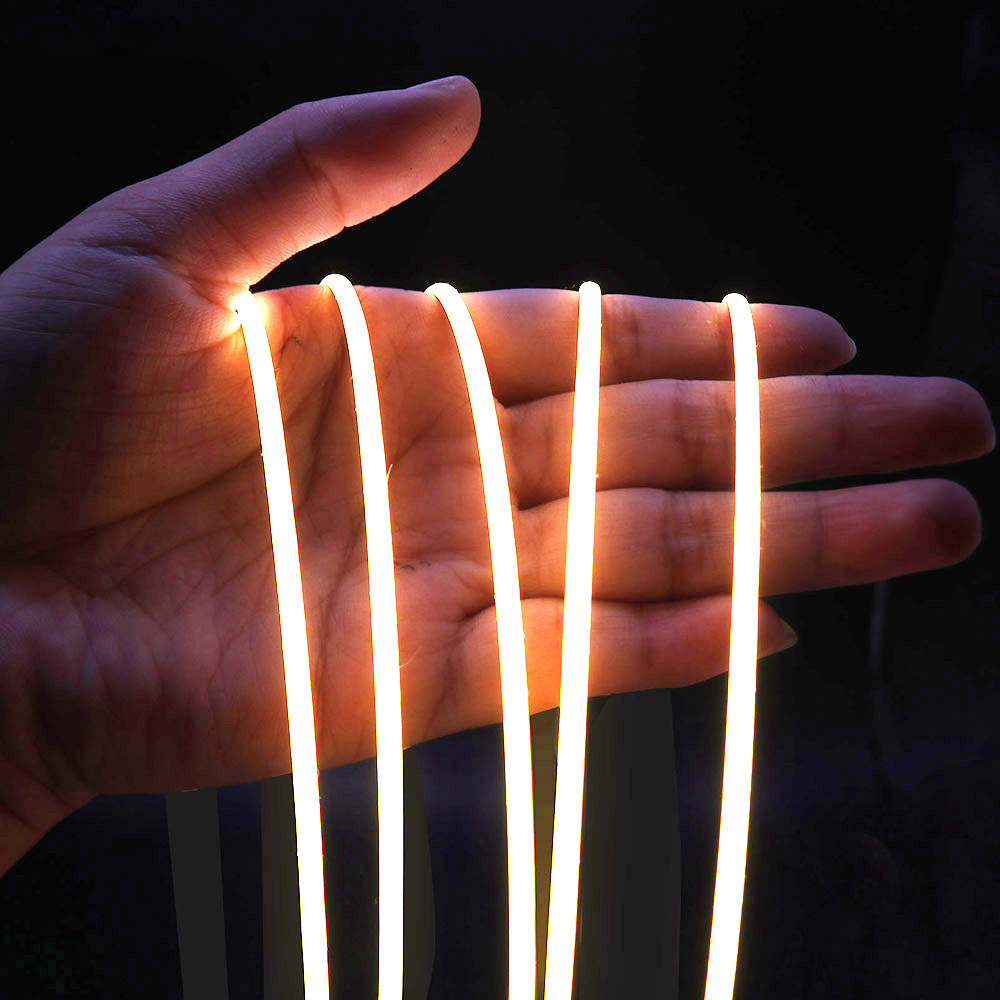
Mini Flexible COB LED Strip Light 384LEDs/m 3mm Wide Ra90 DC 12V Copper Body CE ROHS
View Engineering SpecsDual-Channel Dynamic CCT Tuning
Independent 2700K Warm White and 6500K Cool White die arrays integrated on a single PCB, enabling seamless color temperature shifting across the Planckian locus.
Chip-on-Board (COB) Dotless Optics
Continuous phosphor gel dispensing over 528+ flip-chips per meter eliminates pixel hotspots, providing smooth, homogeneous linear illumination without deep diffusers.
Heavy Copper Thermal Substrates
2oz/3oz double-sided rolled copper flexible PCBs maintain ultra-low electrical resistance, controlling voltage drop and minimizing thermal degradation over extended runs.
Whitepaper: Engineering Architecture of Custom Dual White (CCT) LED Strips
As commercial, hospitality, and high-end residential architectural environments pivot toward Human-Centric Lighting (HCL), the demand for high-performance Custom OEM Dual White LED Strip Manufacturers has escalated dramatically. Dual White—frequently referred to as Correlated Color Temperature (CCT) tunable white—LED strips allow dynamic adjustment of white light from warm tones (typically 1800K to 2700K) to crisp daylight (up to 6500K). Achieving precise, shift-free spectral mixing, however, requires rigorous engineering across thermal management, spectroradiometric binning, and driver-level Pulse Width Modulation (PWM) synchronized control.
1. Color Mix Photometrics and MacAdam Ellipse Binning
The primary quality metric for a premium Dual White LED strip manufacturer lies in batch-to-batch color consistency. When two distinct LED channels (Warm White and Cool White) operate simultaneously, the combined color vector traverses the chromaticity diagram along the Planckian Locus. Inferior chip binning results in color rendering skew, creating unsightly greenish or pinkish tint deviations during intermediate Kelvin transitions.
To guarantee uncompromising optical fidelity, leading OEM factories enforce 3-step MacAdam Ellipse binning (SDCM < 3) on both die sets. Furthermore, high color fidelity standards dictate that the Color Rendering Index (CRI, Ra) remains above 95 across the full tuning spectrum, with special focus on critical spectral metrics:
- R9 Value > 80: Crucial for accurate deep-red reproduction in retail display and skin-tone rendering.
- R15 Value > 90: Vital for medical, cosmetic, and architectural photography applications.
- Color Consistency (SDCM): Engineered within strict tolerance limits to eliminate color banding across multi-reel continuous runs.
| Specification Parameter | Standard Commercial SMD CCT | High-Density 2-in-1 Dual White SMD | Advanced Flip-Chip COB Dual White |
|---|---|---|---|
| LED Density | 120 - 240 LEDs/m (Alternating) | 192 - 384 LEDs/m (2-in-1 Package) | 528 - 640 Chips/m (Continuous Gel) |
| Optical Hotspots | Visible without deep profile | Slightly visible in shallow profile | 100% Dotless Seamless Beam |
| PCB Width Options | 10mm - 12mm | 8mm - 10mm | 2mm - 5mm (Ultra-Narrow) / 8mm / 10mm |
| Beam Angle | 120° | 120° | 180° Ultra-Wide Dispersion |
| Thermal Resistance (Rth) | High (Packaged Leadframe) | Moderate (Enhanced SMT Pads) | Ultra-Low (Direct Die-to-Copper Bonding) |
| Voltage Options | 12V / 24V DC | 12V / 24V DC | 5V / 12V / 24V DC & Mains High-Voltage |
2. Thermal Dissipation Mechanics & PCB Copper Thickness
A persistent technical bottleneck in high-power Dual White strips is localized heat generation. Because CCT strips pack two independent circuits within a restricted PCB footprint (often between 5mm to 10mm width), thermal density ($W/m^2$) can double when both warm and cool channels are fully energized at 100% duty cycle.
Custom OEM manufacturing overcomes this via 2oz/3oz double-sided electrolytic rolled copper flexible printed circuits (FPC). The heavy copper weight lowers electrical trace resistance according to Joule's Law ($P_{loss} = I^2 R$), curbing excessive heat dissipation along the linear run and preventing trace burnout. Furthermore, direct-bonded flip-chip COB topology routes junction thermal energy directly into the aluminum substrate extrusions, extending the LED lifetime ($L_{70}B_{10}$) beyond 50,000 operational hours at elevated ambient temperatures.
Future Procurement Trends for Dual White LED Strips (2025–2030)
B2B procurement executives, lighting specifiers, and electrical engineering buyers must align their supply chain strategies with shifting regulatory, architectural, and technological landscapes. Over the next decade, several key trends will redefine how Dual White LED strips are manufactured and sourced globally:
A. Integration with DALI-2 DT8 and Matter Smart Protocols
Legacy dual-channel PWM dimming is rapidly giving way to digital control protocols. Modern smart lighting infrastructures demand native compatibility with DALI-2 Device Type 8 (DT8), which allows a single DALI address to control both intensity and color temperature simultaneously. Furthermore, OEM buyers are requiring driver-and-strip ecosystems compatible with Matter-over-Thread and Zigbee 3.0 protocols for seamless commercial building automation.
B. Ultra-Narrow Form Factors for Frameless Architectural Integration
Architectural lighting design is moving toward invisible light sources recessed into millwork, tile reveals, and minimal ceiling extrusions. Sourcing demands for ultra-narrow Dual White PCBs—ranging from 2mm to 5mm widths—have spiked. Achieving dual-channel trace routing within a 2mm copper PCB without cross-talk or structural fragility represents a high barrier to entry that sets top-tier OEM manufacturers apart.
C. Stringent Eco-Design (EU ErP/EPREL) Energy Efficiency Standards
Global regulatory bodies, notably the European Union with its updated Energy-related Products (ErP) directives, are enforcing strict luminous efficacy thresholds. Future CCT strips must deliver upwards of 130 to 160 lumens per watt (lm/W) in white tuning modes. Custom OEM manufacturing now focuses on premium high-efficacy chips, optimized phosphor ratios, and highly reflective white solder-mask coatings to satisfy green building certifications (LEED / BREEAM).
Technology & Manufacturing Evolution: From SMD to Advanced COB
The technological evolution of flexible linear lighting has progressed through three key generations:
- 1st Gen (Discrete Alternating SMDs): Alternating Warm White (e.g., 2835 SMD) and Cool White chips side-by-side. Drawback: Noticeable color separation at close diffusion distances.
- 2nd Gen (2-in-1 Multi-Chip SMDs): Encapsulating two distinct white LED dies inside a single 3528 or 5050 package leadframe. Improvement: Better localized mixing, but limited chip density and thermal buildup within small packages.
- 3rd Gen (Flip-Chip COB CCT Gel Extrusion): The modern benchmark. Bare flip-chips bonded directly to the FPC, sealed under a dual-formulated continuous phosphor gel layer. Benefit: Completely smooth visual appearance, 180-degree optical beam angle, zero shadow lines, and superior mechanical flexibility for curved profiles.
Why Partner with Our Custom OEM Manufacturing Plant?
We deliver verified manufacturing rigors, end-to-end customization flexibility, and strict quality assurance protocols tailored specifically for global distributors and lighting brands.
SGS Audited Facility
Fully verified production lines equipped with automated High-Speed SMT, automatic wire bonding, and continuous phosphor dispensing machines under ISO9001 management systems.
Full ODM/OEM Flexibility
Bespoke engineering for custom PCB widths, tailored copper trace layouts, custom wire harness soldering, laser-etched branding, and custom retail packaging.
Strict Quality Control
100% 4-hour high-voltage aging tests, integrating sphere spectroradiometer validation, thermal shock testing, and IP68 waterproof chamber testing prior to shipment.
Frequently Asked Questions (FAQ) for OEM Buyers
In-depth technical answers addressing common procurement, engineering, and manufacturing inquiries regarding Custom Dual White LED Strips.
What is the minimum order quantity (MOQ) for custom PCB widths and Kelvin range requests?
For standard dual white flexible strip profiles, our prototyping MOQ starts as low as 5 to 10 meters. For fully custom OEM requests—such as bespoke PCB copper layouts, custom width extrusions (e.g., 2mm to 4.5mm), or tailored CCT spectrum mixing (e.g., 1800K to 4000K)—the typical production MOQ is 1,000 meters, following engineering sample sign-off.
How do you prevent color shift when dimming or tuning Dual White channels?
Color shift during dimming is controlled by utilizing high-frequency, constant-voltage PWM controllers paired with precision-matched LED forward voltage ($V_f$) bins. By ensuring both warm and cool LED dies possess identical $V_f$ tolerances and driving them via logarithmic curve PWM controllers, color temperature stability is maintained across 0.1% to 100% dimming levels.
What are the advantages of choosing 24V or 48V systems over 12V for CCT strips?
Dual White strips draw current across two distinct channels. Operating at 24V or 48V DC halves or quarters the operational current ($I = P/V$) compared to 12V. This significantly reduces voltage drop over long linear runs, minimizes thermal loss, allows longer single-feed run lengths (up to 10–15 meters without brightness loss), and enables thinner FPC copper traces.
Can your Dual White COB LED strips be cut on-site without damaging the tuning channels?
Yes. Our engineered Dual White COB strips feature clearly marked copper cut-pads spaced at short intervals (typically every 18mm to 50mm depending on voltage). Each cut section contains complete 2-channel circuit traces, allowing installers to trim strips precisely to length without interrupting continuous color tuning.
Which waterproof encapsulation options are available for outdoor or sauna CCT applications?
We offer four primary ingress protection levels: IP20 (Indoor dry), IP65 (Nano-coated / Silicone spray splash-proof), IP67 (Silicone tube extrusion), and IP68 (Full solid silicone injection molding). For extreme environments like saunas or steam rooms, we utilize high-temperature UV-stabilized food-grade silicone resistant to sulfur, moisture, and temperatures up to 100°C.
What international certifications and compliance reports accompany OEM orders?
All OEM Dual White LED strip lines carry CE, RoHS, REACH, and FCC certifications. Photometric test reports, including IES LM-79, LM-80 thermal degradation data, TM-30-18 color vector graphics, and spectral power distribution (SPD) sheets from integrating sphere testing, are provided with every mass-production lot.
How are sample orders handled for customized lighting projects?
Once technical specifications (voltage, wattage/m, CCT range, PCB width, IP rating) are verified by our engineering team, functional prototypes are produced within 3 to 5 working days. Spectroradiometer data reports are dispatched along with the physical samples for complete customer validation.
What private labeling and brand OEM packaging options do you provide?
We provide comprehensive private label solutions, including laser-printed customer logos on the reverse side of 3M adhesive tape, custom-branded anti-static reel packaging, customized barcode/QR code box labels, and bespoke outer master carton printing to seamlessly integrate with your existing brand logistics.
Partner with a Leading Dual White LED Strip Factory
Need custom PCB layouts, precise Kelvin binning, or reliable high-volume manufacturing for your next architectural project or lighting brand? Talk directly with our senior optical and SMT engineers today.
Contact Us