Wholesale High-Density & Programmable COB LED Strips
Explore our certified product series engineered for seamless architectural integration, featuring cut-anywhere flexible circuits, smart Wi-Fi/App connectivity, and precise spectral consistency.
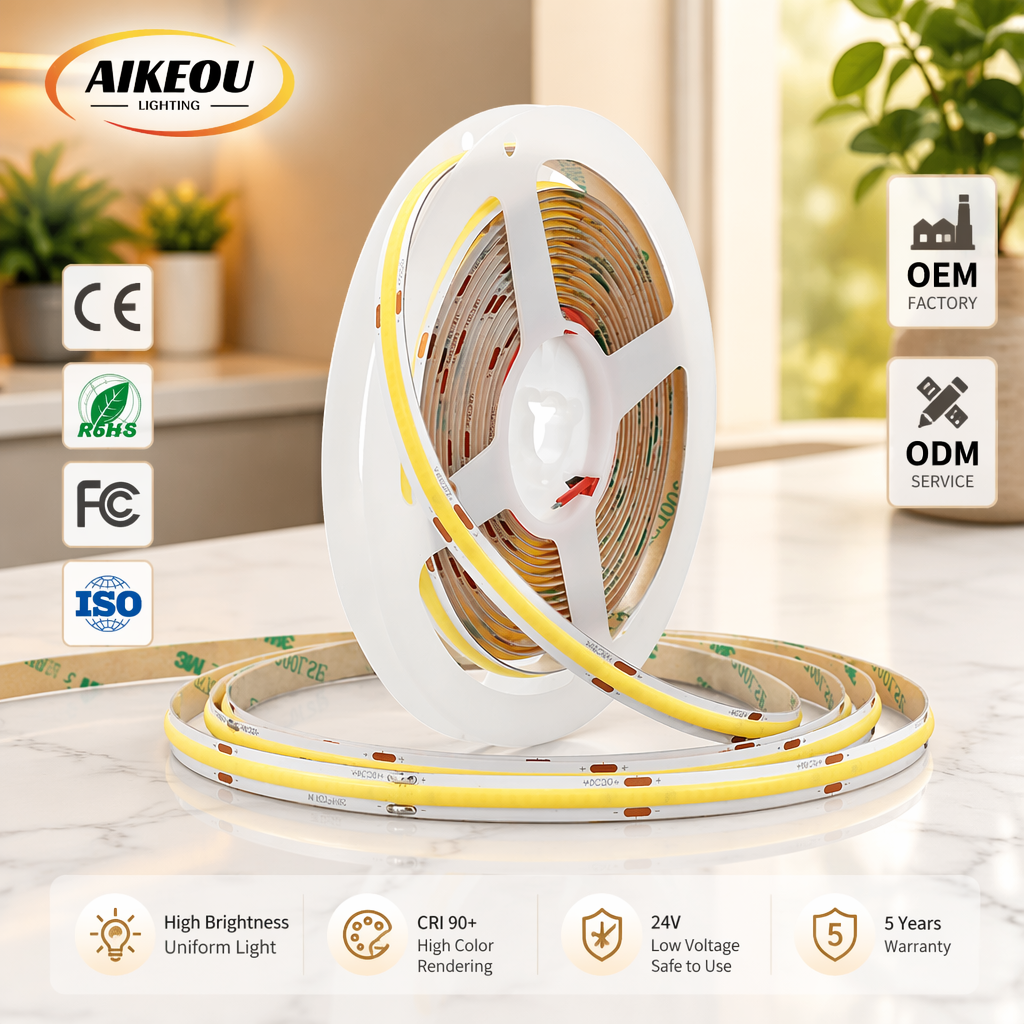



SGS-Verified Manufacturing Infrastructure in Shenzhen
Shenzhen Vokud Technology Co., Ltd. operates a vertically integrated production ecosystem designed for international OEM/ODM lighting brands, commercial distributors, and architectural engineering firms requiring absolute spectral binning and thermal reliability.
3-Oz Rolled Annealed Copper PCB
To eliminate damaging voltage drop over long linear runs, our flexible printed circuit boards (FPC) utilize dual-layer 3-ounce pure copper substrates. This yields superior thermal dissipation, structural tensile resilience, and continuous electrical stability across 10-meter single-feed runs.
IP68 Silicone Co-Extrusion
Our outdoor and marine-grade programmable LED strips utilize integrated silicone co-extrusion technology (non-yellowing, anti-UV, saline resistant). Unlike cheap PVC tubing, our IP68 rated housing survives thermal shocks from -40°C to +80°C without cracking, clouding, or color shifting.
Strict Binning & Spectrophotometry
Every batch of LED dice undergoes automated optical sorting inside our certified photometric testing laboratory. We guarantee 3-step MacAdam Ellipse color consistency (SDCM < 3) across multiple order shipments, ensuring repeat B2B orders match installed project phases seamlessly.
Technology Trends Shaping Programmable LED Linear Lighting
As digital control protocols evolve, commercial buyers are shifting from traditional discrete SMD pixel strips to continuous COB packaging, higher PWM refresh frequencies, and hybrid control interfaces.
1. The Shift to High-Density COB Addressable Architectures
Historically, addressable lighting relied on discrete SMD packages (such as SMD 5050 or 2835) combined with external ICs (WS2811) or integrated ICs (WS2812B, SK6812). While effective, discrete SMD strips create harsh "hotspots" or pixel graining when placed in shallow aluminum channels or exposed reflective surfaces.
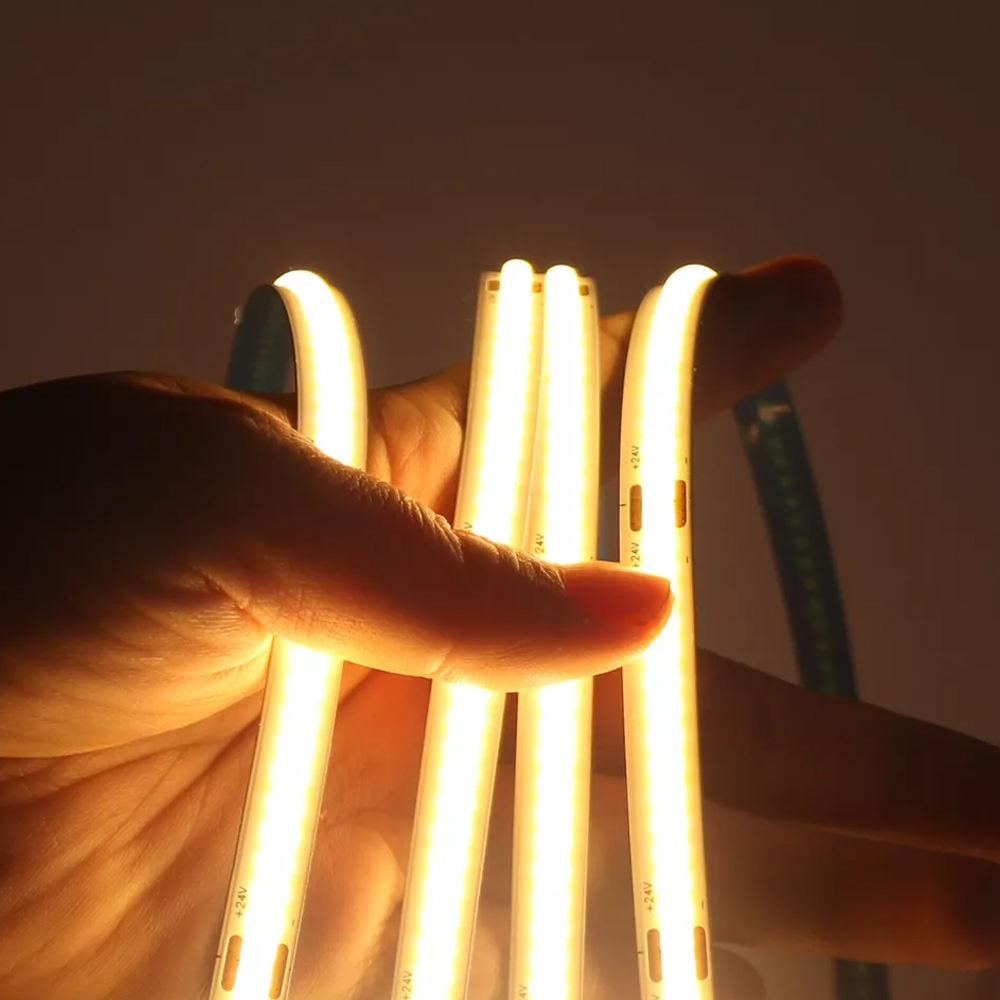
The industry trajectory is rapidly converging on COB (Chip-on-Board) Programmable Strips. By wire-bonding up to 576 micro-LED flip-chips per meter directly onto the flexible PCB substrate and encapsulating them under a continuous fluorescent phosphor gel sleeve, dotless addressable lighting is achieved without bulky optical diffusers.
| Technical Metric | Legacy SMD Pixel Strip | Next-Gen Programmable COB |
|---|---|---|
| Hotspot Elimination | Requires deep diffuser (15mm+) | 100% Seamless / Zero Diffuser |
| Beam Angle | 120° Directional | 180° Continuous Lambertian |
| Min. Bending Radius | 25 mm (Package Stress) | 10 mm (Micro Flip-Chip) |
| Thermal Impedance | High (Plastic Package) | Low (Direct PCB Bonding) |
| PWM Refresh Rate | 400Hz - 1.2kHz | 2.0kHz - 3.84kHz (Flicker-Free) |
2. Dual-Signal Redundancy (Break-Resume ICs)
Single-data-line protocols (e.g., standard WS2812B) suffer from single-point failure modes: if one LED or IC chip fails, the data stream halts, leaving the remainder of the strip completely unlit. Advanced B2B procurements are transitioning to WS2813, WS2818, or GS8208 IC protocols featuring dual-data signal lines (Main Data + Backup Data). A single defective chip is bypassed automatically, preserving full operation for high-value commercial architectural installations.
3. High PWM Frequencies for Broadcast & Film
With video content production, virtual production studios, and retail displays requiring camera recording, lower Pulse Width Modulation (PWM) dimming causes visual banding and stroboscopic flicker on camera sensors. Modern programmable drivers and ICs operating above 3,840 Hz PWM refresh rates are now mandatory for high-end hospitality, stage, and broadcast projects.
4. Ultra-Narrow Width PCBs (down to 2.7mm)
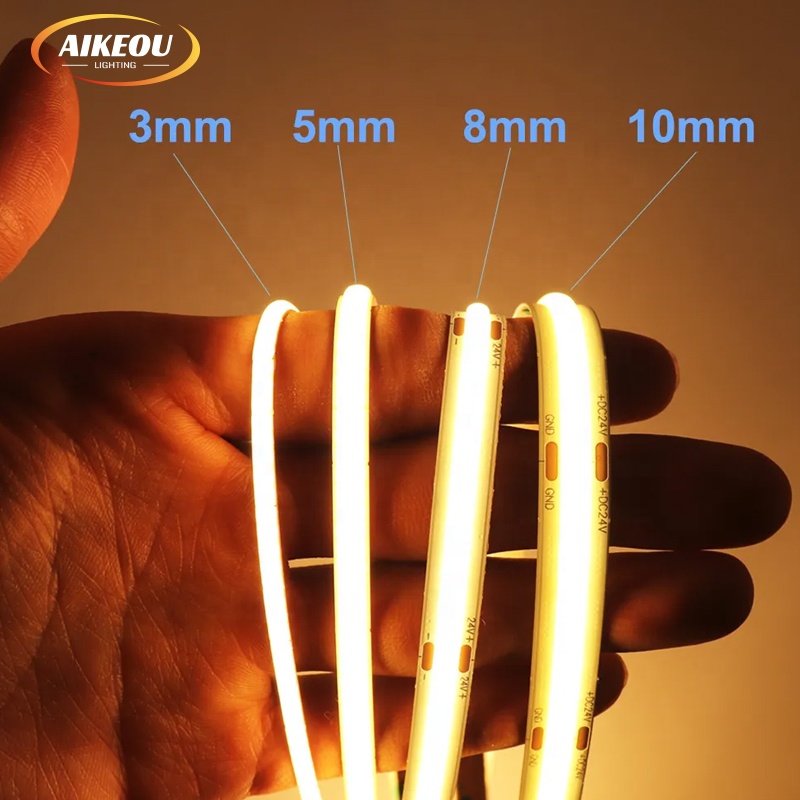
Miniaturization is a core architectural requirement. Micro-channels integrated into millwork, acoustic panels, stair nosing, and luxury joinery demand ultra-narrow circuit profiles. By leveraging high-density SMT lines and micro flip-chips, customized programmable LED strips with 2.7mm, 3mm, and 4mm PCB widths are replacing traditional 10mm wide strips without sacrificing current handling capacity.
Global Sourcing Trends: Total Cost of Ownership (TCO)
When sourcing wholesale programmable LED strips from China, forward-thinking buyers evaluate factors beyond initial unit price per meter. Total Cost of Ownership is heavily impacted by yield reliability, regulatory compliance, and custom integration flexibility.
Supply Chain Risk Mitigation via Quality Certifications
Importing non-compliant LED luminaires into the EU, UK, or North American markets poses severe customs seizure risks, retailer rejections, and liability hazards. Reliable manufacturing partners must provide comprehensive, verifiable testing documentation:
- ✓ CE-EMC & CE-LVD: Ensuring low-voltage directive compliance and zero electromagnetic interference with surrounding building systems.
- ✓ RoHS 3.0 & REACH: Guaranteeing absence of heavy metals, lead solder, or hazardous plasticizers in silicone extrusions.
- ✓ FCC Part 15 Class B: Mandatory verification for North American digital device emissions, especially critical for high-speed IC clock signals.
The Rise of OEM Customization & Kitting Services
B2B buyers are moving away from stock 5-meter rolls toward factory-customized, job-ready kitting solutions. Key supply chain trends include:
- ✓ Custom Cut Lengths & Pre-Soldered Wire Harnesses: Eliminating labor-intensive soldering on job sites by receiving factory-IP-sealed custom lead lengths.
- ✓ Private Label Packaging & Barcoding: Custom printed anti-static bags, reel stickers, master carton markings, and serial numbers for automated warehouse logistics.
- ✓ Dedicated BIN Allocation: Locking specific LED bin numbers for multi-year multi-phase construction projects.
Frequently Asked Questions for B2B Importers
In-depth technical answers addressing engineering, order MOQ, driver calculations, and control protocols for commercial sourcing decisions.
Request a Custom Technical Quote & Free Sample Kit
Partner directly with Shenzhen Vokud Technology Co., Ltd. for factory-direct wholesale pricing, certified engineering support, and rapid turnaround on custom programmable COB and RGBIC LED strips.
