Featured High Density LED Strip Products
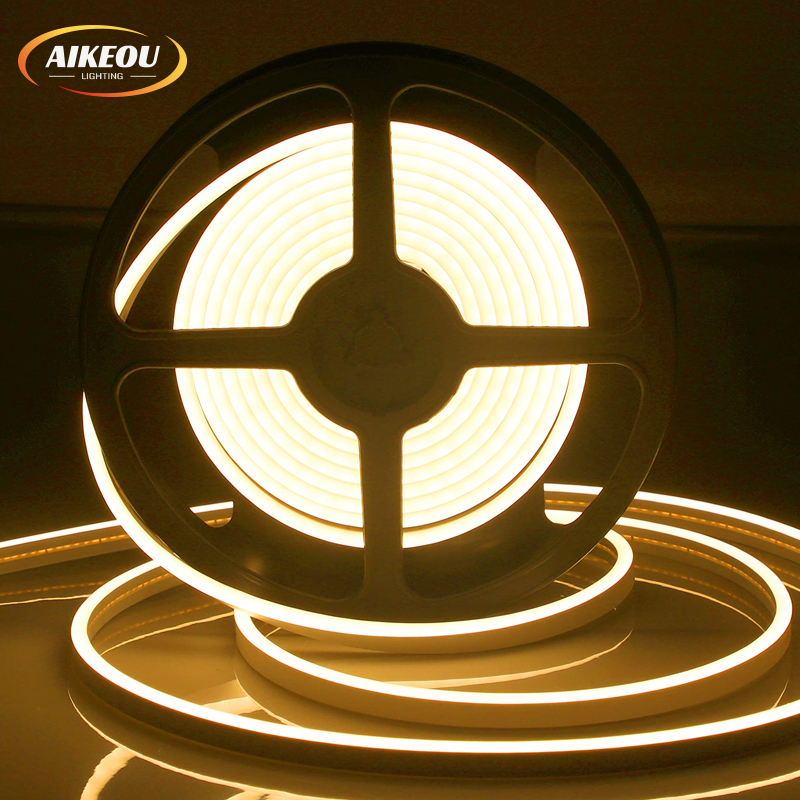
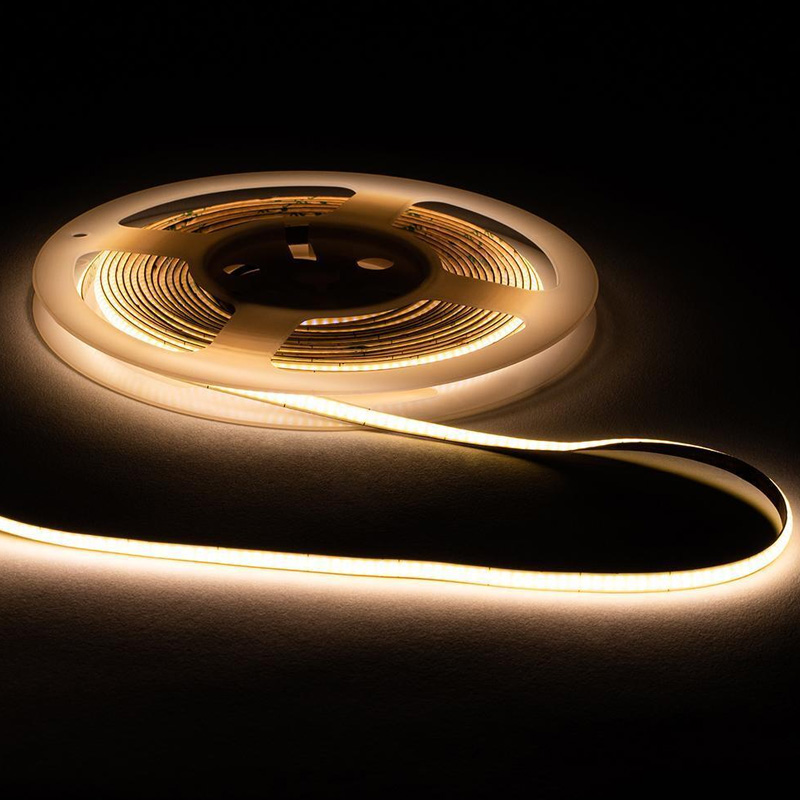
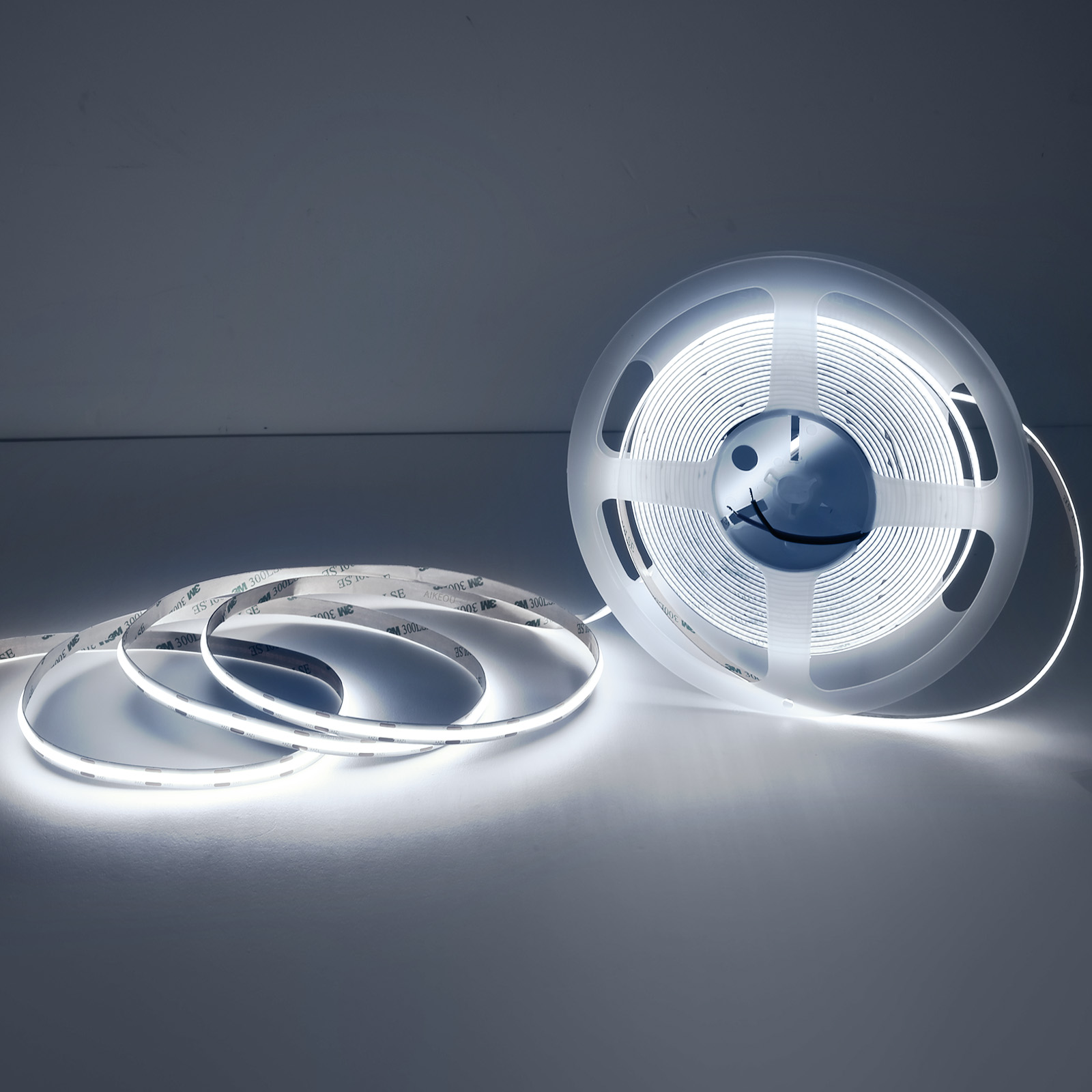
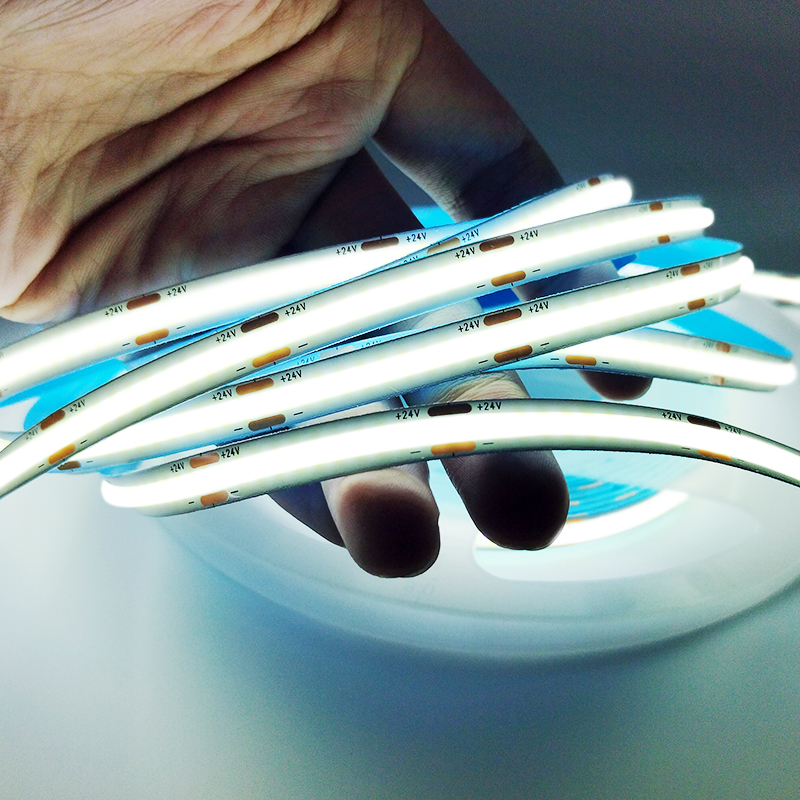
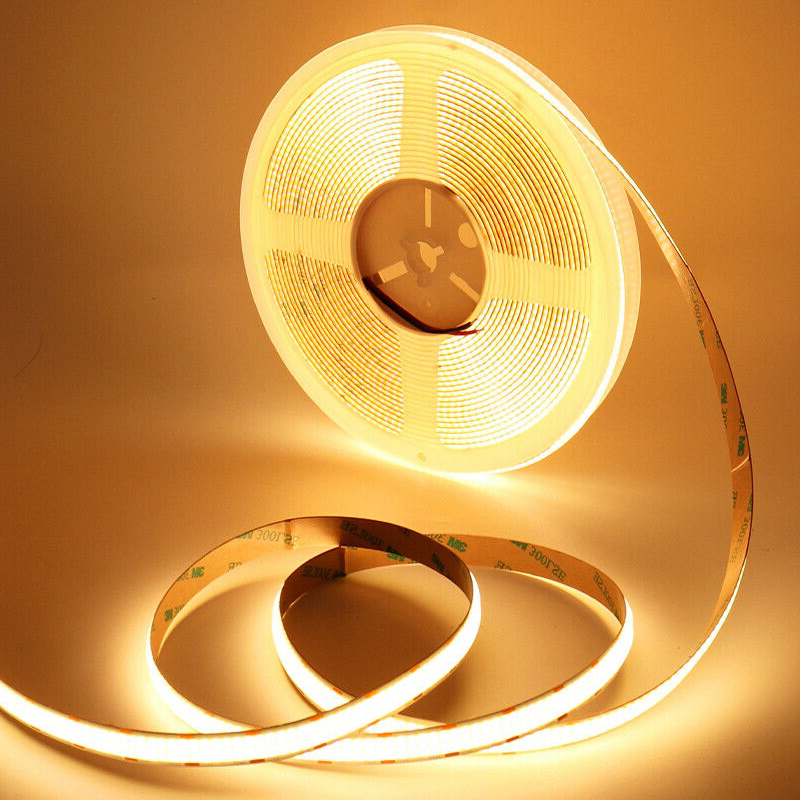
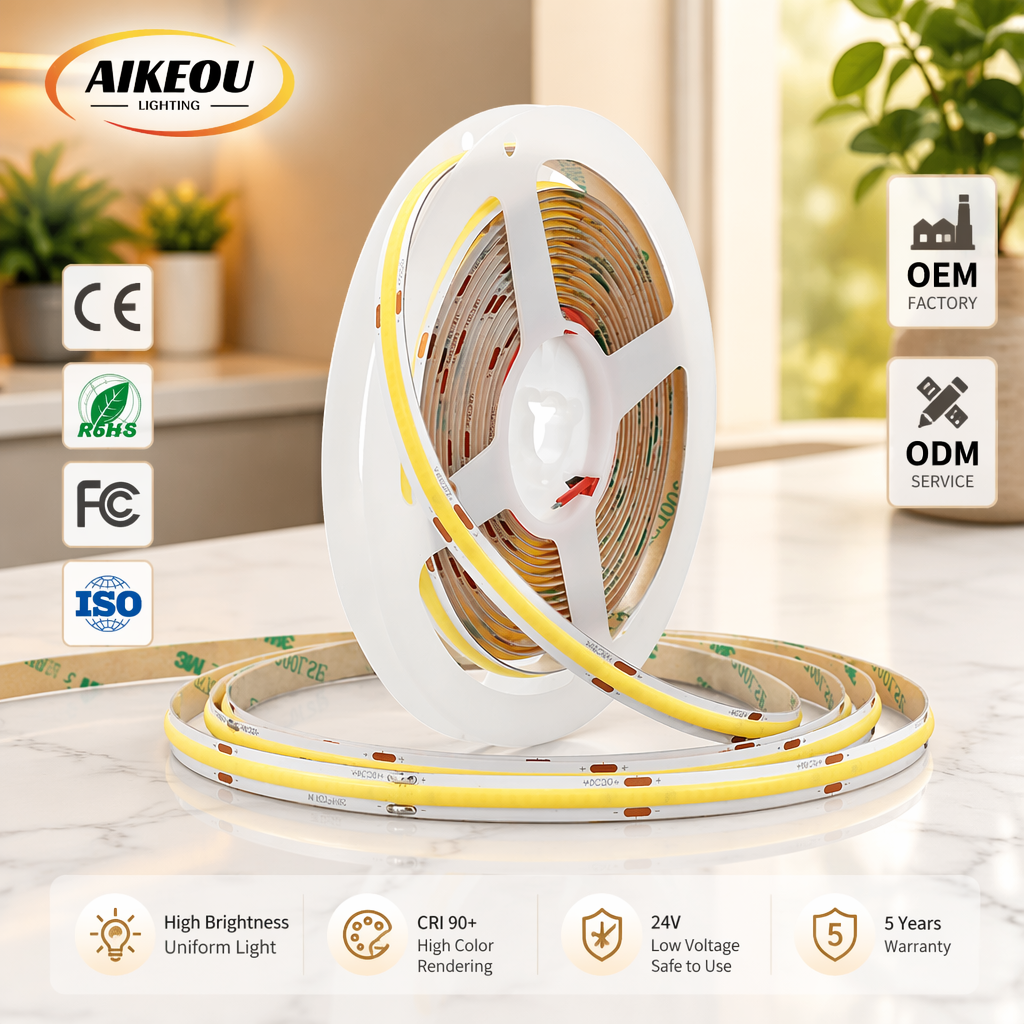
Direct factory supply featuring dotless COB technology, flexible PCB engineering, precise color binning, and smart IP-rated encasements.

1. Strategic Landscape: China Wholesale High Density LED Strip Manufacturing
The global solid-state lighting (SSL) market has experienced a fundamental paradigm shift. Traditional Surface Mounted Device (SMD) LED strips—characterized by visible LED hotspots, uneven luminescent profiles, and thermal bottlenecking—are increasingly being replaced by High Density Linear LED Systems. Chief among these innovations is Chip-on-Board (COB) and Chip Scale Package (CSP) strip manufacturing technology. As global lighting designers, electrical engineering contractors, and OEM brand distributors demand continuous, spot-free linear illumination, China's manufacturing supply chain, particularly centered in Shenzhen and Guangdong, has established itself as the world's premier production hub.
When evaluating a China Wholesale High Density LED Strip Factory & Exporter, wholesale importers and enterprise buyers must analyze technical capabilities beyond simple price-per-meter metrics. High-density manufacturing requires advanced surface-mount technology (SMT), sub-micron flip-chip bonding, automated silicone phosphor dispensing, and multi-stage photometric testing. A superior factory ensures thermal management stability across high chip-density layouts—ranging from 320 LEDs/m, 480 LEDs/m, to ultra-dense 600 LEDs/m configurations—while offering dual-layer 2oz/3oz rolled copper flexible printed circuits (FPCB) to suppress voltage drop across long installation runs.
Information Gain Insight: Unlike standard 12V/24V SMD strips that suffer from heat accumulation when chip density exceeds 120 LEDs/meter, high-density COB strips utilize flip-chip die technology directly bonded onto the copper substrate. This eliminates gold wire connections, reduces thermal resistance by over 35%, and achieves continuous 180° light distribution without deep aluminium diffuser channels.
2. Core Enterprise Advantages & OEM/ODM Engineering Capabilities
Partnering directly with a verified China manufacturing facility offers global buyers structural advantages in pricing, technological customization, supply chain resilience, and quality assurance. Our manufacturing enterprise integrates vertically from LED chip binning to final IP68 silicone extrusion, providing white-label and private-label partners with an unassailable competitive edge in regional markets.
Direct Flip-Chip Packaging
Automated high-speed die bonders secure bare LED chips directly onto the flexible PCB substrate, achieving packaging densities up to 600 chips/m without wire-bonding failure points.
Strict Color Binning (<3 SDCM)
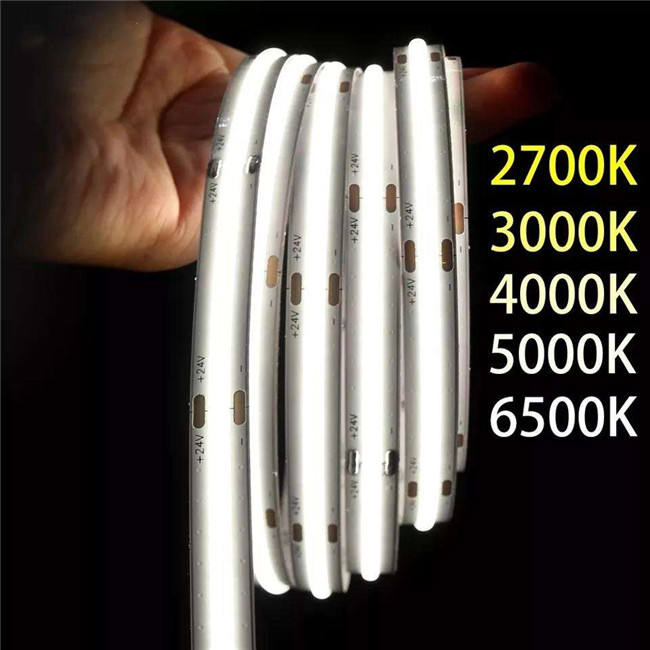
Automated optical sorters guarantee color consistency across production batches. All CCT options (2700K, 3000K, 4000K, 6000K, CCT Tunable) remain strictly within 3-step MacAdam Ellipses.
Heavy Copper FPCB Substrates
Utilizing 2oz or 3oz double-sided electrolytic rolled copper PCBs reduces internal electrical resistance, lowers operating temperatures, and prevents catastrophic voltage drop.
2.1 Complete OEM/ODM Customization Parameters
For international buyers requiring bespoke product specifications, direct factory sourcing unlocks total engineering control over the following product parameters:
- FPCB Width Options: Ultra-narrow 2.7mm, 3mm, 5mm for architectural architectural slots; standard 8mm, 10mm for generic channels; and 12mm-15mm for double-line, high-wattage commercial fixtures.
- Voltage Configurations: DC 5V (USB smart DIY), DC 12V (automotive/compact cabinets), DC 24V (standard commercial runs up to 10m without drop), and High Voltage AC 110V/220V (driverless long-distance outdoor facades up to 50m).
- Phosphor Formulations: High Color Fidelity options achieving CRI (Ra) > 90, Ra > 95, and Television Lighting Consistency Index (TLCI) > 97 with TM-30-18 spectrum compliance for museum and broadcast studio applications.
- Ingress Protection (IP) Engineering: IP20 (Indoor dry), IP65 (Silicone glue spray / Nano-coating), IP67 (Silicone tube extrusion), and IP68 (Solid silicone co-extrusion for sauna, swimming pool, and harsh marine environments).
3. Technical Breakdown: COB vs. High-Density SMD vs. CSP Technology
To assist technical procurement officers and commercial buyers in specifying the appropriate linear engine, the table below outlines the structural distinctions between traditional high-density SMD, modern COB, and emerging CSP LED strips:
| Performance Metric | Standard High-Density SMD (e.g., 2835 120D) | Dotless COB Strip (320-528 Chips/m) | Next-Gen CSP Strip (608+ Chips/m) |
|---|---|---|---|
| Luminous Uniformity | Visible hotspots; requires deep profile + frosted lens | 100% Seamless dotless light, zero diffusion clearance needed | Ultra-bright dotless line; high spatial luminance |
| Beam Angle | 120 Degrees | 180 Degrees continuous dispersion | 145 - 160 Degrees wide dispersion |
| Thermal Resistance (Rth) | High (~45-60 K/W due to SMD package) | Low (~15-25 K/W direct chip-to-copper) | Ultra-low (<12 K/W direct ceramic/copper contact) |
| Flexibility & Bending Radius | Moderate (Risk of SMD solder joint cracking) | Superior flexibility (No rigid plastic chip packages) | High flexibility; minimal solder fatigue risk |
| Lumen Efficacy Range | 90 - 110 lm/W | 100 - 130 lm/W (Dependent on phosphor layer) | 120 - 150 lm/W (High energy efficiency) |
4. Future Sourcing & Procurement Trends for Global B2B Buyers
As the international LED lighting market matures, B2B procurement strategies are shifting from spot purchasing toward long-term strategic vendor integration. Wholesalers, engineering suppliers, and retail brand owners must align their inventory and sourcing roadmap with key emerging global trends over the next 3-5 years:
4.1 Convergence with Smart Building Protocols & IoT
High-density LED strips are no longer isolated static lighting elements. Modern commercial real estate and luxury residential projects demand native compatibility with smart control protocols. Sourcing trends indicate a sharp increase in demand for addressable RGBIC, SPI, and DMX512 high-density COB strips, as well as dual-color CCT tunable white systems integrated with Matter, Zigbee 3.0, Wi-Fi 6, and Bluetooth Mesh controllers. B2B importers must prioritize manufacturers offering pre-tested plug-and-play driver and controller bundles alongside raw tape reels.
4.2 Compliance with Stringent Global Energy & Environmental Regulations
Regulatory bodies in major import destinations have continuously raised the bar for optical efficiency and eco-design standards. In the European Union, the updated Energy Labelling Regulation (EU 2019/2015) and Eco-design Requirements (EU 2019/2020) enforce strict lumen-per-watt thresholds and mandatory standby power limits. Similarly, Title 24 Joint Appendix 8 (JA8) in California demands high CRI (Ra ≥ 90, R9 ≥ 50) combined with high efficacy. Leading China LED strip exporters are responding by re-engineering flip-chip blue dies and optimizing phosphor slurry formulas to achieve >140 lm/W without sacrificing high color rendering fidelity.
4.3 Demand for Miniaturization and "Cut-Anywhere" Architectural Profiles
Architectural lighting design is moving toward invisible fixture footprints. Linear slots are shrinking from traditional 15mm-20mm tracks down to 3mm, 4mm, and 5mm millwork grooves in custom cabinetry, acoustic paneling, and dry-wall recessing. Consequently, procurement trends heavily favor ultra-narrow 3mm/5mm high-density COB strips and "Mini-Cut" or "Cut-Anywhere" linear circuitry—allowing installers to trim the strip at increments as short as 5mm to 10mm (or anywhere along the trace) to eliminate dark shadows at profile corners and end-caps.
5. Technology & Development Trends in High Density Linear Lighting
Understanding the underlying technological trajectory of high-density LED manufacturing enables wholesale buyers to anticipate market shifts, prevent inventory obsolescence, and position their catalog ahead of competitors.
5.1 Advanced Phosphor Continuous Encapsulation
The core technological breakthrough of the COB LED strip is continuous linear silicone-phosphor dispensing over hundreds of micro-dies mounted on a flexible circuit. Advanced factories utilize machine-vision optical dispensing nozzles that measure chip height and pitch dynamically in real-time. This guarantees precise layer thickness across a 50-meter production roll, preventing color temperature shifts (e.g., yellowing at the edges or blue leaks near cut points) that plague low-tier manufacturers.
5.2 Direct-Drive High Voltage & Driverless Long-Distance Runs
For large-scale commercial facades, perimeter fencing, and outdoor landscaping, traditional 12V/24V low-voltage systems require heavy step-down transformers every 5 to 10 meters to prevent dimming caused by IR voltage drop. The technical development trend toward High-Voltage AC 110V/220V COB linear neon strips solves this issue. Incorporating miniature constant-current ICs directly onto the flexible PCB enables continuous single-feed runs of 50 to 100 meters, dramatically reducing electrical labor and transformer equipment costs for engineering buyers.
5.3 Full-Spectrum & Human-Centric Lighting (HCL)
Human-Centric Lighting (HCL) focuses on replicating natural daylight curves to support human circadian rhythms. Development in high-density LED strips now emphasizes full-spectrum chips that mirror the sun's spectral power distribution (SPD)—suppressing harmful short-wave blue spikes (~450nm) while enhancing beneficial continuous blue-cyan wavelengths (~480nm). High-density CCT tunable COB strips (ranging from warm 1800K candle-light to crisp 6500K daylight) provide the smooth, flicker-free dimming required for health-conscious workspace and hospitality installations.
Accelerate Your LED Sourcing with a Direct Factory Partner
Partner with an industry-leading China wholesale exporter. Contact our engineering team today to request customized OEM samples, full photometric LM-79/LM-80 test reports, and direct factory tier-1 volume pricing.
6. Frequently Asked Questions (FAQ) for B2B Importers & Buyers
Key technical and commercial inquiries regarding factory procurement, quality control, logistics, and custom manufacturing.
