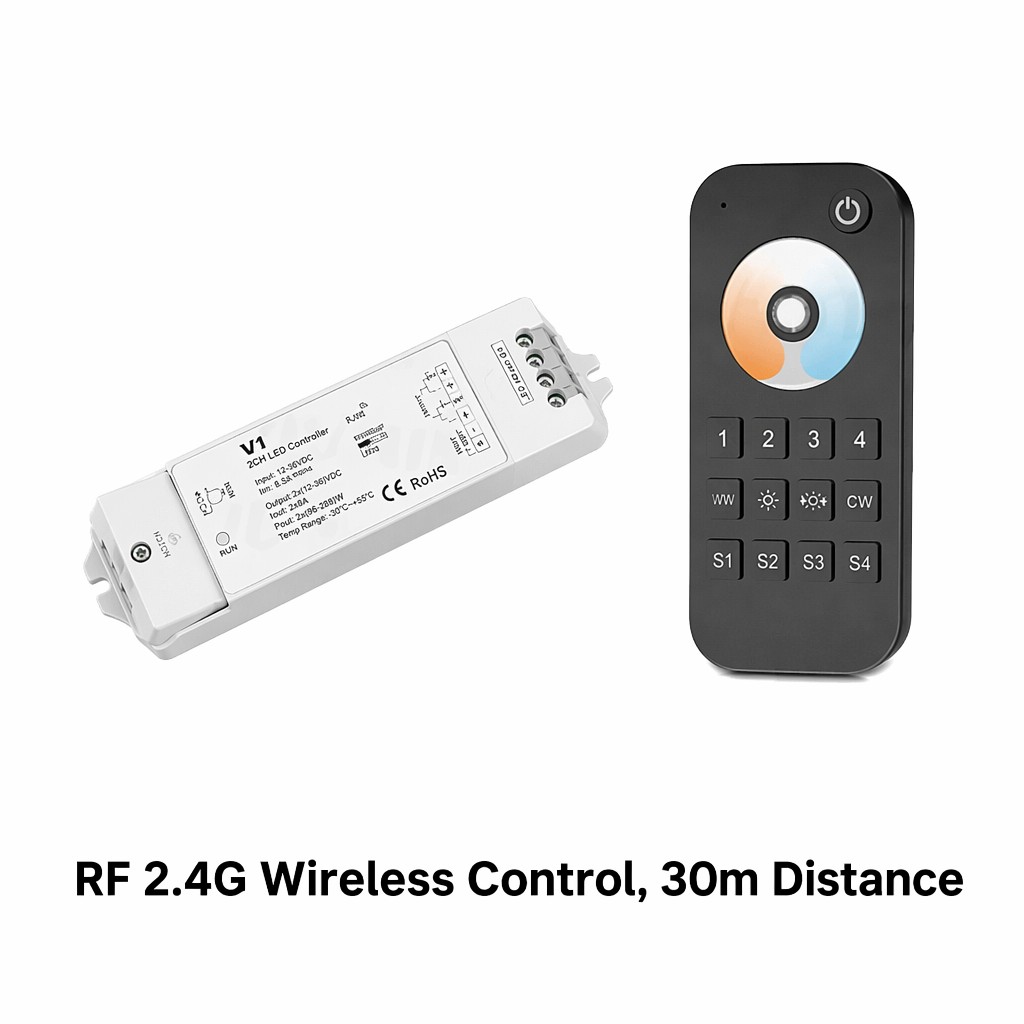
Factory Direct Catalog
High-Performance LED Strip Light Solutions
Explore our core product portfolio, featuring dotless Flip-Chip COB, addressable RGBIC, ultra-narrow mini-cut, and CCT tunable strips manufactured in Shenzhen.
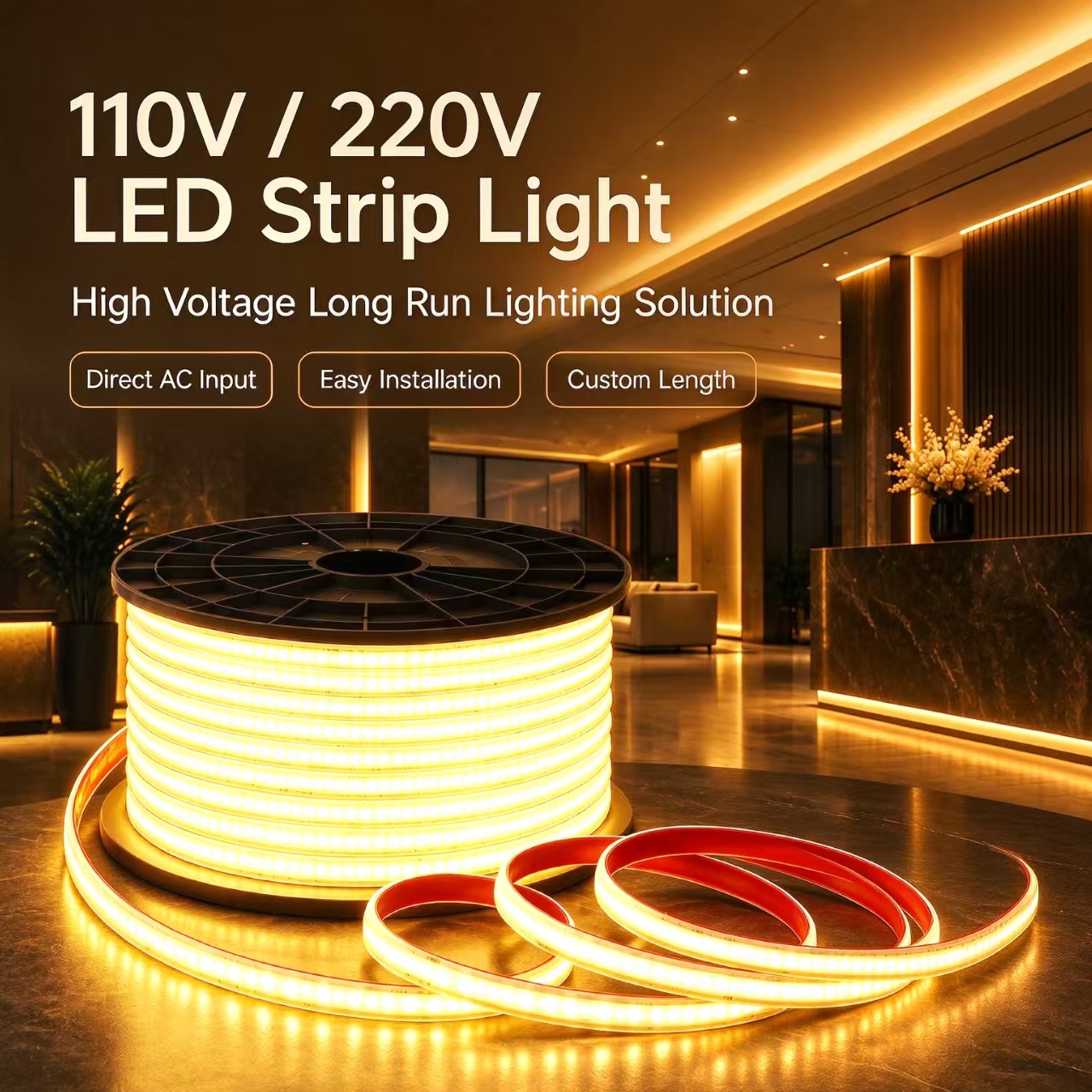
AIKEOU IP65 COB LED Strip 220V 110V Outdoor Waterproof IP68 Flexible High Voltage Light Strip
View Product Details
COB LED Strip Light 12V/24V 10m Copper 8mm Warm White Smart Flexible Cuttable Strip
View Product Details
COB LED Strip 2.7mm 384 LED/m Monochrome 12V 24V Flexible Copper Body IP20 Uniform Stair Light
View Product Details
720 LEDs/m RGB COB LED Strip Lights with IP20 Rating Remote Control Support DC 12V/24V
View Product Details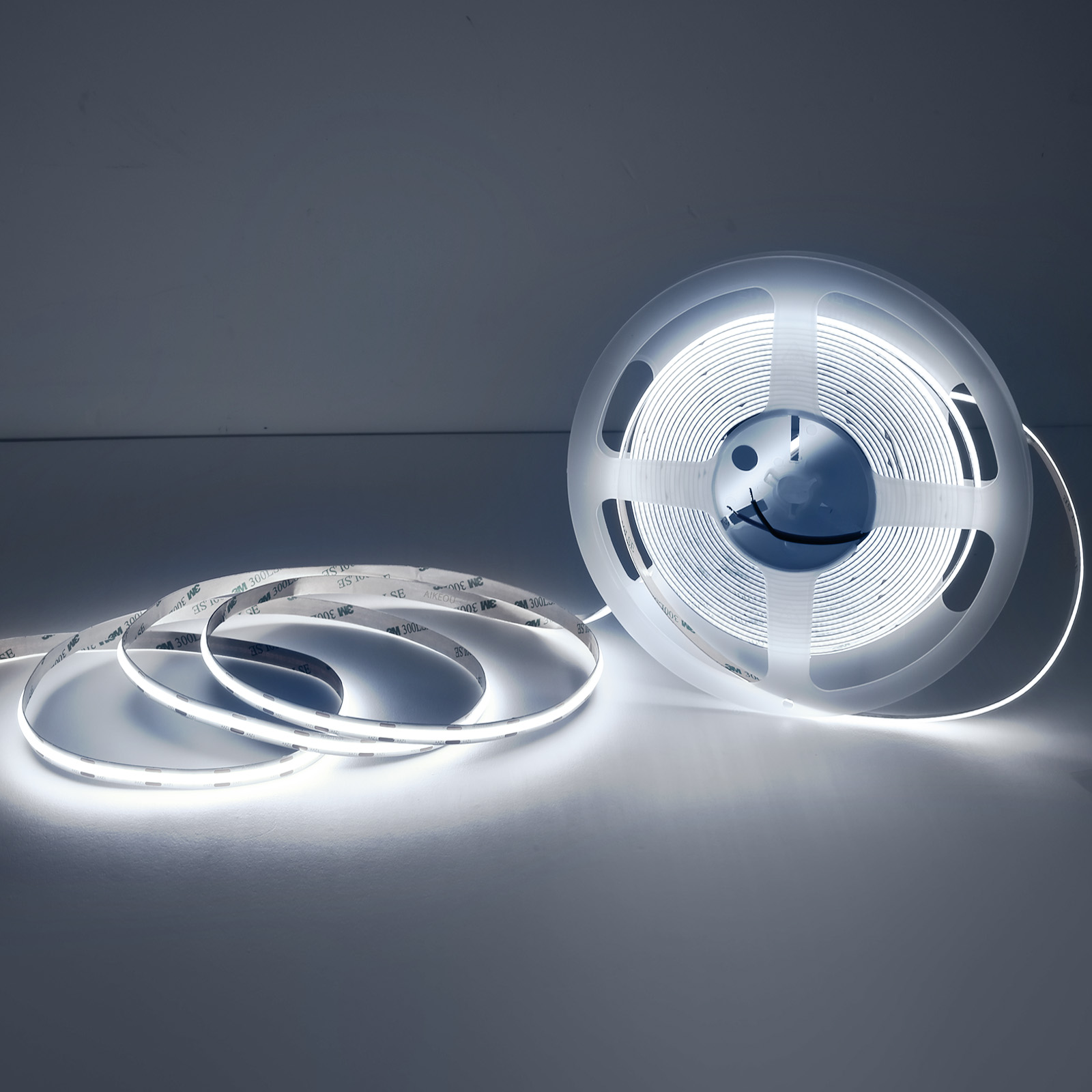
Dimmable 8W 14W/m Flexible PCB COB LED Strip Light DC5V 320LEDs/m 6000K Smart App Control
View Product Details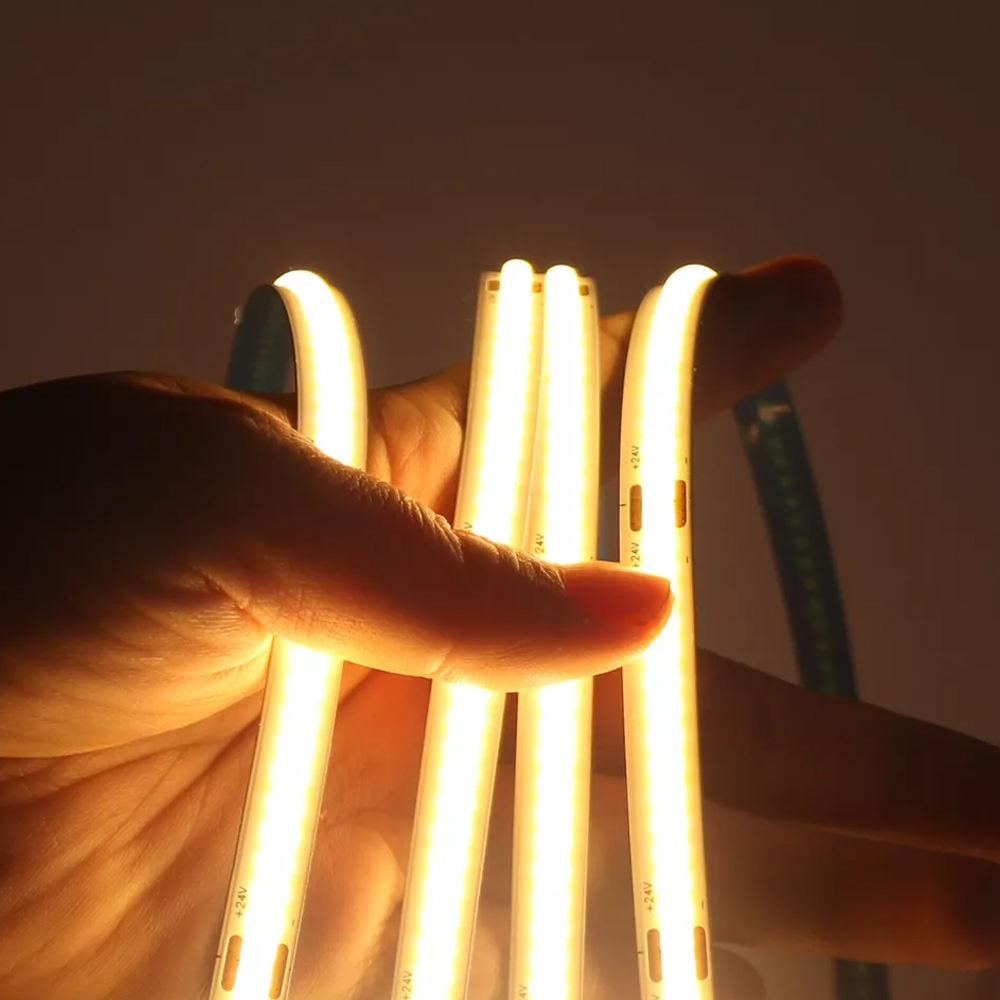
Aikeou 480LEDs/m 8mm 11W/m 24V IP20 3000K 4000K 6500K CRI90 Flexible Copper PCB COB Strip
View Product Details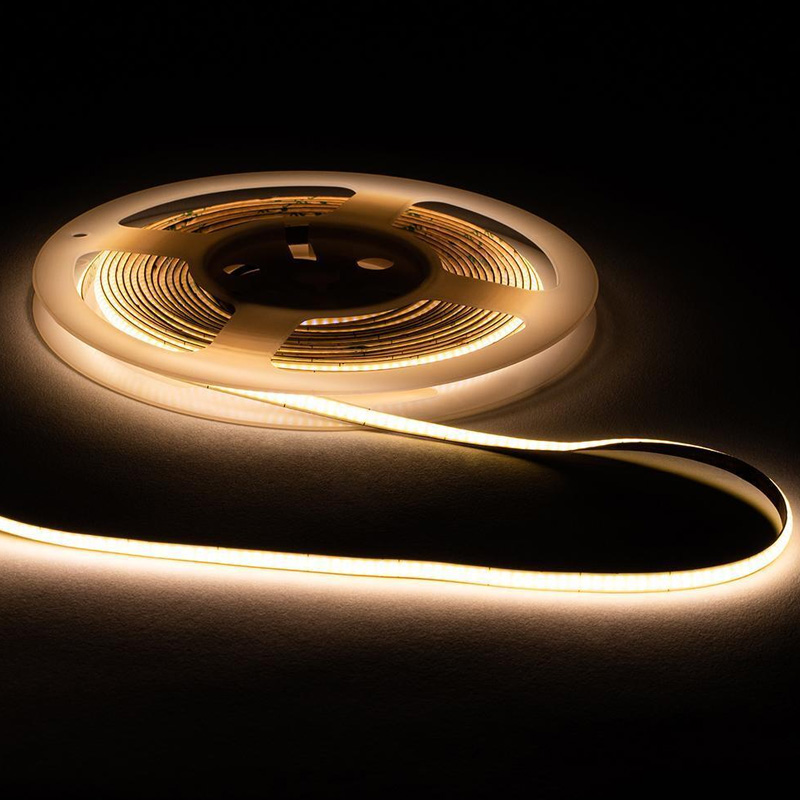
Aikeou 400/312/320/384/480LEDs/m 5mm 8mm 10W/m 12V 24V COB LED Light Strip for Cabinet DIY
View Product Details1. The Global Landscape of China LED Strip Manufacturing
Over the past decade, the global architectural, commercial, and residential lighting industries have experienced a fundamental technological pivot toward flexible linear LED lighting. At the epicentre of this transformation is Shenzhen, Guangdong Province—the premier manufacturing hub producing over 70% of the world's flexible printed circuit board (FPCB) LED linear fixtures. For global procurement officers, lighting designers, and OEM brand managers, sourcing from top-tier Chinese suppliers offers unparalleled advantages in economies of scale, supply chain integration, and rapid technological iteration.
However, the market presents significant differentiation in quality. Navigating China’s supplier landscape requires a granular understanding of manufacturing processes, photometric metrics, and supply chain audit procedures. Leading manufacturers, such as Shenzhen Vokud Technology Co., Ltd., have elevated the industry benchmark by transitioning from legacy Surface Mounted Device (SMD) encapsulation (e.g., SMD 2835, 5050, 3528) to state-of-the-art Flip-Chip COB (Chip-on-Board) and CSP (Chip Scale Package) architectures.
15+
Years Industry Expertise
165K+
Meters Monthly Capacity
Ra 95+
High Color Rendering Index
< 3-SDCM
MacAdam Ellipse Binning
2. Paradigm Shift: Legacy SMD vs. Next-Generation COB Technology
To make informed procurement decisions, commercial buyers must understand the physics and optical evolution separating Traditional SMD strips from modern Flip-Chip COB strips.
SMD Technology Bottlenecks: Traditional SMD strips mount packaged LED dies encased in plastic sub-mounts onto flexible PCBs using SMT reflow soldering. Because SMDs are spaced intermittently (typically 60 to 240 LEDs per meter), they create visible bright spots ("hotspots") and dark gaps. Achieving seamless, linear light with SMD strips necessitates installing deep aluminum profiles with frosted polycarbonate diffusers, which increases total installation depth, thermal resistance, and material costs.
Flip-Chip COB Engineering Breakthrough: Chip-on-Board (COB) technology eliminates the plastic LED package entirely. Hundreds of bare flip-chips (ranging from 320 to 720 dies per meter) are bonded directly onto a flexible dual-layer copper FPCB. The entire chip array is then coated with a continuous, yellow phosphor-infused silicone gel layer.
| Performance Parameter | Legacy SMD LED Strip (e.g., SMD 2835/5050) | Next-Gen Flip-Chip COB LED Strip |
|---|---|---|
| Optical Uniformity | Visible hotspots; requires deep aluminum profile diffusers | 100% Continuous dotless linear beam, 180° emission angle |
| LED Chip Density | 60 – 240 LEDs / meter | 320 – 720 Chips / meter |
| Flexibility & Bending Radius | Moderate; risk of solder joint stress fractures during tight bends | Ultra-flexible; die-bonded directly to copper with no wire bonds |
| Thermal Resistance ($R_{th}$) | Higher; thermal dissipation choked through plastic SMT package | 35% Lower; direct flip-chip contact with 2oz/3oz copper FPCB |
| Failures & Color Shift | Wire-bond degradation; localized pixel failure causing blackouts | No wire bonding; robust mechanical reliability and longer L70 lifespan |
| Profile Compatibility | Requires 15mm–20mm deep profiles to eliminate visible dots | Fits ultra-slim 3mm–5mm shallow grooves and micro-profiles |
Audit-Ready Manufacturing
Why Tier-1 Importers Partner with Shenzhen Vokud Technology
Verified on-site by SGS Group, Vokud provides full end-to-end OEM and ODM capabilities, ensuring zero-defect quality and international compliance.
SGS Verified Production Facility
On-site audited facility located in Shenzhen, operating under rigorous ISO9001 quality management systems with complete traceability from raw wafer to final export carton.
Strict MacAdam Ellipse Color Binning
We guarantee 3-step MacAdam Ellipse consistency (< 3 SDCM) across all standard batches. Multi-project reorders match previous color temperatures perfectly with zero batch-to-batch variation.
9 In-House Photometric Test Labs
Equipped with integrating spheres, IES goniophotometers, salt-spray corrosion chambers, IP68 waterproof immersion tanks, and thermal-shock aging racks.
Global Compliance Certifications
Complete regulatory documentation for seamless customs clearance in Europe, the Americas, and APAC, including CE, RoHS, FCC, EMC, and DoC test reports.
3. Future Procurement Trends in the LED Strip Industry (2025–2030)
As energy efficiency mandates tighten globally (e.g., EU ErP regulations and Title 24 in California), the strategic sourcing of linear lighting is evolving rapidly. B2B importers must align their purchasing roadmaps with five critical technological trends driving the market:
Trend 1: Micro-Pitch & Ultra-Narrow Mini-Cut COB Strips
Architectural lighting design is shifting toward invisible light sources. Demand is surging for PCB widths under 4mm (down to 2.7mm) with micro-cut points every 10mm or continuous cut-anywhere technology, enabling seamless integration into millwork, retail display cases, and curved furniture grooves.
Trend 2: Dynamic Addressable RGBIC + CCT Hybrid Architectures
Commercial venues, hospitality spaces, and modern smart homes are replacing standard static RGB strips with digitally addressable COB strips (utilizing ICs such as WS2811, WS2812B, and SPI protocols). The latest innovation integrates tunable dual-white (CCT) chips directly with RGB pixels under a single phosphor matrix, allowing smooth warm-to-cool transitions alongside dynamic chasing color effects.
Trend 3: Extreme Environment Silicone Co-Extrusion (IP68)
Legacy PVC and glue-filled waterproof sleeves tend to yellow, crack, and harden under UV exposure or thermal stress. The future belongs to silicone integrated co-extrusion, providing IP68 submersible protection, high UV resistance, chlorine resistance for swimming pools, and sauna-rated temperature tolerance up to 100°C.
Trend 4: High Efficacy Low-Power Consumption (>140 lm/W)
With rising electricity costs, commercial projects require higher lumen output with lower wattage draw. Advanced flip-chip technology paired with ultra-pure copper flexible PCBs now achieves efficacy exceeding 140 lumens per watt, significantly reducing total cost of ownership (TCO).
Trend 5: Driverless High-Voltage AC Direct COB Strips
For long-distance perimeter lighting, stadium facades, and outdoor landscaping, traditional 12V/24V strips suffer severe voltage drop over 10 meters. Direct 110V/220V AC COB strips with integrated IC rectifiers enable continuous single-feed run lengths of 50 to 100 meters without external power supplies or line brightness fading.
4. Sourcing Roadmap: How to Audit a Chinese LED Strip Manufacturer
When evaluating suppliers in China, pricing alone should never be the sole decision metric. Sub-standard suppliers frequently cut costs by utilizing thinned copper FPCBs (0.5oz instead of 2oz), recycled silicone phosphor matrixes, or un-binned LED dies. B2B buyers should implement the following 4-stage quality audit framework before issuing POs:
Phase 1: FPCB Copper Weight
Request verification of 2oz or 3oz rolled-annealed (RA) copper flexible circuit boards. Heavy copper prevents voltage drop, lowers thermal resistance, and resists tearing during installation handling.
Phase 2: Thermal & Photometric Aging
Ensure the factory conducts 100% 4-hour burn-in aging tests on all finished reels prior to reel packaging. Verify LM-80 test reports for LED chips to guarantee long-term lumen maintenance.
Phase 3: Adhesive Backing Authenticity
Substandard thermal tape detaches within months of installation. Demand genuine 3M 300LSE, 9495LE, or VHB high-tack thermal conductive adhesive tapes specified for your mounting surface.
Phase 4: Waterproofing Material Grade
Specify food-grade silicone extrusion rather than epoxy resin or PVC. Silicone retains flexibility from -40°C to +200°C without yellowing or optical transmittance decay.
Buyer Knowledge Base
Frequently Asked Questions (FAQ) for B2B Importers
Get instant answers to critical engineering, logistics, and customization queries directly from our OEM technical team.
What is the Minimum Order Quantity (MOQ) for OEM/ODM orders?
Standard stock configurations for COB, CCT, and RGBIC LED strip lights start at a minimal 5 meters per reel MOQ. For custom OEM projects requiring tailored FPCB width, private label packaging, custom CCT tuning (e.g., 1800K, 2200K, or 4000K precise binning), or specialized wire connectors, the typical MOQ is 1,000 meters following prototype approval.
How does flip-chip COB technology prevent light spotting without diffusers?
Flip-chip COB strips mount ultra-dense LED dies (up to 720 chips/m) directly on the circuit board, covered by a uniform phosphor-silicone encapsulation bar. This transforms point-source light emitting diodes into a single continuous linear light source, delivering 100% spot-free illumination even when installed in ultra-shallow aluminum channels under 5mm deep.
How do I choose between 12V, 24V, and 48V low-voltage DC LED strips?
12V DC: Ideal for short automotive, cabinet, or DIY applications where cut points need to be short (e.g., every 10mm to 25mm).
24V DC: The industry standard for commercial lighting. Halves the operating current compared to 12V, allowing continuous run lengths up to 10 meters from a single power feed with minimal voltage drop.
48V DC / Constant Current IC: Used for long linear architectural runs (15m to 20m+) from one power point without driver attenuation or end-to-end dimming.
What certifications are required to import LED strips into North America and the EU?
For European markets, products must comply with the CE-LVD (Low Voltage Directive), CE-EMC, and RoHS directives, alongside ErP energy efficiency registration. For North American markets, compliance requires FCC certification for electromagnetic interference, alongside UL or ETL listed standards for low-voltage Class 2 drivers and LED strip assemblies.
Can you manufacture waterproof LED strips suitable for saunas and steam rooms?
Yes. We manufacture specialized high-temperature IP68 COB LED strip lights encased in fully enclosed silicone co-extrusion sleeves. These strips operate reliably in ambient temperatures exceeding 90°C to 100°C and 100% relative humidity, making them ideal for saunas, steam rooms, spa centers, and harsh marine environments.
What is your policy on color consistency across repeat orders?
We enforce strict MacAdam 3-Step (3-SDCM) color binning controls on all LED chip purchases. We record and store the optical spectrum data and binning codes for every customer order. When reordering months or years later, your production batch is mapped to the exact same Bin code to guarantee flawless color matching.
What customization options are available for OEM/ODM partnerships?
We offer full-spectrum customization including: FPCB width (2.7mm to 15mm), copper thickness (1oz/2oz/3oz), LED density (320, 480, 512, 720 chips/m), custom color temperatures (1800K to 10000K, Amber, Pink, Ice Blue, UV), custom cutting marks, pre-soldered cable leads/connectors, silk-screened brand logos, and custom retail packaging boxes.
How do you package and protect LED strip light reels for international freight?
Strips are wound on sturdy plastic reels (5m, 10m, or 50m lengths), packed inside moisture-proof anti-static aluminum foil bags with desiccant packs, heat-sealed, and placed into reinforced 5-ply corrugated export cartons. Master cartons are palletized and corner-protected for air or ocean freight handling.
Partner with China's Premier LED Strip Light Manufacturer
Looking for a reliable OEM/ODM supplier in Shenzhen? Request a customized engineering quote, factory catalog, or prototype sample kit today. Our technical specialists respond within 12 hours.
Get a Quote