Precision-Engineered Digital & COB LED Strips
Direct factory supply featuring high-density phosphor encapsulation, multi-protocol IC control, and extreme thermal resilience.


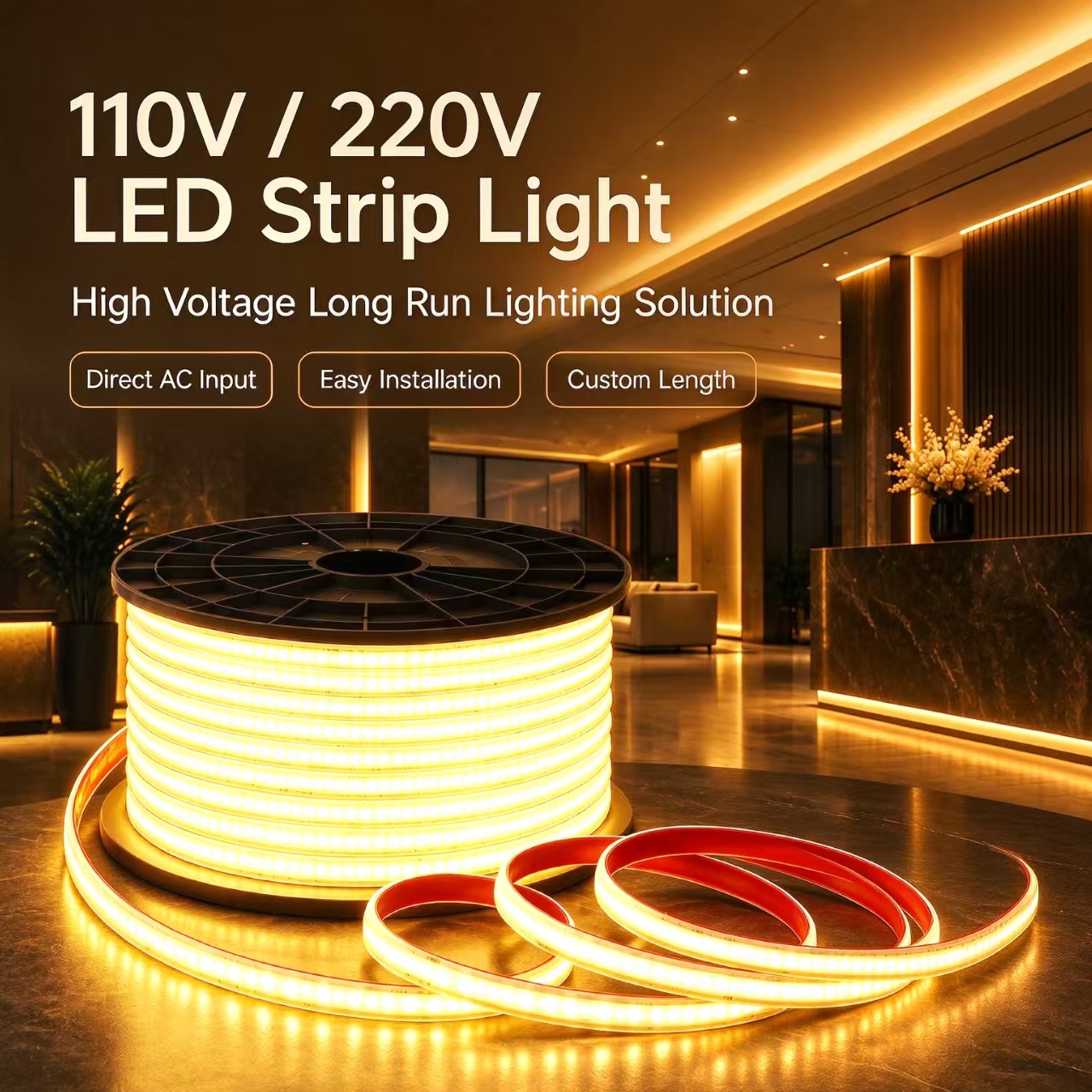

China's Premier Digital & COB LED Strip Infrastructure
SGS-verified operational capabilities based in Shenzhen, driving precision LED tape innovation for premier international OEM and ODM brands.
Engineering Breakdown: Sourcing Digital LED Strips from China Factory Partners
The global solid-state lighting (SSL) market is undergoing a structural paradigm shift. Conventional Surface Mount Device (SMD) linear tapes—historically dominated by 3528, 5050, and 2835 package geometries—are rapidly being superseded by high-density Chip-on-Board (COB) continuous phosphor arrays and addressable digital pixel linear modules (RGBIC / WS2811 / WS2812B / UCS1903). For international distributors, lighting project contractors, and OEM brand buyers, navigating China's manufacturing landscape requires an in-depth technical understanding of electrical design, thermal management, color consistency binning, and micro-IC control protocols.
1. Architectural Anatomy: COB vs. Addressable Digital SMD Strips
When specifying flexible LED light strips for high-end architectural, commercial, or entertainment applications, procurement managers must evaluate two distinct core technological paradigms:
| Technical Parameter | Chip-on-Board (COB) Linear Tape | Addressable Digital Pixel Strip (SMD + IC) |
|---|---|---|
| Luminous Efficacy & Uniformity | Dotless, continuous beam (up to 576 chips/m). Zero hotspots without diffusers. | Discrete pixel spots (30–144 LEDs/m). Requires aluminum diffuser profile for homogeny. |
| Control Protocol | Analog constant voltage (PWM dimming) or Dual CCT 2-wire / 3-wire tuning. | Digital SPI/DMX data bus (WS2811, WS2812B, SK6812, UCS1903, TM1914). |
| Color Rendering Index (CRI) | Ra > 90 / Ra > 95 standard; MacAdam Ellipse SDCM < 3. | Ra > 80 (Standard RGB/RGBW); specialized RGB-CCT dual-chip chips reach Ra > 90. |
| Thermal Dissipation Architecture | Flip-Chip LEDs bonded directly to 2oz/3oz rolled-copper FPCB. Low $R_{th}$. | Lead-frame SMD package heat sink transferred through solder pads to PCB copper trace. |
| Physical Flexibility & Cut Units | Ultra-flexible; micro-cut segments down to 10mm–25mm increments. | Cuttable per single IC control node (1 LED or 3 LEDs depending on circuit voltage). |
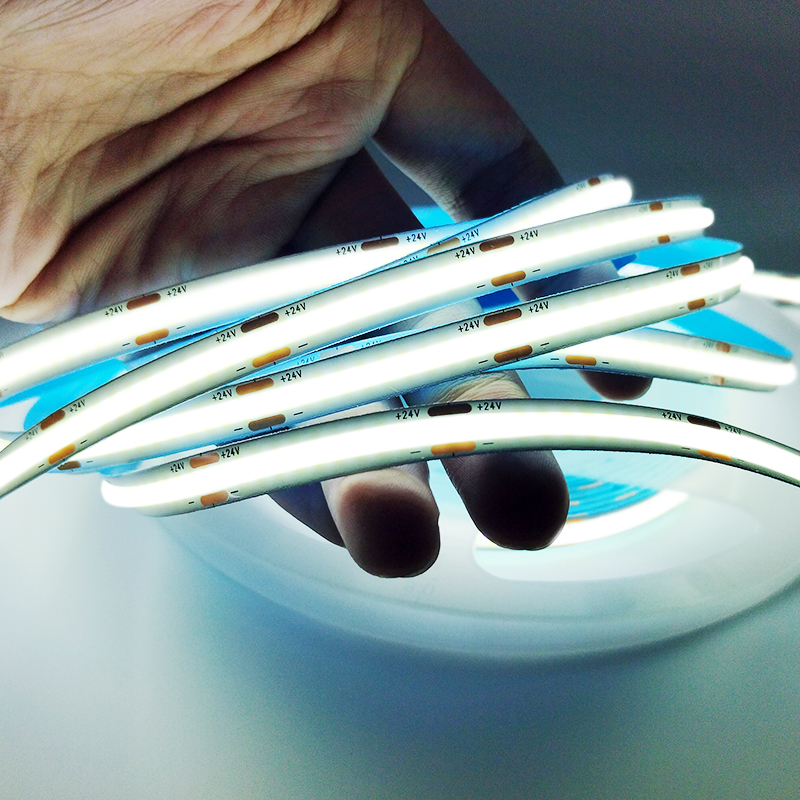
Flip-Chip COB Encapsulation Integrity: Direct chip-on-board bonding eliminates lead-wire wire bonding failures—a main cause of premature field degradation in low-cost SMD strips. By dispensing a single, continuous yellow phosphor silicone gel strip over flip-chips arranged at ultra-high spatial density (320 to 720 LEDs/m), COB technology achieves a 180° light distribution angle with non-visible pixelation, even when mounted inside ultra-shallow aluminum extrusions.
2. Micro-IC Control Protocols & Digital Signal Integrity
As a leading China wholesale manufacturer, our engineering lab emphasizes signal redundancy and noise immunity across long linear runs. When procuring addressable digital pixel LED strips (often marketed as RGBIC or Dream Color strips), understanding the underlying Integrated Circuit (IC) protocol is vital:
- Single-Data Bus ICs (WS2811 / WS2812B / SK6812): Cost-effective, widely supported by external SPI controllers, Arduino, Raspberry Pi, and Art-Net lighting consoles. However, a single damaged IC interrupts data flow down the remaining line.
- Dual-Data / Break-Point Resume ICs (WS2813 / WS2815 / CS8812): Feature dual signal wires (Data & Backup Data). If a single pixel is physically crushed or burnt out, the backup data channel seamlessly bypasses the failed node, preserving unbroken display continuity across commercial installations.
- High-Voltage Addressable ICs (DC 12V / 24V Integrated): Legacy 5V digital strips suffer severe voltage drops beyond 2.5 meters. Modern engineering integrates 12V or 24V step-down circuitry directly into the pixel module, allowing 10-meter to 15-meter single-ended power runs without color shifting toward the far end.
3. Thermal Management, FPCB Copper Weight, and Voltage Drop Control
A frequent point of failure in low-tier LED strip manufacturing is excessive electrical resistance across thin Flexible Printed Circuits (FPCB). Cheap wholesale suppliers often use 0.5oz or 1oz single-sided electro-deposited (ED) copper, resulting in rapid voltage drops, overheating, thermal color drift, and LED lumen degradation (L70 failure within 10,000 hours).
Our Shenzhen manufacturing facility utilizes double-sided 2oz (70µm) and 3oz (105µm) Rolled Annealed (RA) high-purity copper substrate layers. Rolled copper offers superior fatigue resistance during repeated bending compared to brittle ED copper. Combined with thermal conductive 3M 300LSE / VHB adhesive backings, our linear strips efficiently conduct junction temperature away from the LED dies ($T_j < 65^\circ\text{C}$ at $25^\circ\text{C}$ ambient operating temperature), ensuring an operational lifespan exceeding 50,000 hours certified by LM-80 test reports.
Why Top Global Lighting Brands Partner With Us
Refining OEM/ODM production standards with end-to-end quality assurance and direct factory pricing.
SGS On-Site Audited Facility
Our Shenzhen manufacturing complex is fully audited on-site by SGS Group. Production lines, QA/QC testing protocols, and trade capabilities are independently verified for buyer security.
MacAdam Ellipse CCT Binning
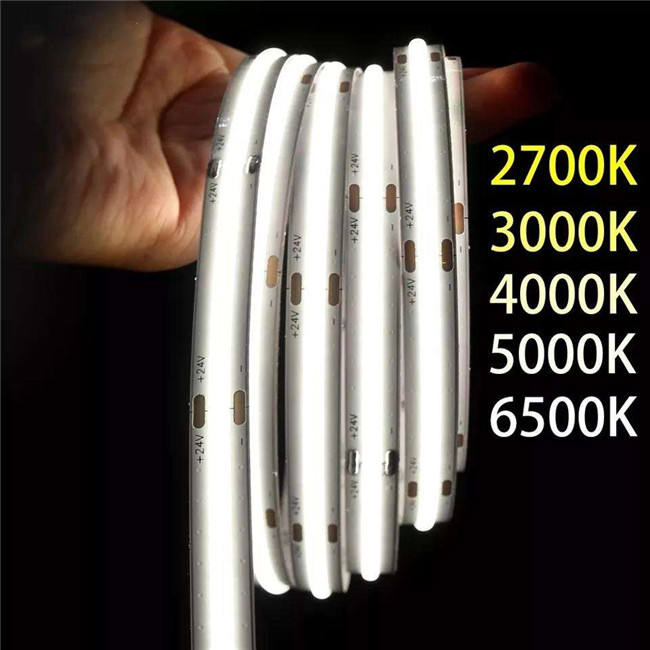
We enforce strict 3-step MacAdam Ellipse (SDCM < 3) binning across all white color temperatures (2700K to 6500K). This eliminates color temperature discrepancies between separate production lots.
Full ODM & Customization
From ultra-narrow 2.7mm PCBs to custom IP68 silicone co-extrusion profiles, private label packaging, and custom cut lengths, our R&D engineering team turns designs into certified products.
Global Regulatory Compliance
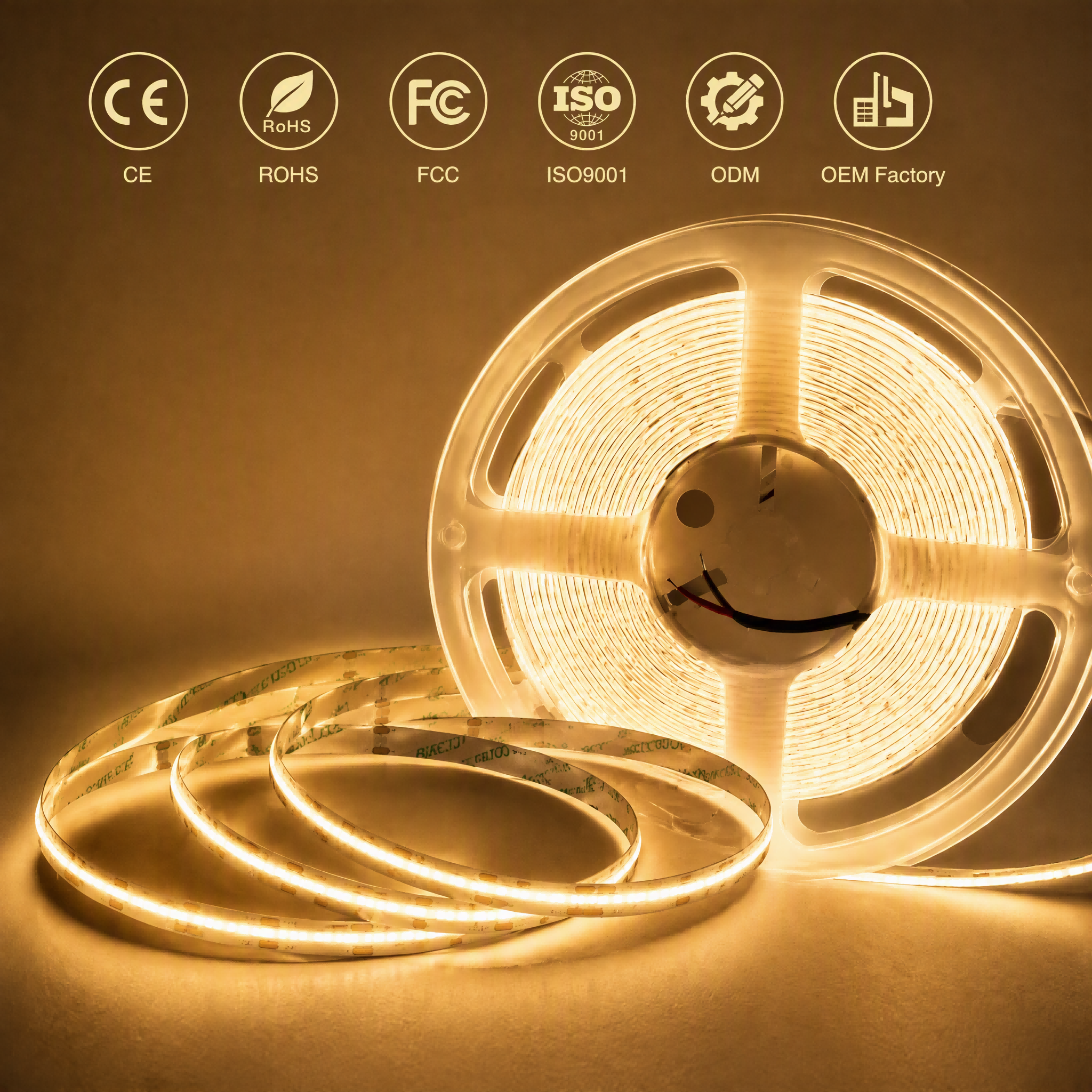
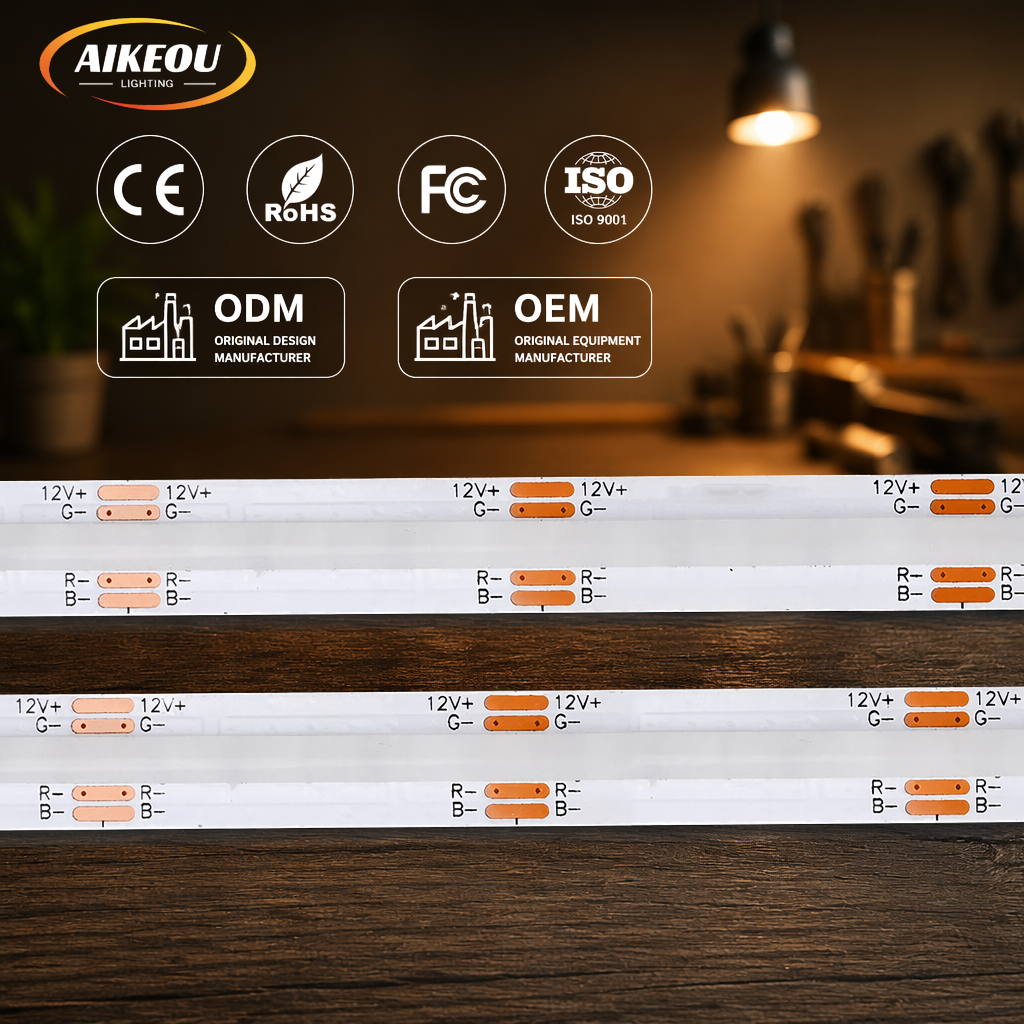
Every product batch is tested and backed by comprehensive CE, RoHS, FCC, and EMC certification files, ensuring seamless customs entry and retailer compliance across Europe and North America.
Low MoQ & Rapid Prototyping
We support agile sourcing strategy by offering standard sample orders starting at just 5 meters. Rapid functional prototyping allows lighting designers to test configurations before volume commitments.
Multilingual B2B Support
Our dedicated engineering and sales team communicates fluently in English and Spanish, providing technical datasheet reviews, layout calculations, and 24/7 post-purchase assistance.
Future Trends in Digital LED Strip Manufacturing & B2B Procurement
As the LED strip lighting market matures, B2B buyers must anticipate coming technical standards and consumer expectations over the next 3 to 5 years. Factory-level innovations in Shenzhen and Guangdong are driving several major shifts:
Trend 1: Micro-Narrow PCBs & Free-Cutting COB Flexible Strips
Architectural lighting design is moving toward minimal spatial visibility. Traditional 8mm and 10mm linear strip widths are giving way to ultra-narrow 2.7mm, 3mm, and 5mm FPC designs capable of delivering full lumen output without tearing or thermal choking. Furthermore, second-generation COB technology now features "Mini Cut-Anywhere" circuitry, where the cut unit length is reduced from standard 25mm or 50mm segments down to 5mm or individual chip cutpoints. This flexibility completely eliminates dark ends inside custom-length millwork and cabinet channels.
Trend 2: Smart IoT Integration & Wireless Ecosystem Compatibility
The rise of unified smart home protocols, notably Matter over Thread and Wi-Fi 6, is reshaping the digital LED strip control landscape. Wholesalers are transitioning away from proprietary 44-key IR remotes toward embedded smart controllers that integrate natively with Tuya, Smart Life, Apple HomeKit, Amazon Alexa, and Google Home ecosystems. Digital addressable strips now feature multi-channel SPI drivers that enable high-frequency PWM (up to 4000Hz), providing flicker-free dimming required for HD video recording studio and architectural photography applications.
Trend 3: Environmental Protection & Anti-Yellowing Silicone Extrusion
Legacy IP65/IP67 waterproof strips relied on cheap epoxy resin dripping or PVC tube sleeving. Within 6 to 12 months of UV exposure, epoxy resin cracks, yellows, and turns brittle, shifting color temperature significantly. Modern procurement standards demand integrated solid silicone co-extrusion technology (IP68). High-grade optical silicone maintains crystal-clear transparency across extreme operating ambient temperatures (-40°C to +80°C), resists salt spray corrosion, UV radiation, and chlorine exposure, making it essential for sauna, outdoor facade, and marine lighting projects.
Trend 4: Supply Chain Traceability & Total Cost of Ownership (TCO)
Global importers are consolidating vendor relationships around reliable tier-1 manufacturers who offer full component traceability. Evaluating a China LED strip wholesaler now extends beyond initial FOB price per meter to calculating Total Cost of Ownership (TCO)—accounting for warranty replacement ratios, shipping costs optimized by compact reel packaging, and customs clearance certainty via accredited testing documentation.
Frequently Asked Questions (FAQ) for Importers
Clear answers to technical, commercial, and operational questions commonly raised during B2B supplier evaluation.
What is the minimum order quantity (MOQ) for custom OEM/ODM COB & Digital LED strips?
How do Chip-on-Board (COB) strips compare against traditional SMD LED strips in performance?
Which international quality certifications do your LED light strips carry?
How do I determine whether to specify 12V, 24V, or High-Voltage (110V/220V) LED strips?
What color temperature consistency standards do you guarantee across bulk wholesale shipments?
What quality control steps occur prior to factory dispatch?
Accelerate Your LED Lighting Sourcing Strategy
Request our comprehensive 2025 B2B product catalog, full engineering datasheets, and direct OEM factory price list today.
