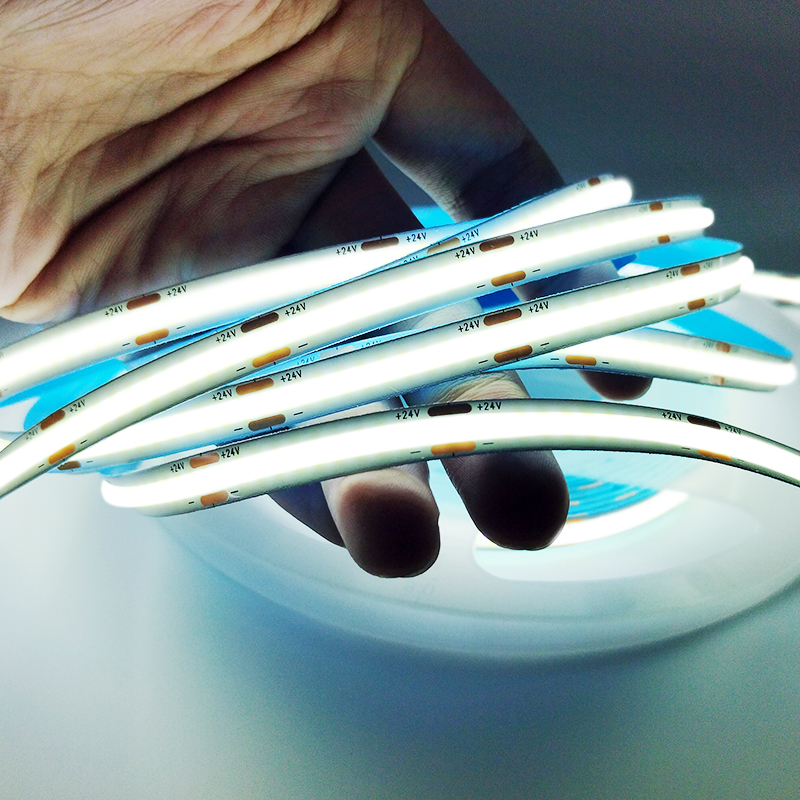
Featured Commercial LED Strip Solutions
Direct from Shenzhen Engineering Hub: High-density COB, IP68 Waterproof Silicone Extrusion, Tunable CCT, and Addressable RGBIC Strips for Global Distributors & Project Buyers.
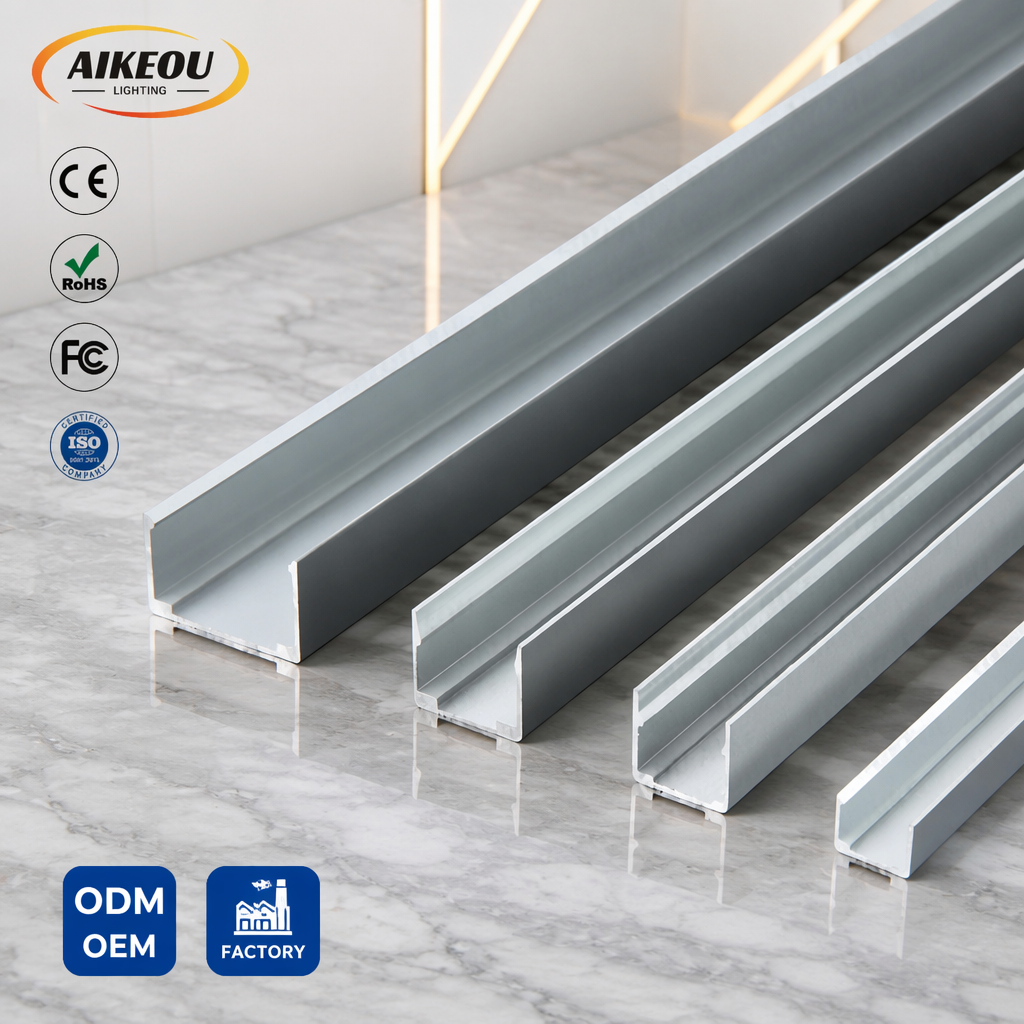
Flexible Ribbon Tape LED Neon Flex Strip CRI 90 Dimmable 5V/12V/24V
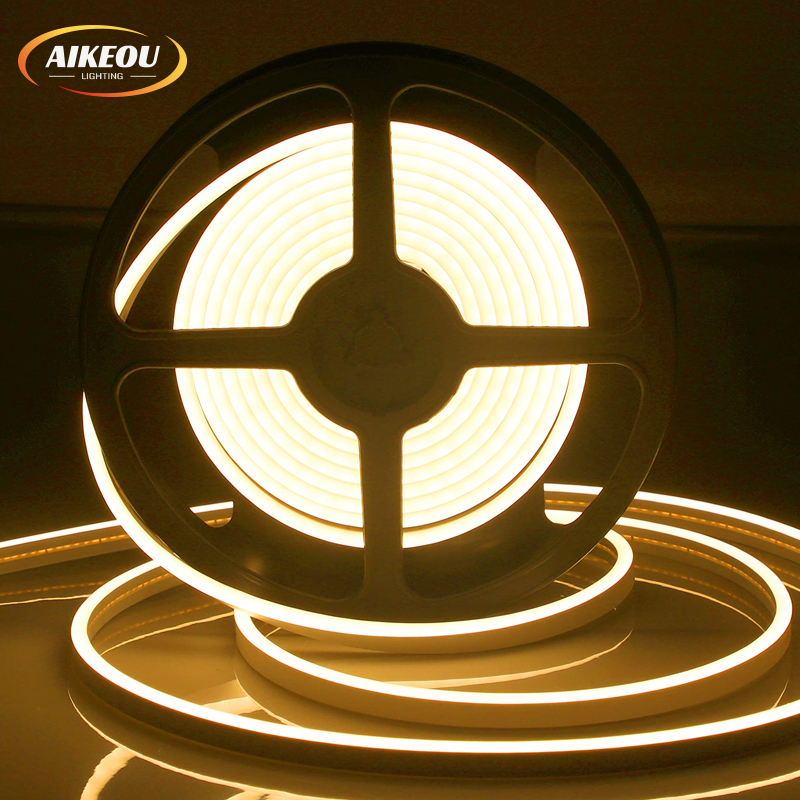
IP65 Waterproof Neon Lights 5m/Roll 2835 Strip 120LEDs/m Cuttable
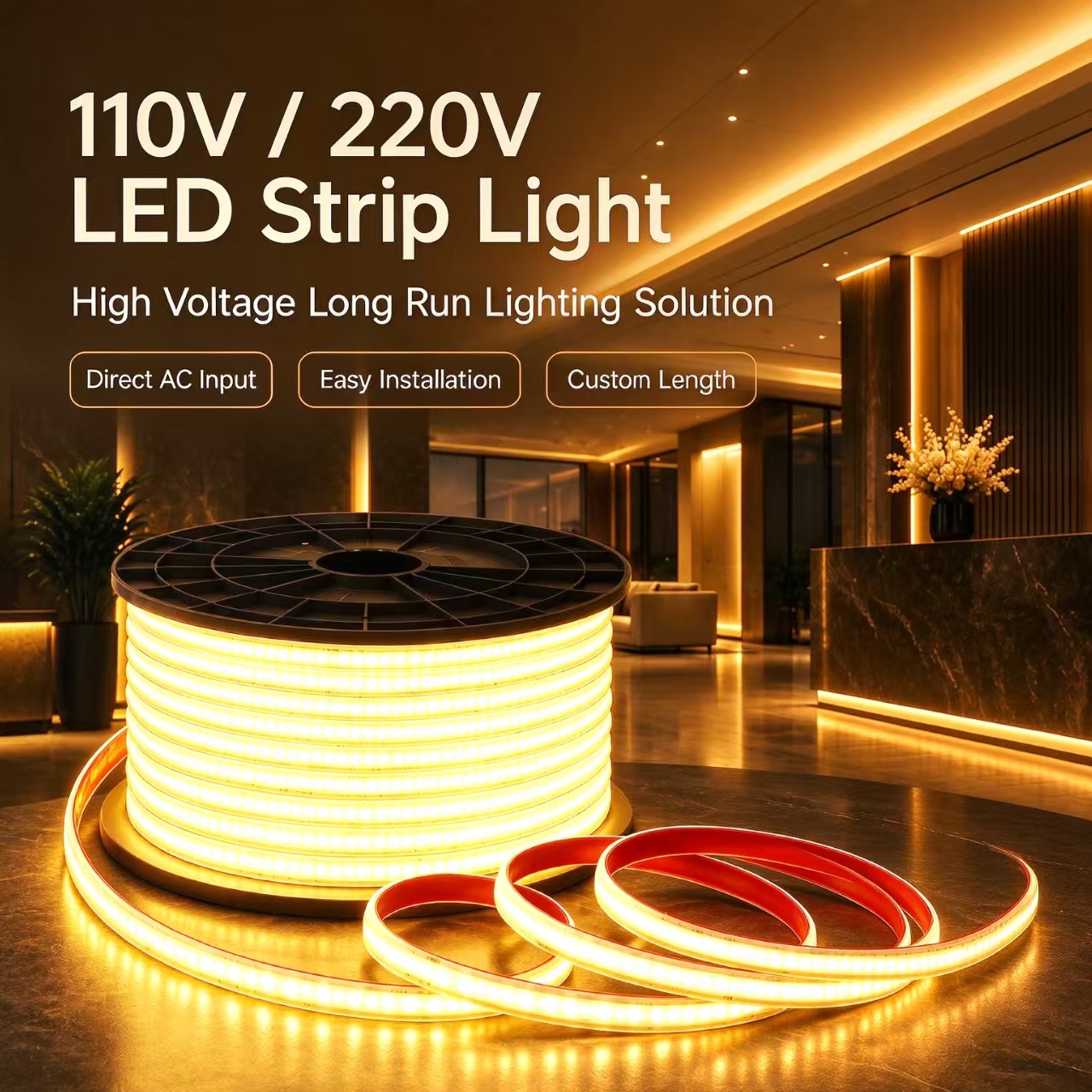
IP65/IP68 Outdoor High-Voltage COB LED Strip 110V/220V Drive-Free

High CRI 90+ Flexible Copper LED Light Panels CCT Tunable Sheets

Ultra-Narrow 2.7mm COB LED Strip 384 LEDs/m Flexible Copper Body
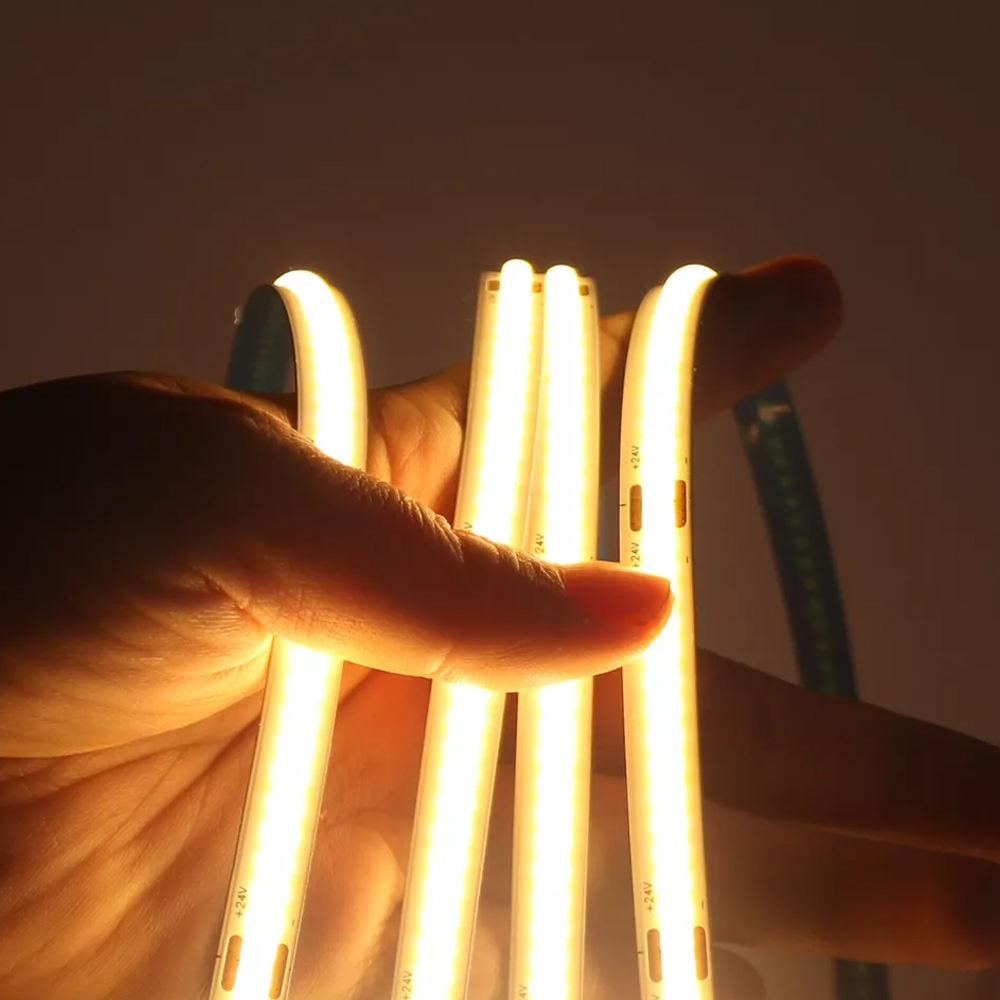
High-Density 480LEDs/m 8mm 11W/m 24V CRI90 COB Linear Tape
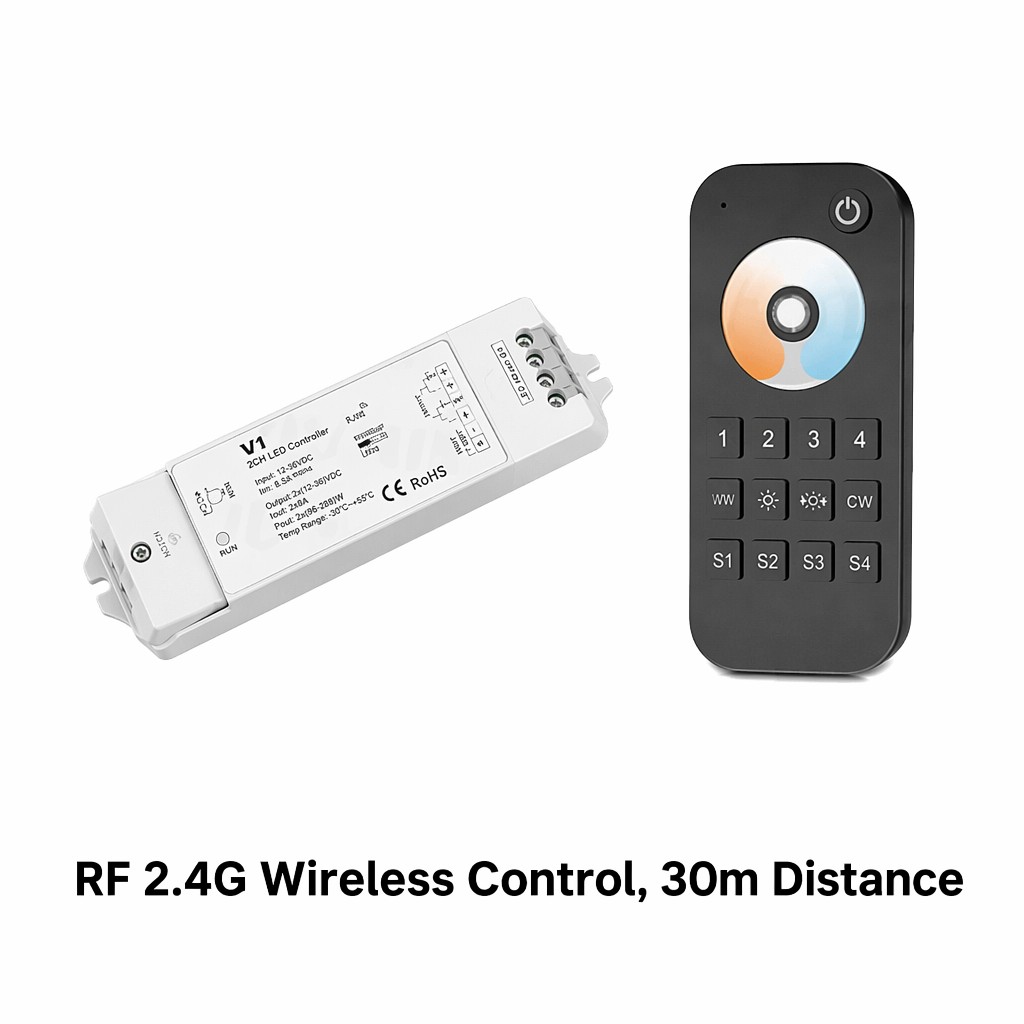
RF 2.4G Smart LED Controller V1-V3 Series RGB/RGBW/SPI Dimming
1. Technical Blueprint: Engineering Commercial LED Strips in China
As architectural lighting evolves from basic backlighting to integral linear illumination, commercial LED strip specification demands engineering rigors far beyond standard retail tape lights. China’s supply chain leadership—anchored by specialized manufacturers like Shenzhen Vokud Technology Co., Ltd.—has shifted from high-volume assembly to advanced semiconductor encapsulation, precise optical engineering, and thermal dynamics optimization.
Commercial-grade LED linear systems require strict adherence to photometric stability, thermal resistance management ($R_{th}$), and mechanical endurance. Understanding the underlying physics of continuous Chip-on-Board (COB) and Chip-Scale Package (CSP) strip technologies is essential for wholesale buyers, lighting specifiers, and OEM brand engineers seeking competitive market differentiation.
1.1 Copper Substrate PCB Architecture & Thermal Resistance Mechanics
The lifetime and lumen maintenance ($L_{70}/B_{10} > 50,000\text{ hours}$) of an LED strip rely predominantly on the heat dissipation efficiency of its Flexible Printed Circuit (FPC). Low-tier commodity LED strips rely on 1oz or sub-1oz single-sided rolled copper, leading to severe thermal choking, elevated junction temperatures ($T_j > 85^\circ\text{C}$), and accelerated chromaticity shift. Premium commercial strips manufactured by Vokud utilize double-sided 2oz to 3oz electro-deposited or Rolled Annealed (RA) pure copper substrates.
3oz Heavy Copper FPC
Reduces electrical resistance, minimizes voltage drop over 10m single-feed runs, and ensures current uniformity across all chips.
Thermal Management ($R_{th}$)
Direct chip-to-copper bonding lowers thermal resistance down to $< 1.5^\circ\text{C}/W$, keeping junction temperatures cool under continuous load.
SDCM < 3 Binning
Automated spectral sorting ensures 3-Step MacAdam Ellipse consistency across batch orders, eliminating visible color batching variations.
1.2 Photometric Quality & Spectral Fidelity (CRI 95+ & TM-30-18 Metrics)
Commercial specifiers no longer accept raw Color Rendering Index ($R_a$) as the sole benchmark for lighting fidelity. Traditional $R_a$ measures only 8 color swatches ($R_1-R_8$), failing to account for vibrant red tones ($R_9$) crucial for retail display, hospitality ambiance, and architectural stone rendering. Commercial LED strip light manufacturing at Vokud incorporates high-efficiency fluorescent phosphor blends to achieve comprehensive spectral accuracy:
- High Color Fidelity ($R_f \ge 93$): Evaluates 99 real-world color samples under IES TM-30-18 standards.
- Gamut Score ($R_g \ge 100$): Guarantees rich color saturation without unnatural color distortion.
- Deep Red Rendering ($R_9 \ge 80$): Essential for accurate skin tones, fresh produce displays, and luxury interior woodwork.
2. Technological Comparison: COB vs. CSP vs. Traditional SMD LED Strips
Selecting the optimal architectural form factor requires an objective comparison of optical mechanics, installation constraints, and thermal endurance. Below is an engineering evaluation comparing continuous Chip-on-Board (COB), Chip-Scale Package (CSP), and traditional Surface Mount Device (SMD) linear tapes.
| Engineering Parameter | COB (Chip-on-Board) | CSP (Chip-Scale Package) | SMD (2835 / 5050) |
|---|---|---|---|
| Optical Uniformity | 100% Seamless / Dotless (180° Beam) | Near-Seamless (160° Beam) | Visible Hotspots / Pixelated (120°) |
| Chip Density | 320 to 576 chips/meter | 240 to 480 chips/meter | 60 to 240 LEDs/meter |
| Min. Profile Depth Needed | 0mm (No diffuser lens required) | < 5mm profile depth | > 15mm deep profile + frosted lens |
| Bending & Mechanical Flexibility | Ultra-high flexibility (No wire-bonds) | High flexibility (Flip-Chip) | Moderate (Risk of SMD joint cracking) |
| Thermal Impedance | Lowest (< 1.2°C/W direct copper) | Low (< 1.5°C/W direct copper) | Moderate to High (PLCC frame boundary) |
| Narrow PCB Width Options | Down to 2.7mm / 3mm ultra-narrow | Down to 4mm | Standard 8mm / 10mm |
As shown above, COB strips eliminate the visual "dotting" phenomenon inherent to classic SMD designs. By mounting bare flip-chips directly onto the flexible copper board and covering them with a continuous linear phosphor silicone extrusion, COB tech enables ultra-slim architectural aluminum profiles without deep channel extrusions.
3. Future Procurement Trends: 2025–2030 B2B Commercial LED Strip Market
The global commercial LED strip market is undergoing radical technological consolidation driven by smart building automation, energy efficiency regulations (such as EU ErP directives), and modern architectural demands. B2B buyers, OEM brands, and lighting wholesalers must align their sourcing strategies with four core future trends:
3.1 Miniaturization & Ultra-Narrow PCB Extrusions (2.7mm to 4mm)
Architectural millwork, custom cabinetry, and acoustic baffle lighting demand micro-linear fixtures. Production lines at Vokud now achieve high-yield 2.7mm and 3mm width single-row COB LED strips featuring 384 chips/m. These ultra-narrow flexible strips fit within concealed grooves and narrow tile trim channels, unlocking new lighting integration methods for luxury interior projects.
3.2 Smart Protocol Integration (Matter, Zigbee 3.0 & DALI-2 DT8)
Static single-color linear lighting is rapidly transitioning to dynamic tunable white (CCT 2700K–6500K) and digitally addressable RGBIC systems. Procurement trends show a massive surge in demand for strips paired with multi-channel DALI-2 Type 8 (DT8) drivers and wireless Matter-over-Thread controllers. B2B buyers now prioritize suppliers offering plug-and-play smart driver-controller-strip ecosystems.
3.3 AC Drive-Free High-Voltage (110V/220V) Continuous Outdoor COB
For long-distance architectural facades, building outlines, and landscape perimeters, low-voltage DC systems suffer from severe voltage drop and require bulkier external power supplies every 5 to 10 meters. The latest direct-AC 110V/220V COB strips incorporate integrated circuit (IC) linear drivers directly on the ribbon, allowing single continuous runs of up to 50 meters from one power feed with IP68 silicone co-extrusion waterproofing.
3.4 Co-Extruded Silicone IP68 Waterproofing Technology
Traditional PVC tube sleeve waterproofing degrades under UV exposure, turns yellow, and cracks under thermal stress. The future of outdoor and wet-location linear lighting lies in food-grade silicone solid co-extrusion. Solid silicone extrusions offer zero air-gap moisture ingress, salt spray corrosion resistance, UV stabilization, and operation across extreme thermal ranges (-40°C to +80°C).
4. Comprehensive Commercial Procurement & Engineering FAQ
Addressing critical technical considerations, installation mathematics, and factory compliance protocols for B2B buyers and project engineers.
How is DC voltage drop calculated, and why choose 24V over 12V for commercial projects?
Voltage drop occurs due to the inherent electrical resistance ($R$) of the copper PCB trace ($V_{drop} = I \times R$). A 12V strip requires double the current ($I$) of a 24V strip for equivalent wattage ($P = V \times I$). Higher current leads to four times greater heat dissipation ($P_{loss} = I^2 R$) and rapid voltage drop, causing noticeable tail-end dimming. For commercial runs exceeding 5 meters, 24V DC is mandatory to maintain uniform flux across the entire linear run.
What is the minimum order quantity (MOQ) for custom OEM/ODM strip development?
Standard COB, CCT, and RGBIC strips carry a low MOQ starting at 5 meters for stocked items. For custom PCB layouts, private-label branded tape backing (3M 9080A / VHB), tailored color temperatures (e.g., 2200K amber or 3500K commercial neutral), custom wire harness solderings, or custom retail reel packaging, OEM project MOQs typically start at 1,000 meters following sample approval.
What certifications are required for importing LED strips into the EU and North America?
For EU customs clearance and retailer compliance, strips must hold CE-LVD (Low Voltage Directive), CE-EMC (Electromagnetic Compatibility), RoHS 2.0 (Hazardous Substances), and REACH documentation, alongside EU ErP energy rating filings. For North American markets, UL-listed or ETL-recognized component status is essential, accompanied by FCC Part 15 Class B compliance for digital controllers.
What is the functional difference between IP20, IP65, IP67, and IP68 LED strips?
IP20 is unencapsulated for dry indoor coves; IP65 features a top-surface nano-coating or silicone spray for dust and light splash protection; IP67 utilizes a hollow silicone tube or U-channel sleeve suitable for damp exterior applications; IP68 represents solid-core integrated silicone extrusion engineered for underwater immersion (saunas, pools, and building facades).
How does Vokud ensure color consistency across multi-container wholesale shipments?
Vokud enforces strict single-binning protocols. All LED flip-chips are cataloged by chromaticity coordinates ($x, y$) during automated SMT sorting. Orders placed months apart are produced using reserved chip bins matching the original 3-Step MacAdam Ellipse target, guaranteeing zero color variance between replacement reels or multi-phase project installs.
What rule should be applied when sizing power supply drivers for commercial strips?
Power supplies should be specified with an 80% continuous load safety margin. Calculate total nominal wattage (Strip Wattage per Meter $\times$ Total Meters) and divide by 0.8. For example, a 15W/m strip running 10 meters consumes 150W; the required driver capacity is $150W / 0.8 = 187.5W$, making a standard 200W driver the correct selection to prevent driver overheating and premature failure.
5. Enterprise Strengths: Why Shenzhen Vokud is China’s Premier Wholesale Partner
Located in the heart of Shenzhen’s high-tech manufacturing cluster, Shenzhen Vokud Technology Co., Ltd. operates state-of-the-art automated production facilities verified on-site by SGS Group. Our engineering team combines robust R&D with stringent quality management, ensuring global B2B buyers receive reliable, high-performance LED linear lighting solutions.
Automated SMT & Bonding
High-speed Yamaha SMT lines place up to 500,000 flip-chips per hour with zero placement offset, ensuring structural reliability across every reel.
100% 4-Hour Aging Test
Every meter of COB and SMD strip undergoes continuous full-power electrical aging, thermal stress cycling, and optical QA check before reel winding.
In-House Spectroradiometers
Integrating spheres and goniophotometers verify exact lumens/watt, CCT Kelvin values, CRI $R_a/R_9$, and spectral power distribution for every batch.
Whether you require custom cut-anywhere 2.7mm COB strips, high-voltage 220V outdoor neon solutions, or private-label retail packaging, Vokud provides full technical documentation, IES files for Dialux simulation, and multilingual engineering support in English and Spanish.
