Choosing LED Strip Lights in 2026 is not just a matter of picking the brightest roll or the lowest price. Global buyers must match each strip to its setting, power supply, control system, and installation conditions. A kitchen counter needs even, comfortable light; a long retail display may need stronger output and consistent color. Details matter. This guide compares practical features, including LED density, color temperature, dimming, adhesive, and cut points.
For international orders, voltage compatibility, plug options, shipping protection, warranty terms, and technical support deserve close attention. Check product labels and supplier documents, then confirm that any required certifications apply in your destination market. Requirements differ by country. An attractive listing alone cannot prove long-term reliability. Where possible, compare published specifications with sample testing and clear return terms. Not always.
The recommendations are organized around common needs, such as accent lighting, outdoor use, smart-home control, and larger commercial projects. Not every premium feature earns its cost, and low initial pricing can hide a weak driver or difficult installation. We flag these trade-offs rather than promise one strip suits every buyer. Use the shortlist as a starting point, and verify dimensions, power requirements, and support before placing an order. That extra check can help prevent mismatched connectors, uneven brightness, and costly replacements.
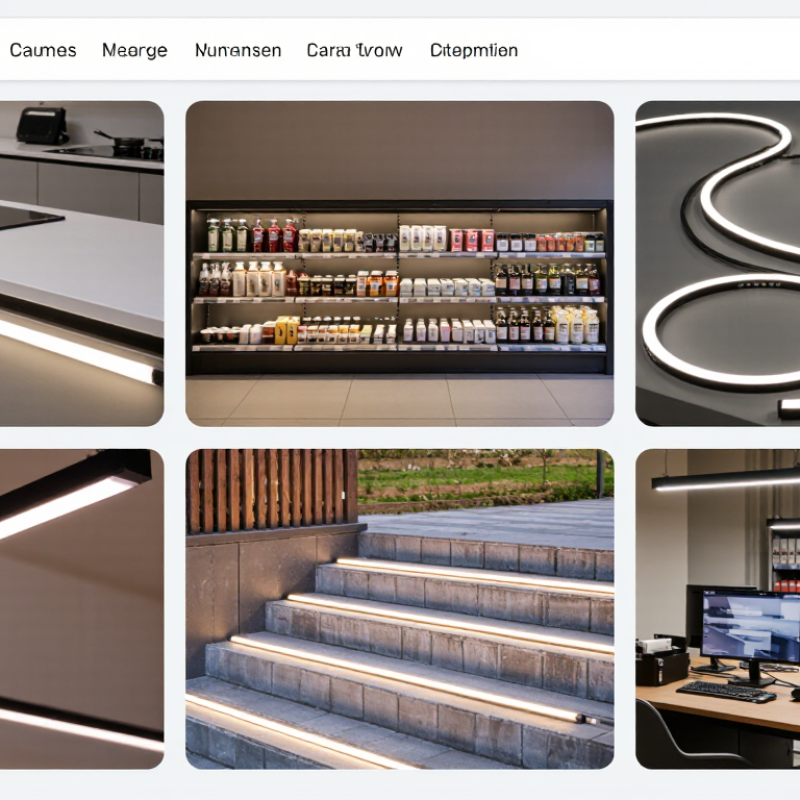
LED strip lights are flexible circuit boards lined with small light-emitting diodes. Each diode converts electrical energy into light, while copper tracks carry power along the strip. Most low-voltage strips need a compatible power supply to convert mains electricity to the voltage they require, often 12 or 24 volts. The supply must also provide enough current for the strip’s length and brightness.
That part matters.
Single-color strips usually offer simple on-and-off or dimming control. RGB versions combine red, green, and blue diodes, and a controller blends their output to create different colors. Some strips use separate white diodes for more natural-looking white light. Before buying, check the voltage, power use per meter, and cut marks printed on the board. Cut only at those marks; cutting elsewhere can interrupt the circuit. An IP rating indicates tested resistance to dust or water, not general product quality. For a cleaner installation, an aluminum channel can help spread heat and protect the strip. Adhesive backing may loosen on dusty or textured surfaces, so preparing the mounting area is worth the effort. It is easy to focus on brightness alone, but wiring, heat, and placement often shape the result just as much.
For global buyers, an LED strip is a system, not just a row of bright diodes. Check the LED type, density, and circuit board together. More LEDs per meter can create smoother light, especially beneath shelves or along reflective surfaces. A wider copper layer may help manage heat, but the fixture still needs room to breathe. Heat matters.
Compare measured brightness and power use, rather than relying on a single headline figure. Confirm the input voltage and match the power supply to the strip’s load, with suitable spare capacity. Color rendering also deserves attention: a higher CRI can make food, fabric, and wood look more natural. Check color consistency across the full roll, since small differences can show on long runs.
The installation environment shapes the specification. An IP rating can indicate resistance to dust or moisture, but it does not make every connection waterproof; connectors and cut ends need careful protection. Review the cut intervals, adhesive backing, dimmer compatibility, and control method before ordering. Ask for a datasheet and sample when possible. Datasheets can be incomplete, and even a good specification may not predict performance inside a warm, enclosed channel. Measure the actual installation conditions.
Comparison of common LED strip configurations. Figures are typical market ranges, not guaranteed specifications; actual performance depends on the strip design, driver, installation, and operating conditions.
| Strip type | Typical LEDs or pixels per meter | Typical voltage | Typical power | Light output and color | Typical use | Key performance factors |
|---|---|---|---|---|---|---|
| SMD 2835, single-color | 60–240 LEDs/m | 12 V or 24 V DC | About 4.8–24 W/m, depending on density and design | White options commonly span 2700–6500 K; output varies widely by chip and power | General lighting, shelves, cabinets, and coves | Check measured lumens per meter, CRI, board width, thermal management, and dimmer compatibility. |
| COB, single-color | Commonly about 320–480 LED chips/m | 12 V or 24 V DC | Often about 8–15 W/m; confirm the specific model | Continuous-looking line of light; white CCT and output depend on phosphor and chip design | Visible channels, task lighting, and installations where individual LED dots are undesirable | Use an aluminum channel where needed for heat dissipation; verify cut points, bend limits, and actual output. |
| Tunable white (CCT-adjustable) | Often 120–240 total LEDs/m across two color channels | Usually 12 V or 24 V DC | Commonly about 9.6–19.2 W/m at full output | Often adjustable across a range such as 2700–6500 K; brightness can vary with CCT setting | Residential and hospitality lighting where warm-to-cool adjustment is needed | Requires a compatible two-channel controller; compare color consistency, CRI, and output at both ends of the CCT range. |
| RGB color-changing | Commonly 30–120 RGB packages/m | 5 V, 12 V, or 24 V DC, depending on design | Varies by density and color; calculate from the specified maximum current or power | Red, green, blue, and mixed colors; typically not a substitute for high-quality white lighting | Accent lighting, displays, and decorative effects | Needs an RGB controller; check voltage, channel current, power-supply capacity, and voltage drop. |
| RGBW color-changing | Often 60–96 packages/m, with separate white emitters | Usually 12 V or 24 V DC | Model-dependent; may draw more power when multiple channels run together | Color effects plus a dedicated white channel; white CCT depends on the selected version | Spaces needing both decorative colors and functional white light | Check controller channel count and combined-channel power; assess the white channel separately for CRI and output. |
| Addressable RGB | Commonly 30–60 individually controlled pixels/m; LED count may differ from pixel count | Often 5 V or 12 V DC; protocol and design vary | Depends on pixel count and brightness setting; use the stated maximum current for sizing | Individually controlled colors and animated effects; white rendering varies by product | Signs, displays, and dynamic architectural effects | Confirm control protocol, data direction, controller capacity, power injection needs, and signal wiring. |
| Specification | What to verify | Why it matters |
|---|---|---|
| Voltage and power | Rated DC voltage, watts per meter, maximum current, and compatible power supply | Incorrect supply sizing or long low-voltage runs can cause dimming, color shift, or overheating. |
| Brightness and color quality | Lumens per meter, CCT, CRI, and test conditions | LED count alone does not establish brightness or color-rendering quality. |
| Protection and environment | IP rating for the complete assembly, connector sealing, ambient temperature, and indoor or outdoor suitability | An IP rating applies to specified test conditions; cutting or joining a strip may reduce its protection unless resealed correctly. |
| Installation and lifetime | Cut interval, PCB width, bend radius, mounting method, thermal requirements, and stated lifetime conditions | Fit, heat management, and installation quality affect appearance, reliability, and service life. |
| Global market readiness | Applicable electrical-safety and EMC documentation, destination-market requirements, plug or driver compatibility, and warranty terms | Requirements differ by destination; verify current local rules and documentation before purchase or import. |
Selection note: Compare complete product data sheets and sample performance. There is no single “best” strip for every project; the right choice depends on the required light output, control method, installation environment, run length, and local compliance requirements.
LED strip lights differ by emitter, color control, and output. Single-color strips suit under-cabinet task lighting, wardrobe interiors, and stair edges, where steady white light matters more than color effects. Tunable-white strips shift from warm to cool white, helping kitchens feel comfortable at night and brighter during daytime work. RGB strips create changing colors for display shelves or event spaces. For more useful white light alongside color, RGBW models add a dedicated white channel. COB strips place emitters close together, producing a smoother line in shallow coves and visible channels. Details matter: a diffuser can soften dots, but it also reduces brightness.
For energy context, the U.S. Department of Energy’s Energy Saver guidance reports that LEDs use at least 75% less energy than incandescent lighting. It also says LEDs can last up to 25 times longer. These are broad LED comparisons, not a guarantee for every strip; drivers, heat, and operating hours affect service life. Choose output for the surface, not just the room. A bright strip aimed at glossy tile may cause glare. A dimmer strip behind a deep shelf may disappear. Color matters. I would check the power supply, measured light output, and heat path before ordering. Product labels do not always make those details easy to compare.
Compare common LED strip types by their typical suitability for different applications. Higher scores indicate a stronger general fit.
Suitability scores are comparative guidance on a 1–5 scale, not product specifications. Actual performance depends on strip design, power supply, installation, and environment. High-voltage strips should be installed in accordance with local electrical codes.
Global buyers comparing LED strip lights in 2026 should look beyond wattage and advertised brightness. Check operating voltage, measured output per meter, color rendering index, and color consistency across reels. Ask whether figures come from a test report or a sales sheet. They are not interchangeable. On long runs, voltage drop can make the far end visibly dimmer. Ask for feed-point guidance and the recommended maximum run length for your configuration.
Supplier comparison matters just as much. Request a current datasheet, sample reel, production lead time, minimum order quantity, and written warranty details. Compare samples in the same room and at the same dimmer setting; photos can hide flicker and color shifts. Ask how the supplier controls LED binning, adhesive quality, and consistency between reels. Check the ingress protection rating against the actual installation environment, not a vague “waterproof” label. Verify applicable documentation for your destination market. A polished catalog helps, but it cannot replace a repeatable sample. I still find this step easy to rush.
Tips: Record supplier answers in one comparison sheet. Keep a sample for later batch checks. Small details matter.
For global buyers, safe LED strip installation starts with the whole system, not the tape alone. Check the strip’s rated voltage, power supply, plug, and dimmer against the destination market. A 12-volt strip paired with an unsuitable supply can overheat or fail. The International Energy Agency has estimated that lighting accounts for about 15% of global electricity use. The U.S. Department of Energy reports that LEDs use at least 75% less energy than incandescent lighting and can last up to 25 times longer. These figures describe LEDs broadly; actual strip performance varies.
Inspect the cut marks and connectors before installation. Keep power supplies ventilated, avoid pinching wires under furniture, and use a suitable aluminum channel where heat buildup is a concern. In damp areas, confirm the complete assembly’s ingress protection rating; a coated strip alone does not make its connections waterproof. Check applicable regional requirements for electrical safety, electromagnetic compatibility, and restricted substances. Standards such as IEC 60598-1 can inform product checks, but local rules and required conformity marks differ. Paperwork matters.
Tips: Test a short section before fixing the full run. Photograph labels and wiring, and keep the product documentation. One easy mistake is assuming that a compatible plug means a compliant installation. It does not.
They use a flexible circuit board with small light-emitting diodes. Copper tracks carry power along the strip.
Many strips need a supply that converts mains electricity to 12 or 24 volts. Check that it provides enough current for the strip’s length and brightness. That part matters.
Single-color strips may support dimming, while RGB strips blend red, green, and blue light. Some also have separate white diodes for more natural-looking white light.
Cut only at the marked points on the circuit board. Cutting between marks can interrupt the electrical circuit.
Check its ingress protection rating against the actual conditions. A “waterproof” label alone does not show how well it suits your installation.
An aluminum channel can spread heat and protect the strip. Clean dusty or textured surfaces before relying on the adhesive backing. I have rushed that check before.
Voltage drop can reduce brightness along long runs. Ask for feed-point guidance and the recommended maximum run length for your setup.
Test samples in the same room and at the same dimmer setting. Compare color, brightness, and flicker; photos can hide differences. Not quite the same.
Request a current datasheet, sample reel, lead time, minimum order quantity, and written warranty details. Ask how the supplier checks color consistency, adhesive quality, and differences between reels. Keep a sample for later batch checks.
LED Strip Lights are flexible lighting systems built from closely spaced light-emitting diodes mounted on a narrow circuit board. Their performance depends on factors such as LED density, color quality, brightness, power requirements, heat management, and protective coatings. Different options suit different needs: single-color strips provide straightforward illumination, tunable-white and color-changing strips offer greater flexibility, and waterproof or high-output types are designed for more demanding environments.
For global buyers in 2026, comparing products means looking beyond price to evaluate specifications, consistency, supplier communication, quality controls, and product documentation. Installation conditions also matter: users should select compatible power supplies and controllers, plan for ventilation and secure mounting, and follow the applicable electrical safety and regional compliance requirements. Careful comparison and installation planning can help buyers choose a dependable solution that fits the intended application.