SGS On-site Verified Custom Manufacturer [email protected]
  • English
  • Español
  • Deutsch
  • Français
  • Português
  • Русский
  • 日本語
  • العربية
  • USD – US Dollar
  • EUR – Euro
  • GBP – British Pound
  • AUD – Australian Dollar
0%

Choosing the best LED Strip Lighting in 2026 is not simply a matter of brightness or price. Buyers need to match a strip’s output, color quality, voltage, protection rating, and control system to the room and installation. A warm strip tucked beneath a kitchen cabinet has different demands from one tracing a shop display or outdoor stairway. Small details matter.

The International Energy Agency’s Energy Efficiency 2023 report estimates that lighting uses around 15% of global electricity and produces about 5% of worldwide greenhouse gas emissions. Those figures cover lighting broadly, not LED strips alone. Still, they explain why efficiency deserves attention. For market context, Grand View Research’s LED lighting reports track continued industry growth, but broad market estimates can differ by scope and methodology. Read the fine print.

LED pioneer and Nobel laureate Shuji Nakamura is often associated with the statement, “The future of lighting is LED.” His work on blue LEDs helped make modern white LED lighting possible. Yet a good strip is not automatically a good purchase. Adhesive can fail on dusty surfaces. Colors may look different under real room lighting, and a low-cost power supply can undermine an otherwise promising kit. This guide compares options by practical performance, installation needs, and buyer support—not headline claims alone. Some specifications still leave room for doubt; testing a sample before a large order is sensible.
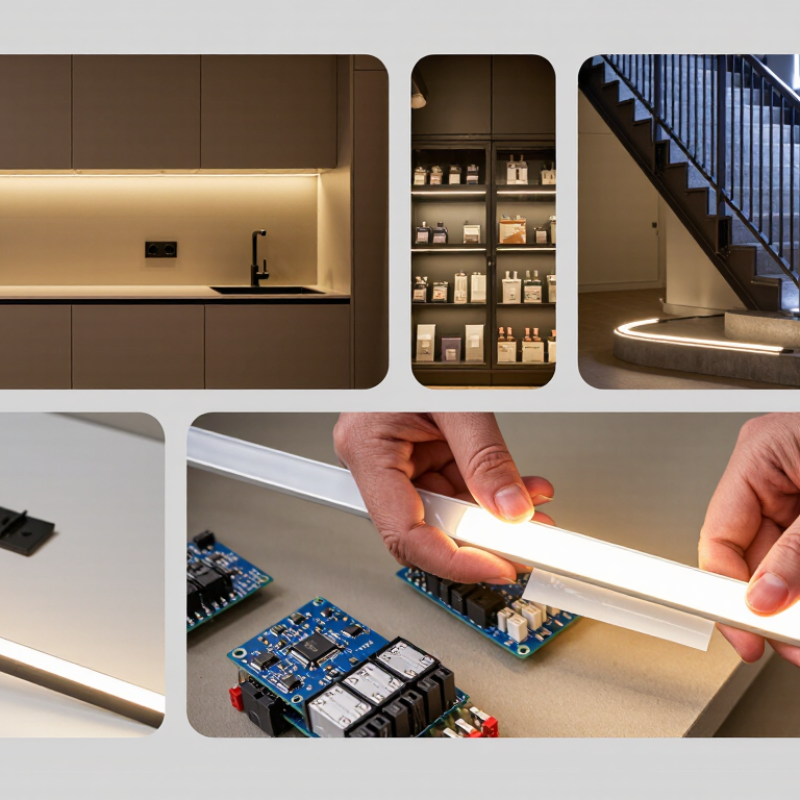
2026 Best LED Strip Lighting for Global Buyers?

What LED Strip Lighting Is and How It Works

An LED strip is a narrow, flexible circuit board carrying small light-emitting diodes. Copper tracks deliver low-voltage direct current from a power supply to each section. Many strips use resistors or electronic controls to limit current; designs vary. Tiny components matter. The diodes convert electrical energy into light, but the board still produces heat during use.

A typical power supply converts household alternating current into the low-voltage direct current the strip needs. The strip’s rated voltage must match the supply. Connect too much length from one end, and voltage can drop along the copper tracks. The far end may look dimmer or show uneven color. Not magic, just electrical behavior. Cutting is usually possible only at marked points, where the circuit is designed to remain usable.

Single-color strips emit one color, while RGB versions combine red, green, and blue LEDs to create changing hues. Some white-light strips use separate warm-white and cool-white diodes. Adhesive backing helps with installation, but a clean, dry surface improves grip. For longer runs, aluminum channels can help manage heat and protect the strip. A tidy diagram can make installation look simpler than it is; connectors, corners, and surface temperature deserve a careful check.

Key LED Strip Types, Features, and Performance Ratings

2026 Best LED Strip Lighting for Global Buyers?

LED strips vary by chip type, density, voltage, and intended use. Flexible SMD strips suit shelves and coves, while COB strips create a smoother line with fewer visible dots. High-density models can improve uniformity, but they may use more power and need better heat dissipation. Check watts per meter, not just advertised brightness.

Performance depends on the whole installation. A 24-volt strip usually loses less brightness along longer runs than a comparable 12-volt strip, though power-feed spacing still matters. Look for a stated CRI of 90 or higher when accurate colors matter, such as in a kitchen or display case. IP ratings also need context. IP65 can resist splashes, but it does not make every connection waterproof. Small detail. Cut marks, connectors, and sealed ends deserve inspection.

Compare brightness in lumens per meter when reliable figures are available, and confirm whether dimming works with the planned controller. Ask for test data at the intended color temperature; warm white and cool white can perform differently. One rating alone rarely tells the full story. I would also check whether the strip stays cool after an hour in its actual channel. That step is easy to skip, and sample displays can be misleading.

How to Choose LED Strip Lighting for Different Applications

Choosing LED strip lighting starts with the task, not the brightest number on the package. For kitchen counters, a 4,000K strip with a high color rendering index can make food colors easier to judge. A warmer 2,700–3,000K tone often suits bedrooms, shelves, and display coves. Small detail, big difference.

For outdoor paths or damp rooms, check the stated IP rating and installation conditions. A sealed strip still needs suitable connectors and careful protection at cut ends. Never assume “water-resistant” means suitable for standing water. Measure each run, mark corners and cut points, and note where power will enter.

Long runs can appear dimmer at the far end, especially at lower voltage. For longer layouts, compare 24V options or plan additional power feeds according to the product instructions. Match the power supply’s voltage and capacity to the strip’s total load, with reasonable headroom.

For workbenches, prioritize useful brightness and glare control; for accent lighting, evenness may matter more. Check dimmer compatibility before installation, since mismatched components can cause flicker or uneven dimming.

Heat matters. An aluminum channel can support the strip and help manage heat, but a diffuser may reduce brightness. Test a short sample in the actual room first. The planned color can look colder than expected under different wall colors or evening light.

Global Standards, Safety, and Compatibility Considerations

For global buyers, an LED strip is only as dependable as its power supply and local fit. Check the rated input voltage and frequency on the driver, not just the strip’s low-voltage rating. A 24-volt strip still needs a suitable mains-powered supply. Plug shape alone does not confirm electrical compatibility. Small details matter.

Ask for test reports and certification documents that match the exact strip and driver being shipped. Standards and acceptance requirements can differ by destination, so confirm them with a qualified local importer or electrician. Look closely at connector polarity, dimmer type, and controller protocol; two products that appear similar may not work together. For bathrooms, kitchens, or outdoor runs, check the stated IP rating and the installation conditions it covers. A rating is not a promise that every joint will stay dry.

Heat is easy to underestimate. A strip installed in a sealed channel may run warmer than one mounted on an open metal surface, so follow spacing and thermal guidance. I would also leave room for uncertainty: paperwork can be current while a substituted component changes the finished product. Verify the delivered driver label, cable length, and test documents before installation, especially on large orders.

How to Compare Suppliers, Costs, and Long-Term Value

Compare LED strip suppliers using the same specification sheet, not headline price alone. Ask for measured lumens per meter, watts per meter, color-rendering index, color temperature, and binning tolerance. Request test reports and sample rolls; inspect color consistency at both ends after running them for several hours. Small details matter. Confirm copper weight, adhesive type, connector compatibility, and protection rating for the actual installation environment. A low-cost roll may need extra power supplies or replacement labor, which changes its landed cost.

The U.S. Department of Energy’s 2019 Solid-State Lighting forecast estimated 569 TWh of annual U.S. electricity savings by 2035 under broad LED adoption. That is a sector-wide projection, not a promise for any strip. DOE Energy Saver also reports that LEDs can use up to 90% less energy and last up to 25 times longer than incandescent bulbs; those figures are general comparisons, not strip-specific guarantees. Compare warranty terms, rated operating hours, and lumen-maintenance evidence, such as LM-80 data with a TM-21 projection. Then estimate lifetime cost using purchase price, power consumption, operating hours, and replacement access. One awkward point: supplier warranties can look generous, yet exclude installation conditions that matter most. Check the exclusions before paying.

2026 Best LED Strip Lighting for Global Buyers? — Comparing Annual Energy Cost

Illustrative comparison of common LED strip input-power ratings. Lower energy use can reduce operating costs, but compare light output (lumens per meter), color quality, protection rating, warranty, and supplier terms before choosing.

Estimate assumes 10 meters of strip, 8 operating hours per day, 365 days per year, and electricity at US$0.15 per kWh. Estimated annual costs are about US$21, US$42, and US$63, respectively. Actual costs depend on local electricity tariffs and real operating hours; rated power alone does not indicate brightness or overall value.

FAQS

What is the difference between SMD and COB LED strips?

Flexible SMD strips suit shelves and coves. COB strips create a smoother line with fewer visible dots. High-density options may need better heat management.

Should I choose a 12-volt or 24-volt strip?

A 24-volt strip usually loses less brightness over longer runs than a comparable 12-volt strip. Power-feed spacing still matters. Check the installation instructions.

What color temperature works best for kitchens and bedrooms?

Around 4,000K can help show food colors clearly on kitchen counters. Warm 2,700–3,000K light often suits bedrooms and display shelves. Test it in the room.

What does an IP rating tell me about moisture protection?

An IP65 rating can indicate splash resistance, but it does not guarantee waterproof connections. Protect cut ends and use suitable connectors. Small details matter.

How can I check whether a strip provides accurate color?

Look for a stated CRI of 90 or higher when color accuracy matters. Ask for measurements at your chosen color temperature. Ratings can leave gaps.

What should I check before installing a long run?

Measure the route and mark corners, cut points, and power-entry locations. Match the supply voltage and capacity to the total load, with some headroom. Long runs may need extra power feeds.

Can an aluminum channel improve an LED strip installation?

An aluminum channel supports the strip and helps manage heat. A diffuser can soften the light but may reduce brightness. Try a short sample first.

How should I compare strip costs and expected lifetime?

Compare measured lumens per meter, watts per meter, warranty terms, and operating-hour ratings. Include electricity use and replacement access in your estimate. I might still overlook installation costs. Check warranty exclusions.

Conclusion

This guide explains how LED Strip Lighting works, from the arrangement of light-emitting diodes on a flexible circuit board to the role of power supplies and controllers. It compares common strip types and key performance features, including brightness, color options, voltage, power use, flexibility, and protection ratings. Understanding these differences helps buyers match a product to its intended setting, whether for indoor accents, task lighting, outdoor spaces, or commercial applications.

The article also outlines how to assess installation needs, operating conditions, and compatibility with power systems and controls. It highlights the importance of checking relevant safety and quality certifications for the destination market, as well as confirming product specifications before purchase. Finally, buyers can compare suppliers by evaluating clear documentation, consistent quality, warranty support, shipping considerations, and total ownership costs—not just the initial price. These factors can help global buyers make informed choices that balance performance, safety, and long-term value.

Oliver

Oliver

Oliver is a professional marketing specialist who helps make the company’s products and expertise clear, useful, and accessible to customers. With a strong understanding of the company’s offerings, he regularly contributes expert articles to its website, covering product features, practical......